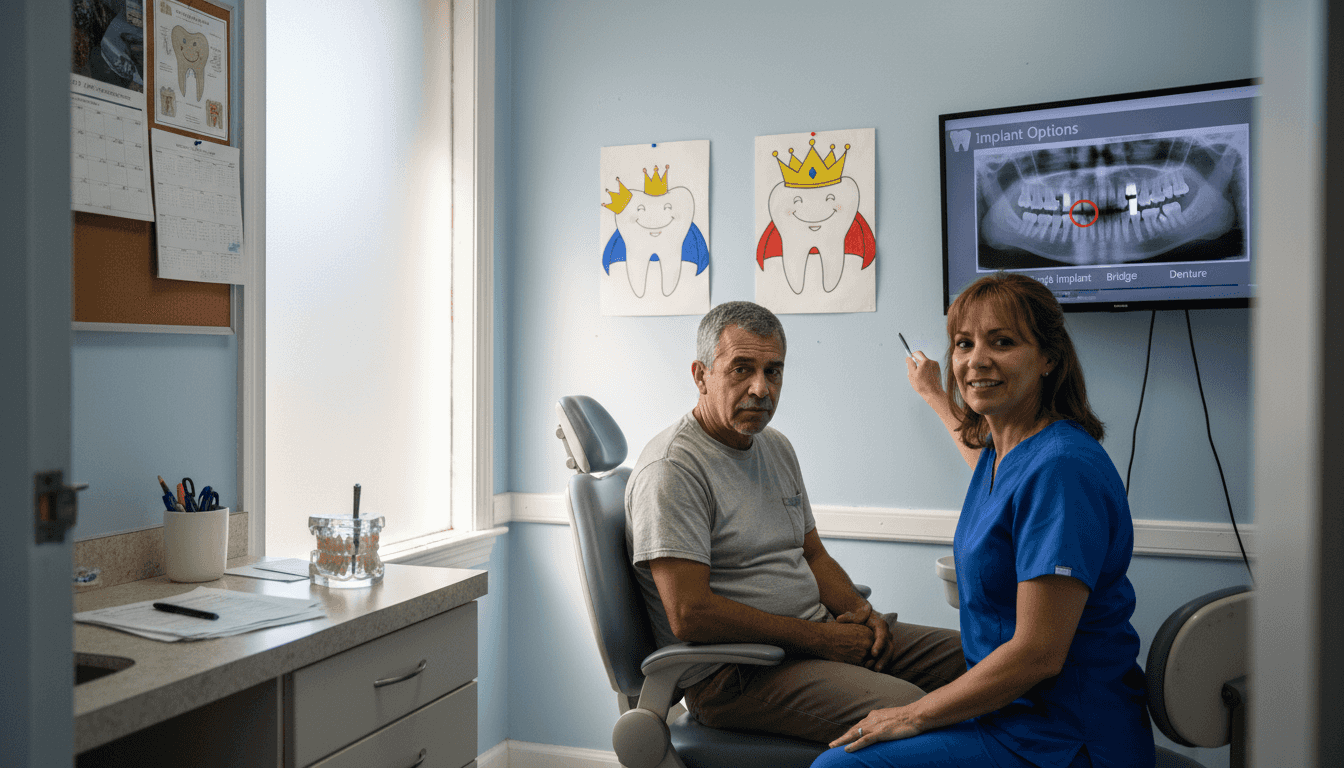
Every family in San Bernardino wants a confident smile without breaking the bank or worrying about Denti-Cal limits. Missing teeth can make eating hard and lower your self-esteem, especially when budgets are tight. Dental implants stand out as a permanent alternative to dentures, using a titanium post that fuses with your jawbone for strength and lasting results. This guide explains how implants work, what materials make them affordable, and how insurance helps Spanish-speaking families get the treatment they deserve.
Table of Contents
- What Are Dental Implants And How They Work
- Types Of Dental Implants And Materials Used
- Procedures Involved In Getting Implants
- Insurance Coverage And Payment Options
- Affordable Alternatives For Low-Income Families
Key Takeaways
| Point | Details |
|---|---|
| Dental Implants Explained | Dental implants replace missing tooth roots with a titanium post that fuses with jawbone for stability and durability. |
| Three-Part System | A dental implant consists of the implant, an abutment, and a crown, creating a natural-looking replacement for missing teeth. |
| Material Options | Titanium, zirconia, and ceramic are key materials, with titanium being the most durable and cost-effective choice. |
| Insurance and Payment Options | Understanding your insurance benefits and available payment plans can significantly lower the cost of dental implants for families. |
What Are Dental Implants and How They Work
A dental implant is a surgical solution that replaces the root of a missing tooth. It’s a small titanium post that your dentist places directly into your jawbone beneath the gum line.
Think of it like this: your natural tooth has two parts. The visible crown sits above your gum, but underneath, the root anchors everything to your bone. When you lose a tooth, you lose both parts. A dental implant restores that anchor point.
The Three-Part System
Dental implants work in three connected pieces:
- The implant - A titanium screw surgically placed in your jawbone
- The abutment - A connector piece that sits on top of the implant
- The crown - The artificial tooth that attaches to the abutment
Your dentist customizes the crown to match your natural teeth in color, shape, and size. From the outside, no one can tell the difference.
How the Process Works
The journey from missing tooth to restored smile happens in stages over several months. Titanium’s biocompatibility with bone allows your jawbone to fuse with the implant—a process called osseointegration. This biological bonding creates a permanent, stable foundation.
During the healing period, your bone gradually anchors the implant. This stability is what makes implants so durable. Unlike dentures that sit on your gum surface, implants become part of your jaw structure.
Who Benefits Most
Implants work best for people who have:
- Lost one or more teeth due to decay, injury, or disease
- Healthy gums and adequate jawbone density
- Good overall health and oral hygiene habits
- Realistic expectations about the timeline and cost
If you’ve worn dentures and struggled with them slipping or affecting your speech, implants offer a game-changing alternative.
Why Choose Implants Over Other Options
Implants provide advantages that other tooth replacement methods can’t match. They preserve your jawbone, maintain your facial structure, and function like natural teeth for chewing and speaking. Most importantly, they’re designed to last a lifetime with proper care.
Dentures and bridges require ongoing adjustments and replacements. Implants, once successfully integrated, stay stable and don’t need the daily removal or special maintenance that other options demand.
Dental implants offer permanence that dentures and bridges simply cannot match, making them a long-term investment in your oral health and quality of life.
Pro tip: Ask your dentist whether your jawbone has sufficient density for implants before committing to treatment. Some patients need bone grafting first, which adds time and cost to the overall timeline.
Types of Dental Implants and Materials Used
Not all dental implants are created equal. The material your dentist chooses directly impacts durability, appearance, cost, and how your body accepts the implant.
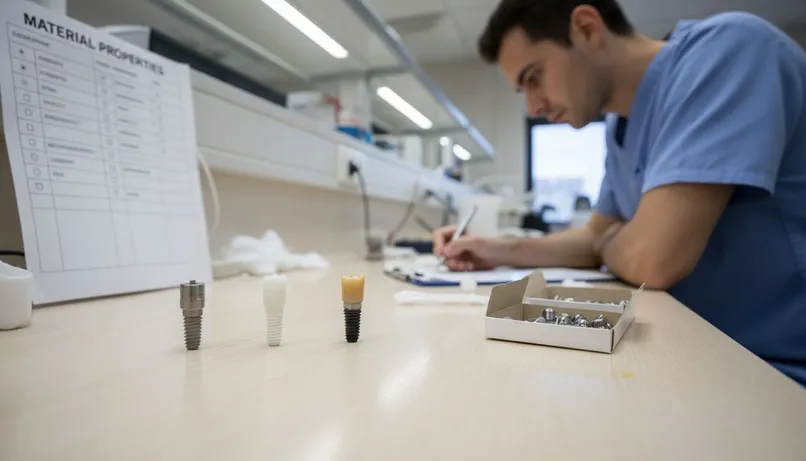
Think of the implant material as the foundation of your entire restoration. A weak foundation means problems down the road. The right material ensures your implant lasts decades without complications.
The Three Main Materials
Titanium, zirconia, and ceramic represent the three primary choices for dental implants. Each offers different benefits depending on your needs and budget.
Titanium implants are the industry standard. They’re incredibly strong, biocompatible with your body, and have a proven track record spanning decades. When bone tissue contacts titanium, it naturally fuses with the implant—a process that creates permanent stability.
Zirconia implants offer a metal-free alternative that looks more natural. If you have metal sensitivities or want the implant to match your tooth color if ever exposed, zirconia delivers that aesthetic advantage. They’re also biocompatible and resist corrosion.
Ceramic implants are the rarest choice. They provide excellent aesthetics and durability but cost significantly more and are more fragile during placement. Few dentists place ceramic implants due to these practical limitations.
Here’s a summary comparing dental implant materials and their key benefits for patients:
| Material | Durability | Appearance | Cost Relative to Titanium | Best For |
|---|---|---|---|---|
| Titanium | Extremely strong | Hidden below gums | Most affordable | Most patients, insurance |
| Zirconia | Long-lasting | Tooth-colored | 15-25% higher | Metal-sensitive, aesthetics |
| Ceramic | Good but fragile | Excellent, natural | Highest (2-3x titanium) | Premium aesthetics seekers |
How Materials Affect Your Costs
Material choice is one of the biggest cost factors in implant pricing:
- Titanium - Most affordable; standard option with excellent value
- Zirconia - Mid-range pricing; costs 15-25% more than titanium
- Ceramic - Most expensive; often double or triple the cost of titanium
For Spanish-speaking families in San Bernardino managing budgets carefully, titanium typically offers the best balance of durability, success rate, and cost.
Titanium: The Smart Choice for Most Patients
Titanium dominates the implant market for good reasons. It integrates seamlessly with jawbone, resists infection, and lasts a lifetime when maintained properly. Most insurance plans, including Denti-Cal, cover titanium implants at higher rates than alternatives.
If aesthetics concern you because the implant will be visible, your dentist can customize the crown to any shade. The metal itself stays hidden beneath your gum line.
The material you choose affects not just how much you pay today, but how long your implant lasts and whether insurance will help cover the cost.
Pro tip: Ask your dentist whether your insurance covers different implant materials at different rates—titanium is often covered more generously than zirconia, which can significantly reduce your out-of-pocket expense.
Procedures Involved in Getting Implants
Getting a dental implant isn’t a single appointment. The process spans several months and involves multiple stages, each critical to your final result.
Understanding the timeline helps you budget for time off work and plan your expenses accordingly. Most families in San Bernardino need to know what to expect before committing.
Step 1: Assessment and Planning
Your journey starts with a thorough evaluation. Your dentist examines your teeth, gums, and jawbone density using X-rays and 3D imaging to create a detailed treatment plan.
This assessment determines whether you need additional procedures like bone grafting. If your jawbone lacks sufficient density, your dentist may recommend a bone graft before implant placement, which adds 4-6 months to your timeline.
Your dentist also reviews your medical history to ensure you’re a good candidate. Certain conditions or medications can affect healing and implant success.
Step 2: Tooth Extraction (If Needed)
If you still have a damaged tooth where the implant will go, your dentist extracts it first. This typically happens weeks before implant placement to allow initial healing.
After extraction, your jawbone begins remodeling. Waiting ensures better bone density for the implant to integrate with.
Step 3: Implant Placement Surgery
This is the main procedure. Your dentist surgically places a titanium post into your jawbone, which serves as your artificial tooth root.
The surgery typically takes 1-2 hours under local anesthesia. You’ll feel pressure but not pain during the procedure. Most patients describe it as manageable—far less uncomfortable than they expected.
After surgery, you’ll have some swelling and discomfort for a few days. Ice and over-the-counter pain medication usually manage this well.
Step 4: Osseointegration (The Waiting Period)
This is where patience matters. Your bone gradually fuses with the titanium implant over 3-6 months in a process called osseointegration.
During this time, the implant becomes permanently anchored to your jawbone. This biological integration is what makes implants so durable and long-lasting.
You’ll need to avoid chewing on that side of your mouth. Your dentist may provide a temporary solution so you can eat normally.
Step 5: Abutment and Crown Placement
Once integration is complete, your dentist attaches an abutment (connector piece) to the implant. Then the custom crown is attached to the abutment.
This final appointment usually takes 1-2 hours. Your new tooth is color-matched to your natural teeth, so it blends seamlessly.
Timeline Overview
The entire process typically takes:
- Assessment and planning: 1-2 weeks
- Tooth extraction (if needed): healing period 6-12 weeks
- Implant surgery: single appointment
- Osseointegration: 3-6 months
- Crown placement: single appointment
Total timeline: 5-8 months from start to finish.
The waiting period during osseointegration isn’t wasted time—it’s when your body creates the strongest possible foundation for a tooth that will last decades.
Pro tip: Schedule your initial consultation early if you have a special event coming up (wedding, graduation, job interview). Knowing your timeline months in advance lets you plan the implant process around important dates in your life.
Insurance Coverage and Payment Options
Dental implants are expensive, but you don’t have to pay the full cost upfront. Understanding your coverage options and available payment plans can make implants affordable for your family.
For Spanish-speaking families in San Bernardino relying on Denti-Cal or HMO insurance, knowing what’s covered before treatment starts saves stress and money later.
What Denti-Cal Covers
Denti-Cal covers some implant-related costs, but not everything. Coverage includes diagnostic exams, X-rays, and bone grafts if medically necessary. The actual implant post and crown may have limited or no coverage depending on your plan.
Deductibles and annual maximums apply. Most plans cap dental benefits at $1,200-$1,500 per year, which often covers only a portion of the total implant cost.
Always ask your Monteluz Dental team to verify your Denti-Cal benefits before starting treatment. They’ll contact your plan to understand exactly what’s covered.
HMO and PPO Insurance Plans
HMO plans typically cover less for implants than PPO plans. HMO plans often require pre-authorization and limit your choice of providers.
PPO plans offer more flexibility and usually better implant coverage. Using an in-network dental provider significantly reduces your out-of-pocket costs.
Check your plan documents for waiting periods. Some plans require you to wait 6-12 months after enrollment before covering implants.
Payment Plans and Financing
Monteluz Dental offers flexible payment options to make implants accessible:
- In-house membership plan - Starting at just $20 per month for uninsured patients
- Monthly payment plans - Spread costs over 12-24 months with no interest
- Third-party financing - Working with dental financing companies for qualified patients
- Sliding scale fees - Based on household income for families with financial hardship
These options mean you don’t have to delay treatment while saving up thousands of dollars.
The Real Cost Breakdown
Understanding what you’ll actually pay helps with budget planning:
- Diagnostic costs - Usually covered by insurance or included in membership
- Implant post - $1,200-$1,600 (partially or fully your responsibility)
- Abutment - $300-$500
- Crown - $800-$1,500
- Additional procedures - Bone grafting ($300-$3,000 if needed)
Your total out-of-pocket cost depends on your insurance coverage and which payment option you choose.
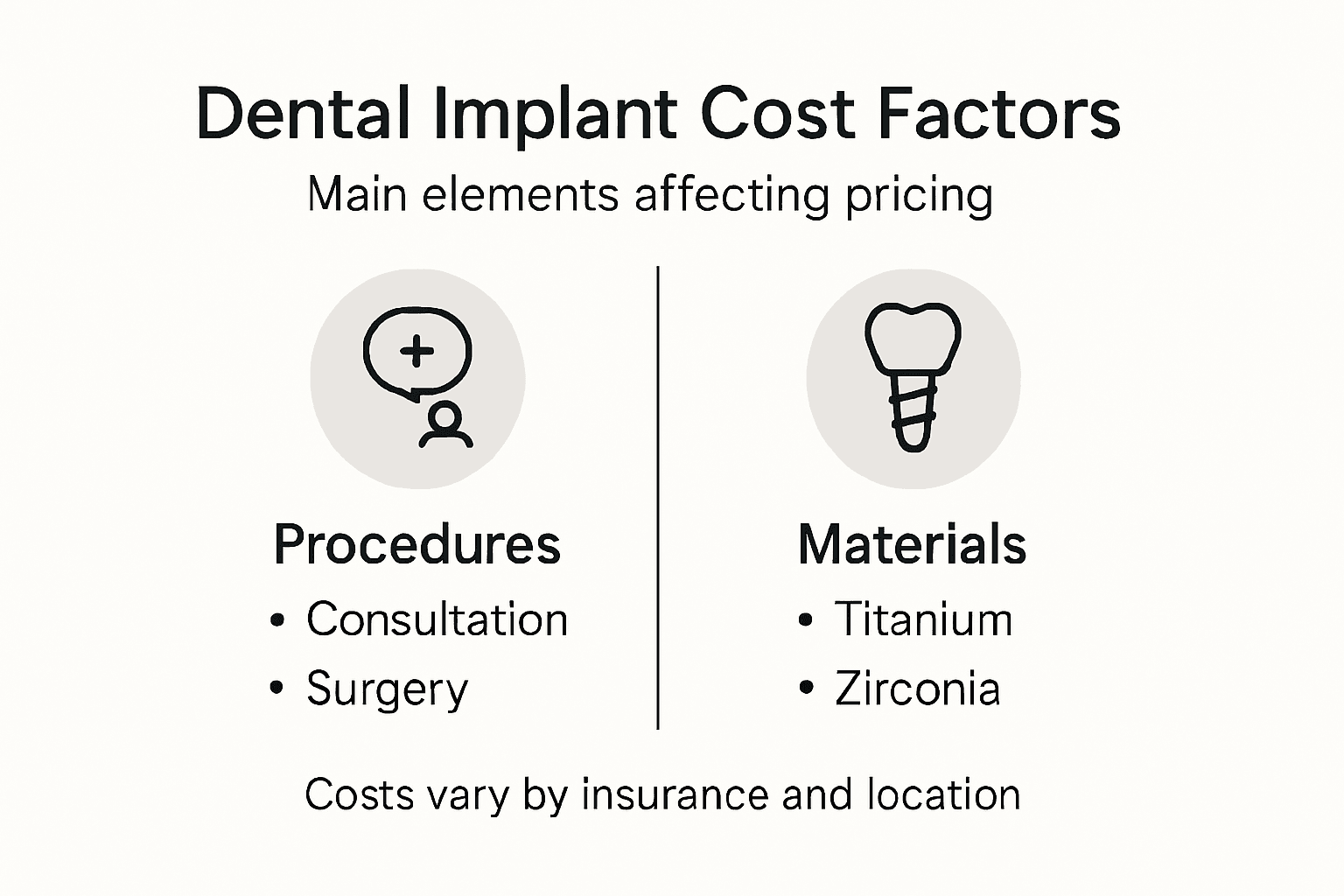
Below is a quick reference for typical dental implant costs and what impacts your out-of-pocket expense:
| Component | Typical Price Range | Insurance Coverage Likelihood | Notes |
|---|---|---|---|
| Implant Post | $1,200-$1,600 | Partial on most plans | Main cost driver |
| Abutment | $300-$500 | Sometimes covered | Attaches crown to implant |
| Crown | $800-$1,500 | May be limited | Custom color and shape |
| Bone Grafting | $300-$3,000 | If medically necessary | Increases overall timeline |
Payment plans and flexible financing exist specifically so that cost doesn’t prevent you from getting the dental care your family deserves.
Maximizing Your Insurance Benefits
Smart planning stretches your insurance coverage further. If your plan has an annual maximum, schedule implant treatment early in the calendar year to use your full benefit.
Some families split treatment across two calendar years to access benefits twice. Your dentist can help coordinate this strategy.
Pro tip: Request a detailed cost estimate from Monteluz Dental before signing consent forms—ask them to break down what your insurance covers, what you’ll owe, and what payment plan options fit your budget best.
Affordable Alternatives for Low-Income Families
Dental implants seem out of reach when your family is living paycheck to paycheck. But multiple pathways exist to make implants affordable, even when your budget is tight.
You don’t have to choose between paying rent and fixing your smile. Resources specifically designed for low-income families can bridge that gap.
Community Health Centers and Sliding Scale Clinics
Community health centers funded by the Health Resources and Services Administration (HRSA) serve uninsured and underinsured families throughout San Bernardino County. These clinics offer dental care on a sliding fee scale based on your household income.
Sliding scale means you pay what you can actually afford. A family earning $25,000 annually might pay 10-20% of the standard cost, while higher earners pay more.
Call your local community health center to ask about dental implant services or referrals. Many operate on a first-come, first-served basis, so plan ahead.
Dental School Programs
Dental schools offer reduced-cost implant treatment provided by supervised students. You’re not getting experimental care—you’re getting quality treatment overseen by licensed faculty.
The trade-off? Treatment takes longer. Students work carefully and deliberately, so appointments may be lengthier and treatment spans more visits than private practice.
University of California schools and private dental schools in Southern California participate in these programs. Costs typically run 40-60% below private dental office fees.
Monteluz Dental’s Membership Program
If traditional insurance isn’t an option, Monteluz Dental’s in-house membership plan starts at just $20 per month for uninsured patients. This membership covers diagnostic exams, X-rays, and cleanings year-round.
Many low-income families use this membership as their primary dental care plan. Combined with flexible payment plans for major treatment like implants, it makes regular care affordable.
Other Assistance Resources
Additional options exist if you qualify:
- Charitable foundations - Organizations like the National Foundation of Dentistry for the Handicapped assist eligible patients
- Medicaid/Denti-Cal - Limited coverage for implants in medically necessary cases
- Veteran benefits - Veterans Administration covers some implant services for qualifying veterans
- Clinical trials - Research studies sometimes offer free or reduced-cost implants in exchange for participation
- Local nonprofits - Religious organizations and community nonprofits occasionally fund dental care for families in crisis
Getting Started
Begin by contacting Monteluz Dental directly. Explain your financial situation honestly. The team will:
- Review your Denti-Cal or insurance eligibility
- Explore membership or payment plan options
- Refer you to community resources if appropriate
- Create a treatment plan within your budget
Affordability barriers shouldn’t prevent you from getting the dental care your family needs and deserves.
Pro tip: Ask Monteluz Dental whether you qualify for any community health center referrals or sliding scale programs before committing to private pay treatment—these resources exist specifically for families like yours.
Understand and Manage the Cost Factors of Dental Implants with Monteluz Dental
Navigating the cost factors of dental implants can feel overwhelming, especially when balancing your family’s budget and oral health needs. This article highlights key challenges such as material choices, procedural steps, and insurance coverage that directly affect pricing and timelines. If you are looking for expert guidance and affordable solutions, explore our Dental Health where we discuss these topics in detail and beyond.
Take control of your dental implant journey today with Monteluz Dental Specialty Group. Serving San Bernardino and the Inland Empire, we specialize in advanced implant care that fits your financial situation. Our bilingual team offers flexible financing plans, accepts Denti-Cal, PPO, and HMO insurance, and has an in-house dental membership plan starting at just $20 per month. Don’t let uncertainty about costs or coverage delay your treatment. Visit Monteluz Dental Specialty Group now to schedule your consultation and get a personalized cost estimate with no surprises. Your long-lasting smile begins with informed choices and trusted partners.
Frequently Asked Questions
What are the main factors that affect the cost of dental implants?
The cost of dental implants can be influenced by several factors, including the type of implant material used, the need for additional procedures like bone grafting, the complexity of the procedure, and the geographic location of the dental practice.
How does the choice of implant material impact the price?
Different implant materials, such as titanium, zirconia, and ceramic, have varying costs. Titanium implants are typically the most affordable and widely used, while zirconia and ceramic options can be more expensive due to their aesthetic benefits and biocompatibility.
Are there payment plans available for dental implant procedures?
Yes, many dental practices offer flexible payment options, including in-house membership plans, monthly payment plans, and third-party financing, to help patients manage the costs associated with dental implants.
Does insurance cover any part of the dental implant costs?
Insurance coverage for dental implants can vary. Many plans may cover diagnostic exams and certain preparatory procedures, but coverage for the implant itself and the crown typically has limitations, making it essential to check with your specific insurance provider.
Recommended
- Role of Insurance in Dental Implants Access
- Dental Implant Terminology Explained: Key Facts
- 6 Key Types of Dental Implants for Affordable Family Care
- Permanent Dental Implants in San Bernardino | Restore Your Smile