Referring patients to specialists is one of the most routine yet high-stakes decisions you make as a general dentist. A missed step in the referral process can leave patients confused about next steps, delay critical treatment, or expose your practice to unnecessary liability. For advanced cases like dental implants and endodontic therapy, the margin for error is even smaller. This guide delivers a practical, step-by-step referral checklist built specifically for Southern California general dentists who want to protect their patients, strengthen specialist relationships, and keep every case moving forward without gaps.
Table of Contents
- Establishing referral criteria: When and why to refer
- Essential information to include in your referral
- Communicating with specialists and patients: Key steps
- Choosing between endodontics and implants: Clinical checklist
- Why communication, not just checklists, determines referral success
- Expert specialty support for seamless referrals
- Frequently asked questions
Key Takeaways
| Point | Details |
|---|---|
| Referral timing matters | Refer based on clear criteria and case complexity to ensure better outcomes. |
| Comprehensive documentation | Include all relevant information in your referral packet to avoid delays. |
| Patient-centered communication | Transparent discussions boost patient understanding and trust. |
| Endodontics vs implants | Use clinical checklists as both options offer high success when chosen wisely. |
| Build specialist relationships | Direct contact with specialists streamlines patient care and follow-up. |
Establishing referral criteria: When and why to refer
With the need for a referral checklist established, the first step is knowing exactly when and why a patient needs to be referred. Clarity here protects both your patient and your practice.
Certain clinical situations make referral non-negotiable. Recognizing these triggers early prevents treatment delays and builds patient confidence in your decision-making. Common indications include:
- Unrestorable teeth where decay, fracture, or structural loss makes preservation impossible
- Failed or calcified root canal systems that exceed general practice scope
- Complex implant planning involving bone grafting, sinus lifts, or multiple missing teeth
- Compromised periodontal support affecting treatment prognosis
- Systemic conditions such as uncontrolled diabetes or bleeding disorders that complicate procedures
- Patient anxiety or behavioral factors requiring sedation beyond your current capacity
- Inconclusive diagnosis where specialist imaging or testing is needed
Beyond clinical signals, legal and ethical triggers matter too. If a case exceeds your training or equipment, continuing treatment without referral increases liability. Documenting your reasoning is not optional. Every referral decision should be recorded in the patient chart, including what you observed, what you discussed with the patient, and why you determined specialist care was appropriate.
Practical decision frameworks like the Dental Practicality Index help you assess prognosis systematically before committing to a referral path. These tools evaluate restorability, periodontal status, occlusal factors, and patient compliance together, giving you a more objective basis for your recommendation. When you’re evaluating complex cases, choosing the right specialist early in the process saves time and prevents misaligned expectations.
“Proactive communication with patients before the referral is made sets the tone for the entire treatment journey. Patients who understand why they’re being referred are far more likely to follow through.” — Clinical practice management perspective
The ADA General Guidelines for Referring Patients emphasize discussing specialty choice, appointment logistics, fees, and post-referral instructions with patients before they leave your chair.
Pro Tip: Create a brief referral rationale template in your charting system. A two-sentence entry documenting your clinical reasoning and patient discussion takes under a minute and significantly reduces your liability exposure.
Essential information to include in your referral
Once you determine a referral is needed, assembling the right information is the next critical step. Incomplete referral packets slow down specialist intake, frustrate patients, and sometimes result in redundant diagnostics.
Here is a numbered checklist of what every referral package should contain:
- Patient demographics: Full name, date of birth, contact information, and preferred language
- Insurance and pre-authorization details: Plan name, ID number, and any pre-auth already obtained
- Relevant radiographs: Periapical films, panoramic images, or CBCT scans as applicable
- Clinical findings: Periodontal charting, tooth vitality results, existing restorations, and occlusal notes
- Medical history summary: Current medications, allergies, systemic conditions, and recent lab values
- Treatment history: Prior procedures on the affected tooth or area, including previous endo attempts
- Reason for referral: A clear, specific diagnosis or working diagnosis and the question you need the specialist to answer
- Urgency level: Whether the case is routine, urgent, or requires priority scheduling
| Referral component | Typical packet | Best-practice packet |
|---|---|---|
| Patient demographics | Basic contact info | Full demographics plus language preference |
| Radiographs | Panoramic only | Periapical, panoramic, and CBCT if indicated |
| Medical history | Verbal summary | Written summary with medications and allergies |
| Reason for referral | Vague (“evaluate tooth”) | Specific diagnosis and clinical question |
| Insurance info | Plan name only | Plan ID, pre-auth status, and coverage notes |
| Urgency level | Not noted | Clearly labeled with suggested timeframe |
For endodontic referrals, include pulp vitality test results and any prior access attempts. For implant referrals, add bone density notes and any relevant medical factors affecting osseointegration. The ADA General Guidelines for Referring Patients link to sample referral forms that can serve as a solid starting template.
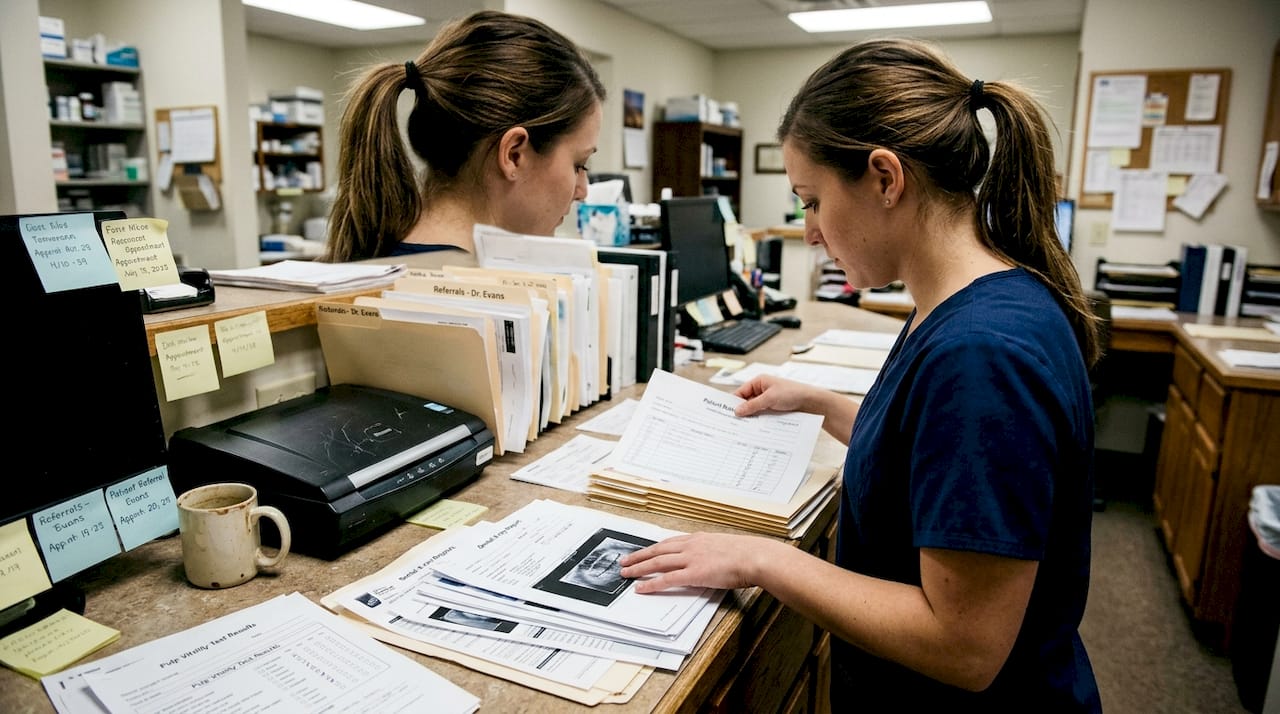
You can also access ready-to-use provider referral forms to streamline your intake process. For patients who need broader oral health context before their specialist visit, a thorough dental hygiene checklist can help them arrive better prepared.
Pro Tip: Build two referral packet templates in your practice management software: one for endodontics and one for implants. Customizing the default fields for each specialty saves staff time and reduces the chance of missing case-specific data.
Communicating with specialists and patients: Key steps
With information in hand, effective communication is the next non-negotiable part of referral success. Even a perfectly assembled packet fails if the handoff conversation is unclear.
Here is a practical communication checklist for both sides of the referral:
- Confirm specialist receipt: Call or message the specialist office to verify they received the referral packet and all attachments
- Brief the specialist directly on complex cases, especially when systemic factors or unusual anatomy are involved
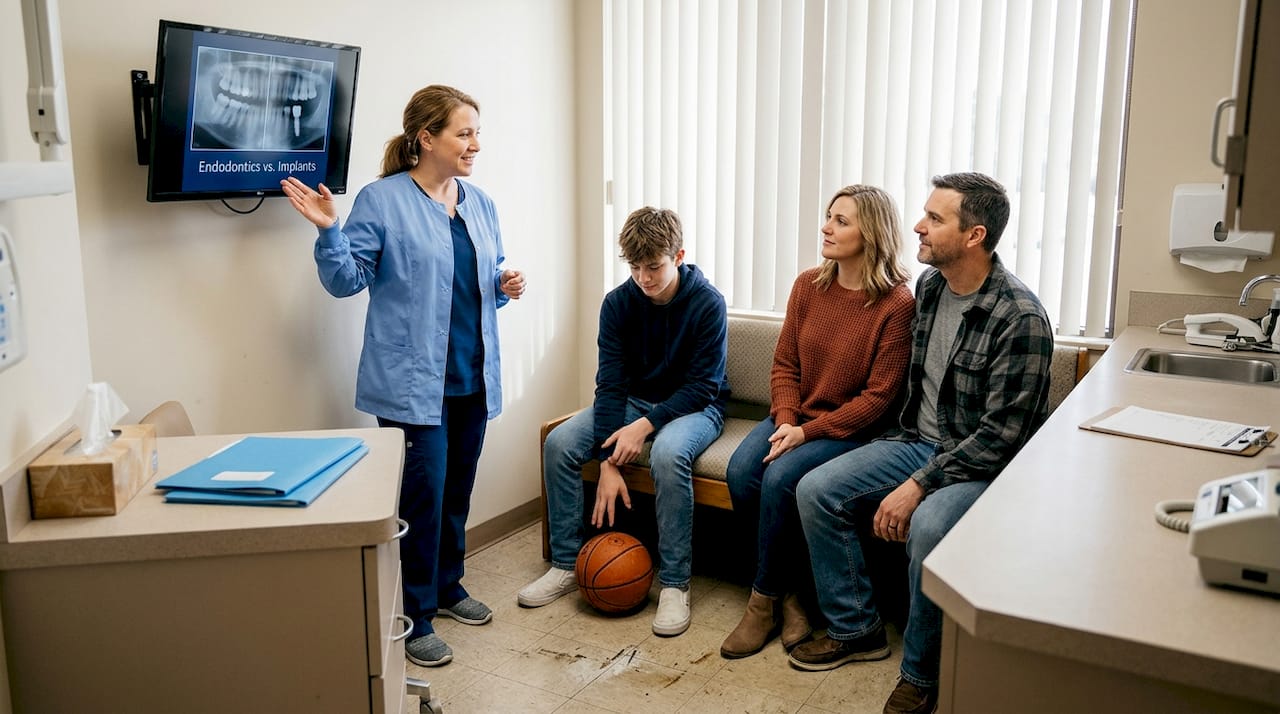
- Explain the referral to your patient before they leave, covering the reason, what to expect at the specialist visit, approximate costs, and next steps
- Provide written instructions summarizing the referral purpose and any interim care the patient should follow
- Schedule a follow-up touchpoint at your practice within a reasonable timeframe after the specialist appointment
- Request a specialist report and review it before the patient returns to your care
For patients who speak Spanish or have dental anxiety, extra steps matter. Bilingual support and calm, clear explanations reduce no-show rates and improve compliance. Strategies for addressing patient concerns before and after referral help patients feel supported rather than handed off. After treatment, sharing clear post-op instructions through your office reinforces continuity of care.
The outcomes data supports investing in this communication layer. Endodontic success rates reach 85 to 92% when cases are properly selected and planned, and implant survival rates are similarly strong when pre-surgical communication and workup are thorough. These numbers drop when handoffs are incomplete.
The ADA guidelines on specialty referrals are clear: patients deserve a full explanation of specialty choice, appointment logistics, fees, and follow-up expectations. That conversation is your responsibility, not the specialist’s.
Choosing between endodontics and implants: Clinical checklist
One of the most frequent referral dilemmas is whether to save a tooth or replace it. Here is a stepwise checklist to help you decide.
Step-by-step case evaluation:
- Assess tooth restorability: Is there sufficient coronal structure for a functional restoration after endo?
- Evaluate periodontal support: Is bone loss minimal enough to support long-term retention?
- Check endodontic prognosis: Is the root anatomy accessible? Has prior endo failed?
- Review occlusal factors: Is the tooth in a position where it can bear functional load?
- Consider patient health: Are there systemic conditions affecting healing for either option?
- Factor in patient preference and compliance: Will the patient commit to the follow-up care each option requires?
- If restorability or prognosis is poor, move toward implant evaluation
| Factor | Endodontic therapy | Dental implant |
|---|---|---|
| Best indication | Restorable tooth with good prognosis | Unrestorable or failed endo case |
| Success rate | 85 to 92% long-term | Comparable long-term survival |
| Treatment time | 1 to 2 visits | Several months including healing |
| Cost range | Generally lower upfront | Higher upfront, long-term value |
| Bone preservation | Natural tooth retained | Stimulates bone via osseointegration |
| Patient suitability | Good periodontal health needed | Adequate bone volume needed |
For a broader view of tooth replacement options, the implants vs dentures comparison helps patients and clinicians weigh long-term outcomes across multiple scenarios.
“There is no clear long-term superiority between endodontic treatment and implants when cases are well-selected. The decision must be holistic, weighing tooth prognosis, patient values, systemic health, and cost alongside clinical data.” — Evidence-based clinical perspective
Why communication, not just checklists, determines referral success
Checklists are your operational foundation. They prevent errors, create consistency, and give your team a reliable process to follow. But we have seen, time and again, that the referrals that truly succeed are the ones built on genuine two-way communication.
A patient who receives a referral form without a real conversation often feels uncertain and sometimes does not follow through. When you take three minutes to explain why you are referring, what the specialist will do, and what the patient should expect, compliance improves noticeably. That conversation cannot be automated.
The research reinforces this. No clear superiority exists long-term between endodontics and implants when cases are selected holistically. That means the conversation about patient values, cost, healing time, and long-term goals is often the deciding factor, not just the clinical data. Your role in that conversation is irreplaceable.
We also believe that direct specialist communication, even a brief call on complex cases, builds the kind of referral relationships that benefit your patients for years. Forms confirm the details. Conversations build trust. When you find the right dental specialist and invest in that relationship, the entire referral process becomes smoother and more predictable for everyone involved.
Expert specialty support for seamless referrals
If you are looking for a trusted referral partner in the Inland Empire, Monteluz Dental Specialty Group is built for exactly this kind of collaboration. We handle advanced cases including dental implants and endodontic therapy with the precision and communication standards your patients deserve.
Our team provides personalized follow-up on every referred case, bilingual support for Spanish-speaking patients, and flexible insurance options including Denti-Cal, PPO, and HMO plans. You can refer your patient directly through our streamlined online form, and we will handle the rest with the care and transparency your practice expects. Reach out today to start building a referral partnership that works.
Frequently asked questions
What information should every dental referral include?
At minimum, include the patient’s demographics, relevant x-rays, treatment history, clinical findings, and a clear reason for referral. The ADA referral guidelines also recommend noting insurance details and appointment logistics.
How do I choose between endodontic treatment and dental implants for my patient?
Base your decision on tooth restorability, patient health, prognosis, and preferences, since both options show high survival rates when cases are selected carefully. No single option is universally superior; the choice should be holistic.
Why is direct communication with the specialist important?
It minimizes miscommunication, ensures instructions are clear, and improves patient trust and compliance. The ADA guidelines on referrals emphasize that both patient and specialist communication are essential components of a successful handoff.
What legal risks exist if I don’t refer appropriately?
Delays or errors in referral can increase liability; always document your clinical reasoning and patient discussions. The ADA referral framework outlines the legal and ethical triggers that make timely, documented referrals a professional obligation.
Recommended
- Checklist de referencia dental para San Bernardino 2026
- Complete dental hygiene checklist for Inland Empire families
- 7 Steps to a Complete Dental Insurance Checklist 2026
- Contact Us | Schedule Your Dental Visit Today
- 7 Key Types of Patient Referrals Admissions Teams Must Know