
Many Inland Empire families struggle to afford dental implants due to limited insurance coverage, especially through Denti-Cal. This guide will reveal accessible financing options, including in-house programs and third-party loans, plus bilingual support to help Spanish speakers. You will learn step by step how to prepare, apply, and avoid common mistakes in implant financing to gain confidence affording the care you need.
Table of Contents
- Prerequisites: Understanding Insurance And Documentation
- Step 1: Evaluating Your Insurance Coverage
- Step 2: Exploring In-House Financing And Membership Programs
- Step 3: External Third-Party Financing Options
- Step 4: Leveraging Bilingual Support For Financing Clarity
- Step 5: Applying For Financing: Step-By-Step Process
- Step 6: Troubleshooting: Common Financing Mistakes To Avoid
- Step 7: Expected Outcomes And Treatment Timelines
- Discover Affordable Dental Implant Options At Monteluz Specialty
- Frequently Asked Questions
Key Takeaways
| Point | Details |
|---|---|
| Denti-Cal Coverage | Denti-Cal generally excludes direct dental implant coverage but supports related procedures. |
| Monteluz Membership | Low-cost membership program starting at $20/month with no credit checks to aid financing. |
| Third-Party Loans | Third-party financing requires good credit with interest rates up to 29.99%. |
| Bilingual Advantage | Bilingual support improves financing understanding and increases treatment acceptance by about 30%. |
| Planning Impact | Proper planning leads to a 90% implant success rate and reduces treatment delays. |
Prerequisites: Understanding Insurance and Documentation
Before you apply for dental implant financing, understanding your insurance limits and gathering essential documents prevents costly denials and treatment delays. Many Inland Empire residents rely on Denti-Cal, but Denti-Cal generally excludes dental implants, covering only related procedures. Knowing this upfront helps you anticipate financing needs and avoid surprises.
You need to collect several critical documents before submitting any financing application. Start with your current or recent insurance information, including policy numbers and coverage details. Gather your complete medical and dental records to help providers assess your treatment needs accurately. You also need proof of income such as pay stubs or tax returns, plus credit information if applying for third-party loans.
Proper preparation streamlines your financing approval and minimizes treatment delays. When you prepare your documents for dental implants thoroughly, you reduce the risk of application denials and speed up approval timelines. Complete paperwork demonstrates financial responsibility and helps lenders make faster decisions.
Pro Tip: Create a dedicated folder with copies of all your insurance cards, recent pay stubs, and dental X-rays before your consultation to expedite the financing process.
Key documents you should gather include:
- Current insurance cards and policy documents
- Recent medical and dental records
- Pay stubs or tax returns from the last two years
- Credit reports if available
- Government-issued identification
Step 1: Evaluating Your Insurance Coverage
Understanding exactly what your insurance covers is the foundation for planning your dental implant financing. For many Inland Empire families, Denti-Cal excludes implants but covers some related preventive and surgical procedures like extractions and diagnostic X-rays. This creates a coverage gap that requires financing solutions to bridge.

You need to identify these coverage gaps clearly before seeking financing. Review your policy documents or call your insurance provider directly to confirm which portions of implant treatment are covered. Some insurers may cover the surgical placement but not the crown, or they might cover preliminary work like bone grafting but exclude the implant itself.
Check whether you qualify for supplemental plans or special programs that might expand your coverage. Some patients combine multiple insurance sources or access employer-sponsored supplemental dental plans. Monteluz Dental accepts PPO and HMO plans and provides bilingual staff who can help you navigate complex insurance options in Inland Empire communities.
When evaluating your coverage, focus on these key areas:
- Diagnostic procedures like X-rays and CT scans
- Surgical extractions and bone grafting
- Implant placement surgery
- Abutment and crown placement
- Annual maximum benefit limits
Understanding your insurance coverage lets you calculate the out-of-pocket costs you need to finance. Most patients discover they need financing for 50% to 100% of implant costs when Denti-Cal or basic dental plans fall short. This knowledge helps you choose the right financing option for your budget.
Step 2: Exploring In-House Financing and Membership Programs
After identifying your insurance gaps, local in-house financing offers flexible, patient-friendly solutions tailored for your budget. Monteluz Dental provides a dental membership options program starting at just $20 per month with significant discounts on dental implants and no credit checks required. This makes dental care accessible even for uninsured and Denti-Cal patients who face coverage limitations.
In-house financing programs build trust between you and your dental provider because they are designed with patient needs in mind. Unlike third-party lenders who focus solely on credit scores and profit margins, in-house plans often offer personalized payment schedules that match your income cycle. You work directly with the practice staff who understand your treatment goals and financial situation.
Membership programs eliminate many barriers that prevent families from accessing dental implants. With no credit checks, you avoid the risk of denial based on past financial difficulties. Monthly payments remain low and predictable, helping you budget effectively without surprise fees or hidden costs.
Pro Tip: Ask about combining your membership discount with any available insurance benefits to maximize savings on your dental implant treatment.
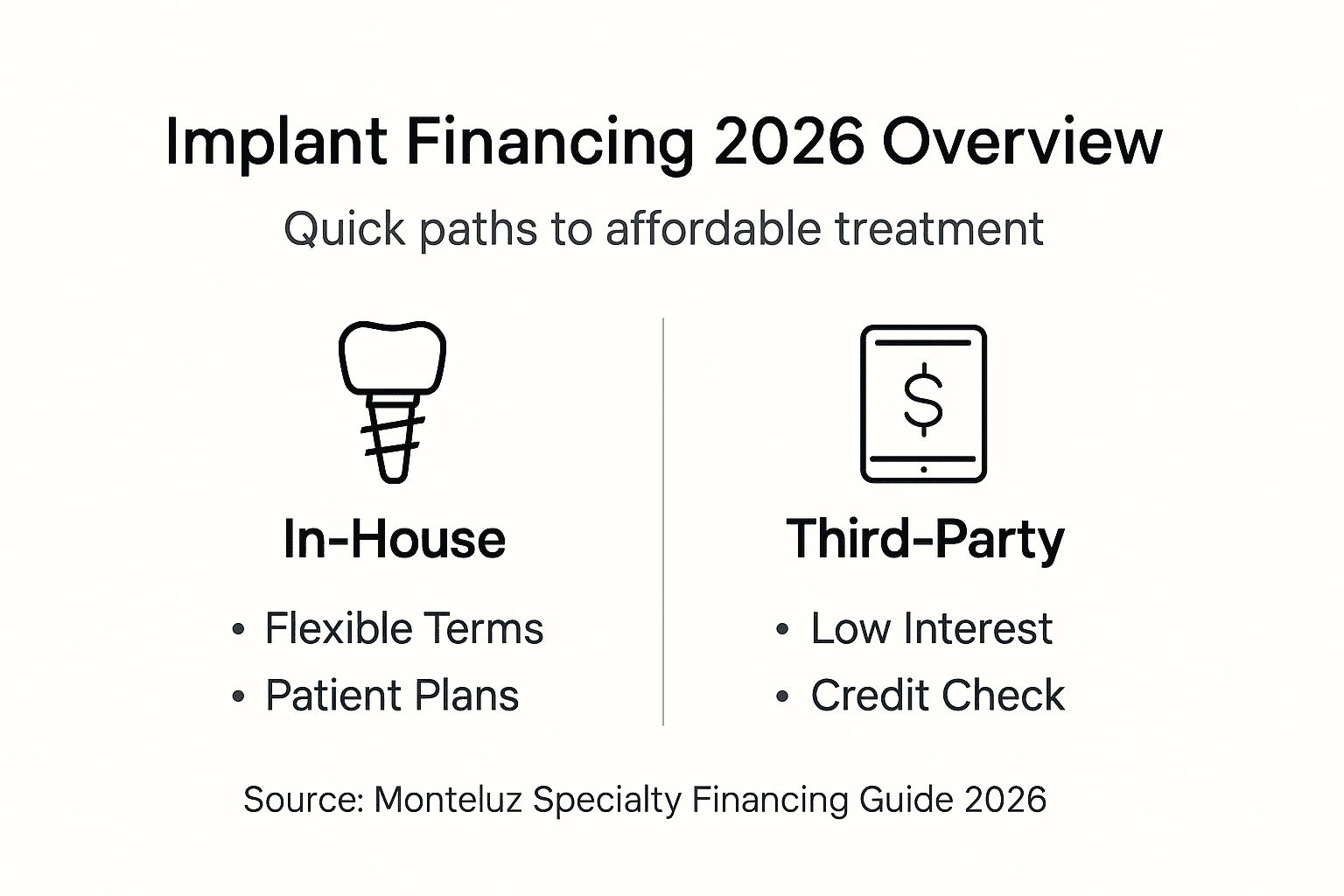
Here is how in-house financing compares to third-party options:
| Feature | In-House Financing | Third-Party Loans |
|---|---|---|
| Credit Check | No credit check required | Good credit typically required (670+) |
| Interest Rate | 0% or low fixed rates | 0% to 29.99% APR |
| Approval Speed | Immediate to same day | Instant to 14 days |
| Monthly Cost | Starting at $20/month | Varies by credit and loan amount |
| Flexibility | Highly personalized | Standardized terms |
In-house programs offer advantages that extend beyond simple cost savings. You build a relationship with your dental team, who can adjust payment plans if your financial situation changes. This flexibility proves invaluable for families facing unexpected expenses or income fluctuations common in the Inland Empire economy.
Step 3: External Third-Party Financing Options
When in-house financing does not meet your needs, third-party lenders provide alternative pathways to afford dental implants. Popular options like CareCredit and LendingClub offer loans with interest rates ranging from 0% promotional periods up to 29.99% APR depending on your credit profile. These lenders specialize in healthcare financing and work with dental practices across the Inland Empire.
Third-party financing requires good credit, typically a score around 670 or higher, for approval and favorable terms. Lenders evaluate your credit history, income, and debt-to-income ratio before deciding on your application. Approval timelines vary from instant online decisions to up to 14 days for more complex applications requiring additional documentation.
You must review loan terms carefully before accepting any third-party financing offer. Some lenders advertise attractive 0% promotional periods but charge retroactive interest if you fail to pay the balance in full before the promotion expires. Others include origination fees, late payment penalties, or prepayment restrictions that increase your total cost.
Explore third-party dental financing options with these considerations in mind:
- Compare multiple lenders to find the best rates and terms
- Calculate total repayment cost including all fees and interest
- Understand promotional period rules and expiration dates
- Check for prepayment penalties if you plan to pay early
- Verify the lender works with your dental provider
Third-party loans work best for patients with strong credit who can secure low interest rates or take advantage of promotional financing periods. If you have good credit and can commit to aggressive repayment during a 0% promotional window, these loans may cost less than other options. However, patients with fair or poor credit often face high APRs that make third-party financing more expensive than in-house programs.
Step 4: Leveraging Bilingual Support for Financing Clarity
Clear communication transforms the dental implant financing process from confusing to manageable, especially for Spanish-speaking families in the Inland Empire. Monteluz Dental provides bilingual English and Spanish staff who explain financing terms, answer questions, and help you understand every detail of your payment options. This support removes language barriers that often prevent patients from accessing quality dental care.
Research shows that bilingual support increases treatment acceptance by up to 30% because patients feel more confident when they fully understand their options. When staff members communicate in your preferred language, you grasp complex financial concepts more easily and make informed decisions about your dental health. Misunderstandings decrease dramatically, reducing the risk of missed payments or confusion about loan terms.
Bilingual support benefits extend beyond simple translation to cultural competency and trust building. Staff who share your language often understand your cultural perspective on healthcare and finances, creating a comfortable environment where you feel heard. This relationship encourages you to ask questions, voice concerns, and engage actively in planning your treatment and financing.
“Language-concordant care improves patient satisfaction, treatment adherence, and health outcomes by fostering trust and reducing communication barriers in diverse communities.”
Working with bilingual dental care support helps you avoid costly mistakes in your financing application. You understand exactly what documents you need, how interest rates work, and what your monthly payments will be. This clarity prevents surprises down the road and ensures you choose a financing plan that fits your budget and lifestyle.
Step 5: Applying for Financing: Step-by-Step Process
Now that you understand your financing options and have bilingual support available, completing your application correctly ensures quick approval without delays. Following a structured process keeps you organized and demonstrates to lenders that you are a responsible borrower. Whether you choose in-house financing or a third-party loan, these steps apply universally.
Start by collecting all required documents in one place before beginning your application. You need your insurance information, complete medical and dental records, proof of income like recent pay stubs or tax returns, and credit reports if applying for third-party financing. Having everything ready prevents application delays caused by missing paperwork.
Follow these steps to apply for dental implant financing successfully:
- Schedule a consultation with Monteluz Dental to discuss your treatment needs and financing options.
- Gather all required documents including insurance cards, pay stubs, and identification.
- Complete the financing application with help from bilingual staff who can answer questions.
- Submit your application to either the in-house program or your chosen third-party lender.
- Monitor your application status and respond promptly to any requests for additional information.
- Review and sign your financing agreement once approved, ensuring you understand all terms.
- Maintain open communication with your dental provider throughout the process.
Tracking your approval timeline helps you plan your treatment schedule effectively. In-house financing at Monteluz Dental often provides same-day decisions, while third-party lenders may take several days to two weeks. Knowing these timelines lets you coordinate your implant surgery dates and manage your calendar.
Maintain regular contact with your dental provider during the application process. If the lender requests additional documentation or clarification, your provider can help you respond quickly. This partnership ensures smooth approval and gets you into treatment faster. For detailed dental implant financing steps, work closely with your dental team who understands both clinical and financial aspects of your care.
Step 6: Troubleshooting: Common Financing Mistakes to Avoid
Even with careful planning, patients often make preventable mistakes that complicate dental implant financing and delay treatment. Learning from these common errors saves you time, money, and frustration. Many issues arise from incomplete information, rushed decisions, or misunderstanding loan terms.
One of the most frequent mistakes is failing to confirm insurance coverage before applying for financing, causing about 35% of claims to be denied. Patients assume their plan covers implants only to discover major gaps after treatment begins. Always verify coverage details directly with your insurer and document the conversation in writing.
Ignoring detailed loan terms leads to high-interest debt and financial hardship for many families. Some patients focus only on monthly payment amounts without calculating total interest costs or understanding promotional period rules. Reading the fine print and asking questions about every fee prevents surprise charges later.
Applying for financing without checking your credit first results in approximately 40% denial rates. Many patients do not know their credit score or have errors on their credit report that lower their score unfairly. Review your credit report before applying and dispute any inaccuracies to improve your approval chances.
Pro Tip: Request a free credit report from AnnualCreditReport.com at least 30 days before applying for dental financing to identify and fix any errors that could hurt your approval odds.
Avoid dental financing mistakes by watching for these red flags:
- Predatory lenders offering APRs above 30% with excessive fees
- Loan terms that seem too good to be true without careful reading
- Pressure to sign agreements quickly without time to review
- Lenders who do not verify your ability to repay
- Skipping bilingual assistance when you need language support
Skipping bilingual assistance causes significant misunderstanding, especially for Spanish-speaking patients who may miss critical details in English-only contracts. Always work with staff who speak your preferred language when reviewing financing agreements. This ensures you understand every clause, fee structure, and repayment obligation before committing.
Step 7: Expected Outcomes and Treatment Timelines
Understanding realistic costs, repayment schedules, and treatment success rates helps you plan effectively for your dental implant journey. Typical implant costs in the Inland Empire range between $3,000 and $6,000 per implant, depending on complexity and whether you need additional procedures like bone grafting. This investment restores your ability to eat, speak, and smile with confidence.
Repayment plans vary widely based on which financing option you choose. In-house membership programs may spread payments over 12 to 36 months with low monthly amounts, while third-party loans can extend from 6 up to 60 months depending on the loan amount and terms. Longer repayment periods reduce monthly costs but increase total interest paid.
Successful implants have approximately a 90% success rate with proper planning and financing; delays in financing can add 3-6 months to treatment time. When you secure financing quickly and maintain good oral health during treatment, your implant has the best chance of integrating successfully with your jawbone. Delays caused by financing issues may complicate your treatment or require additional procedures.
Review these expected outcomes for dental implant costs and timelines:
| Metric | Range | Notes |
|---|---|---|
| Cost per Implant | $3,000 to $6,000 | Includes implant, abutment, and crown |
| Repayment Period | 6 to 60 months | Depends on financing type and amount |
| Success Rate | 90% | With proper treatment and financing |
| Financing Delay Impact | 3 to 6 months | Additional time added to treatment |
| Monthly Payment (In-House) | $20 to $150 | Based on membership and payment plan |
| Monthly Payment (Third-Party) | $100 to $300 | Based on credit and loan terms |
Planning your budget around these timelines ensures you can afford your monthly payments without financial stress. Calculate your total cost including all interest and fees before committing to any financing plan. Compare the total amount you will pay under different financing options to identify the most cost-effective solution for your situation.
Discover Affordable Dental Implant Options at Monteluz Specialty
You have learned how to navigate dental implant financing in the Inland Empire, from understanding insurance gaps to securing affordable payment plans. Now it is time to take action and transform your smile with expert care designed for your budget. Monteluz Specialty offers comprehensive dental implants for missing teeth with flexible financing that makes treatment accessible.
Our dental membership program starting at just $20 per month removes financial barriers and provides significant discounts on implant treatments. You benefit from bilingual staff, no credit checks, and personalized payment plans tailored to your income and family needs. Schedule a consultation today to discuss your specific situation and discover how permanent dental implants in San Bernardino can restore your confidence and oral health.
Frequently Asked Questions
What documents do I need to apply for dental implant financing?
You need current insurance information, complete dental and medical records, proof of income such as pay stubs or tax returns, credit reports if applying for third-party loans, and government-issued identification. Having all documents ready before your consultation speeds approval and prevents delays.
Can Denti-Cal cover dental implant costs directly?
Denti-Cal generally does not cover dental implants directly, but it may cover related procedures like extractions, X-rays, and some surgical work. You need supplemental financing to cover the implant, abutment, and crown portions of treatment that Denti-Cal excludes.
How does Monteluz’s membership program help with implant affordability?
Monteluz’s membership program starts at $20 per month with no credit checks and provides significant discounts on dental implants and other treatments. This makes care accessible for uninsured and Denti-Cal patients who face coverage gaps and cannot qualify for traditional loans.
What credit score is required for third-party financing like CareCredit?
Most third-party lenders like CareCredit require a credit score around 670 or higher for approval and favorable interest rates. Lower credit scores may result in higher APRs up to 29.99% or loan denials, making in-house financing a better option for many patients.
How does bilingual dental staff improve financing process understanding?
Bilingual staff explain complex financing terms in your preferred language, reducing misunderstandings and building trust that increases treatment acceptance by approximately 30%. Clear communication helps you avoid mistakes, ask informed questions, and choose the best financing option for your needs.
Recommended
- Dental Implant Checklist 2026: 20% Higher CA Costs & Tips
- Dental Financing Options Explained: 30% More Treatment Access
- Cost Factors of Dental Implants: What Affects Pricing
- Top 6 Best Dental Implant Options in 2026 for Affordable Care