TL;DR:
- Proper dental diagnosis ensures effective, stable orthodontic treatment tailored to individual needs.
- Fixed appliances suit complex cases better than aligners which are ideal for mild to moderate issues.
- Consistent compliance and strategic financial planning are crucial for successful, affordable orthodontic outcomes.
Choosing orthodontic treatment for yourself or your child can feel like navigating a maze with no map. Between comparing braces and aligners, figuring out insurance, and worrying about long-term costs, many families in San Bernardino and the Inland Empire simply put off care they genuinely need. We built this checklist to cut through that confusion. Each step is designed to give you a clear, actionable path toward affordable, effective orthodontic care, so you can make confident decisions without second-guessing every turn.
Table of Contents
- Step 1: Pre-treatment essentials — your diagnosis and dental health
- Step 2: Choosing your appliance — fixed vs aligners (and why it matters)
- Step 3: Practical checklist for treatment success — compliance, appointments, and post-care
- Step 4: Expert tips for affordable care in San Bernardino and the Inland Empire
- Our perspective: Navigating orthodontic choices with real-world results
- Affordable orthodontic care is within reach — see your options
- Frequently asked questions
Key Takeaways
| Point | Details |
|---|---|
| Diagnosis comes first | Start your orthodontic journey with a thorough dental evaluation to avoid future pitfalls. |
| Appliance choice matters | Fixed appliances are ideal for complex cases; aligners work well for simple corrections and compliant patients. |
| Compliance is crucial | Following instructions and regular appointments guarantee successful, lasting results. |
| Affordable care is possible | Local clinics, insurance, and payment plans help families access high-quality orthodontic solutions. |
Step 1: Pre-treatment essentials — your diagnosis and dental health
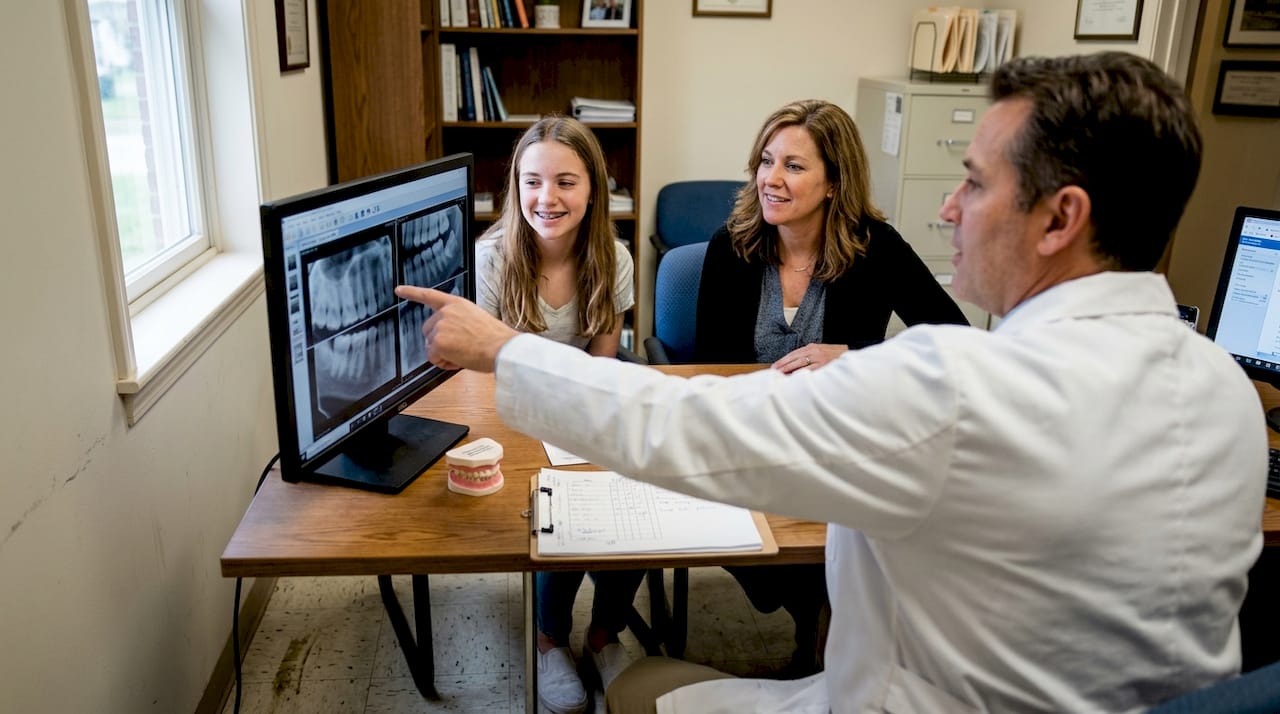
Before any orthodontic work begins, your mouth needs to be in good standing. Think of it like preparing a foundation before building a house. If there are cracks underneath, anything built on top will be unstable. A thorough dental exam is the non-negotiable first step, and it does more than just confirm you need braces.
A complete dental diagnosis identifies issues that could interfere with treatment, including untreated cavities, gum disease, or bone loss. Orthodontic appliances put pressure on your teeth and jaw, so any existing infection or instability must be resolved first. Skipping this step can turn a straightforward treatment into a complicated, costly experience.
Here is what a solid pre-treatment evaluation should cover:
- Full X-rays and bite assessment to map tooth position and bone structure
- Gum health screening to rule out periodontal (gum) disease
- Cavity check and treatment before any appliance is placed
- Growth assessment for children to determine the right timing for intervention
- Review of your dental hygiene habits using a dental hygiene checklist to set a strong baseline
Your diagnosis also directly shapes which appliance will work best for you. Not all bite issues are created equal. Mild crowding in a teenager responds very differently to treatment than a deep overbite in an adult. Research confirms that fixed appliances outperform aligners in complex cases requiring precise vertical control, while aligners perform well for mild to moderate alignment issues where patient compliance is high.
Understanding whether your case is mild, moderate, or complex is not just academic. It directly affects your treatment timeline, total cost, and final outcome. A diagnosis that rushes past these details does you a disservice.
Pro Tip: Ask your orthodontist to explain your case classification in plain language. If they cannot tell you whether your case is mild, moderate, or complex, that is a signal to ask more questions before committing to a treatment plan.
Step 2: Choosing your appliance — fixed vs aligners (and why it matters)
Once you have a solid diagnosis, the next decision is which appliance fits your needs, your lifestyle, and your budget. This is where many families get tripped up by marketing rather than facts.
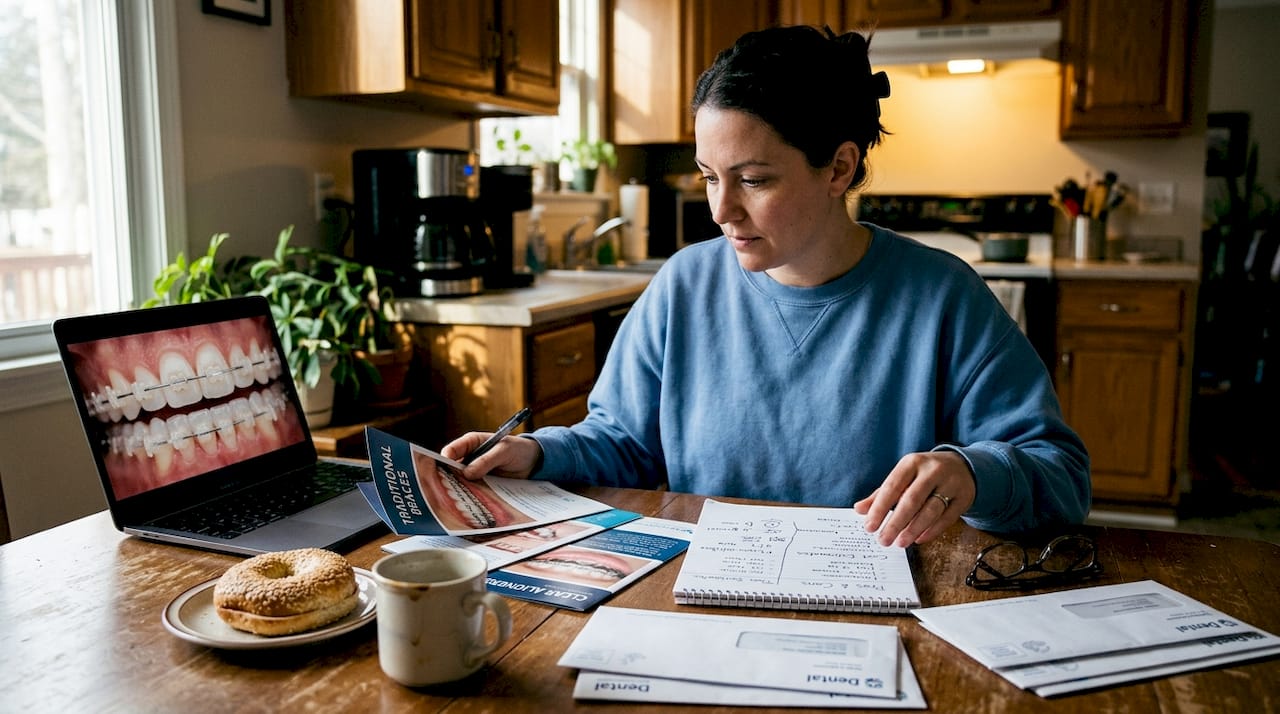
Clear aligners have become extremely popular, and for good reason. They are removable, nearly invisible, and easier to clean around. For mild to moderate crowding and spacing issues, they deliver excellent results. But they are not the right tool for every job.
Studies show that aligners are less accurate for deep bite correction, achieving less than 50% of the planned reduction in many cases. Fixed appliances, meaning traditional braces with brackets and wires, provide superior control in complex cases involving vertical bite problems, significant rotation, or skeletal discrepancies. The wire mechanics in fixed appliances give your orthodontist more precise control over tooth movement.
Here is a quick comparison to help your family decide:
| Dental issue | Fixed appliances | Clear aligners |
|---|---|---|
| Mild crowding | Effective | Highly effective |
| Moderate spacing | Effective | Effective |
| Deep overbite | Best choice | Less accurate |
| Significant rotation | Best choice | Limited |
| Skeletal issues | Best choice | Not recommended |
| Patient compliance concern | Better option | Requires discipline |
For families weighing braces and aligners, the honest answer is that neither option is universally superior. The right choice depends entirely on your specific bite, your age, your compliance habits, and your budget.
“The best appliance is not the most popular one. It is the one matched precisely to your diagnosis.”
Cost is also a real factor. Fixed appliances are often more affordable upfront and may be covered more broadly by insurance plans. Aligners can cost more and may require additional refinements. Review your orthodontic treatment guide to understand what each option involves before your consultation.
Key questions to ask before choosing:
- Is my case mild, moderate, or complex?
- Does my insurance cover both options?
- Am I (or is my child) reliable enough to wear aligners 22 hours a day?
- What is the estimated total cost including retainers and follow-up visits?
Step 3: Practical checklist for treatment success — compliance, appointments, and post-care
Selecting your appliance is only the beginning. What happens during and after treatment determines whether your results last a lifetime or fade within a few years. Consistent effort on your part is just as important as the skill of your orthodontist.
Here is a numbered checklist to keep your treatment on track:
- Follow wear instructions exactly. Aligners require 20 to 22 hours of daily wear. Fixed appliances require you to avoid hard and sticky foods. Cutting corners adds months to your timeline.
- Keep every scheduled appointment. Orthodontic visits are not optional check-ins. Each one adjusts your treatment progression. Missing appointments stalls progress and can cause unwanted tooth movement.
- Maintain excellent oral hygiene throughout. Brackets and wires trap food easily. Brush after every meal and floss daily to prevent cavities from forming under your appliance.
- Maximize your insurance benefits early. Review your dental insurance steps at the start of treatment to understand your annual maximum, deductibles, and what is covered.
- Plan for your retainer before treatment ends. Retention is not optional. Research shows no significant relapse difference between extraction and non-extraction treatment approaches when retainers are worn consistently. The retainer is what preserves your investment.
- Ask about financial assistance early. Explore affordable orthodontic options before you start, not after you receive the bill.
Adherence to your treatment plan is directly tied to outcomes. The role of compliance in orthodontics is well documented, and patients who follow instructions closely achieve results faster with fewer complications.
Pro Tip: Set a phone reminder for aligner changes and appointment dates. Treat orthodontic appointments with the same priority as school or work commitments. Consistency is the single biggest factor in your outcome.
Step 4: Expert tips for affordable care in San Bernardino and the Inland Empire
Cost is one of the most common reasons families delay orthodontic care, but it does not have to be a barrier. There are real, practical strategies to make treatment accessible right here in the Inland Empire.
First, know your insurance. Many PPO and HMO plans include orthodontic benefits, especially for children under 18. Denti-Cal (Medi-Cal) covers orthodontic treatment for eligible children when medical necessity is established. If you are uninsured, in-house membership programs, like the one at Monteluz Dental starting at $20 per month, can significantly reduce your out-of-pocket costs.
Statistic to know: The average cost of braces in Southern California ranges from $3,000 to $7,000 without insurance. With proper planning, families can reduce that number substantially through benefits, payment plans, and membership programs.
Here are practical tips to reduce your orthodontic costs:
- Use your FSA or HSA funds for orthodontic expenses, which are typically eligible
- Ask about family discounts when multiple family members need treatment at the same practice
- Start treatment before the calendar year ends to use current-year insurance benefits and carry remaining coverage into the next year
- Choose a practice that offers in-house financing with no interest or low monthly payments
- Consult a specialist early because delayed treatment can increase complexity and cost
Understanding orthodontist roles and how to access affordable care in your area is a powerful first step. Orthodontists complete two to three additional years of training beyond dental school, and that specialization matters when your case is anything beyond mild.
Local clinics in San Bernardino that accept multiple insurance types and offer bilingual support make a real difference for families who have historically faced access barriers. Accessibility is not just about price. It is about feeling understood and supported throughout the process.
Our perspective: Navigating orthodontic choices with real-world results
We have treated hundreds of patients across San Bernardino and the Inland Empire, and one pattern stands out clearly. Families who struggle most are not the ones with the most complex cases. They are the ones who were steered toward the wrong appliance based on convenience or marketing rather than clinical need.
Clear aligners are a genuinely excellent tool, and we use them regularly. But we have also seen patients arrive at our office frustrated after months of aligner treatment that barely moved their deep bite, because research is clear that aligners underperform on complex vertical cases. The appeal of a removable, invisible option is understandable, but the right answer must come from your X-rays and bite analysis, not from an advertisement.
Affordability and compliance also shape outcomes more than most people realize. A treatment plan that fits your budget and your lifestyle will always outperform a technically superior plan that you cannot stick to. We see this in our local orthodontic experiences every day. Real results come from matching the right plan to the right patient, not from chasing trends.
Affordable orthodontic care is within reach — see your options
If this checklist has helped clarify your next step, we want to make that step as easy as possible for your family. At Monteluz Dental Specialty Group, we offer local orthodontic care tailored to the real needs and budgets of Inland Empire families. Whether you are exploring braces for your child or considering aligners for yourself, our team provides honest, evidence-based guidance from the first consultation forward.
We accept Denti-Cal, PPO, and HMO plans, and our in-house membership program starts at just $20 per month for uninsured patients. Explore your affordable orthodontics Inland Empire options today and schedule a consultation with our bilingual team. Quality orthodontic care should not be out of reach for any family in our community.
Frequently asked questions
What is the most important step before starting orthodontic treatment?
A comprehensive dental diagnosis is crucial to identify health concerns and choose the right appliance for your situation. Without it, even the best appliance may fail to deliver the results you expect, especially in cases requiring precise vertical control.
Are clear aligners suitable for all types of bites?
Clear aligners work well for mild to moderate cases but are less accurate for deep bites, where fixed appliances consistently deliver better outcomes.
How can families reduce orthodontic costs in the Inland Empire?
Maximizing insurance benefits, using FSA or HSA funds, asking about family discounts, and consulting practices with in-house payment plans are the most effective ways to reduce your total orthodontic costs.
Is there a relapse risk after orthodontic treatment?
Research shows no significant relapse difference between extraction and non-extraction treatment approaches, meaning your long-term results depend far more on consistent retainer use than on which treatment method was chosen.
Recommended
- Affordable Orthodontic Care Guide for Local Families
- Affordable Dental Care Workflow for Families Near You
- Understanding the role of orthodontists: affordable care guide
- Orthodontics for oral health: affordable options in Inland Empire