Finding affordable dental implants in San Bernardino can feel overwhelming when every consultation introduces new words and technical phrases. Understanding the critical parts like the implant body, abutment, and crown helps you discuss your options confidently, whether you use Denti-Cal or a PPO plan. This guide explains the key terms, types, and procedures so you can make informed decisions for your family and enjoy lasting oral health.
Table of Contents
- Core Dental Implant Terms And Definitions
- Types Of Dental Implants And Key Components
- Implant Placement Process And Technical Phrases
- Common Misconceptions And Patient Concerns
- Costs, Insurance, And Risks For San Bernardino
Key Takeaways
| Point | Details |
|---|---|
| Components of Dental Implants | Dental implants consist of three main parts: the implant body, abutment, and crown, all essential for proper function and aesthetics. |
| Importance of Osseointegration | Osseointegration is crucial for implant success, involving the bonding of jawbone with the titanium implant, typically taking 3-6 months. |
| Types of Implants | Various types of implants exist, including endosteal, subperiosteal, zygomatic, and mini implants, each suited for different bone structures and patient needs. |
| Cost and Insurance Insights | The cost of dental implants varies significantly, with insurance often covering partial expenses; understanding coverage can improve affordability for patients. |
Core dental implant terms and definitions
When you’re researching dental implants, you’ll run into specialized terminology that might feel confusing. Understanding these terms helps you communicate clearly with your dentist and makes treatment decisions easier. Here’s what you need to know about the key components and concepts.
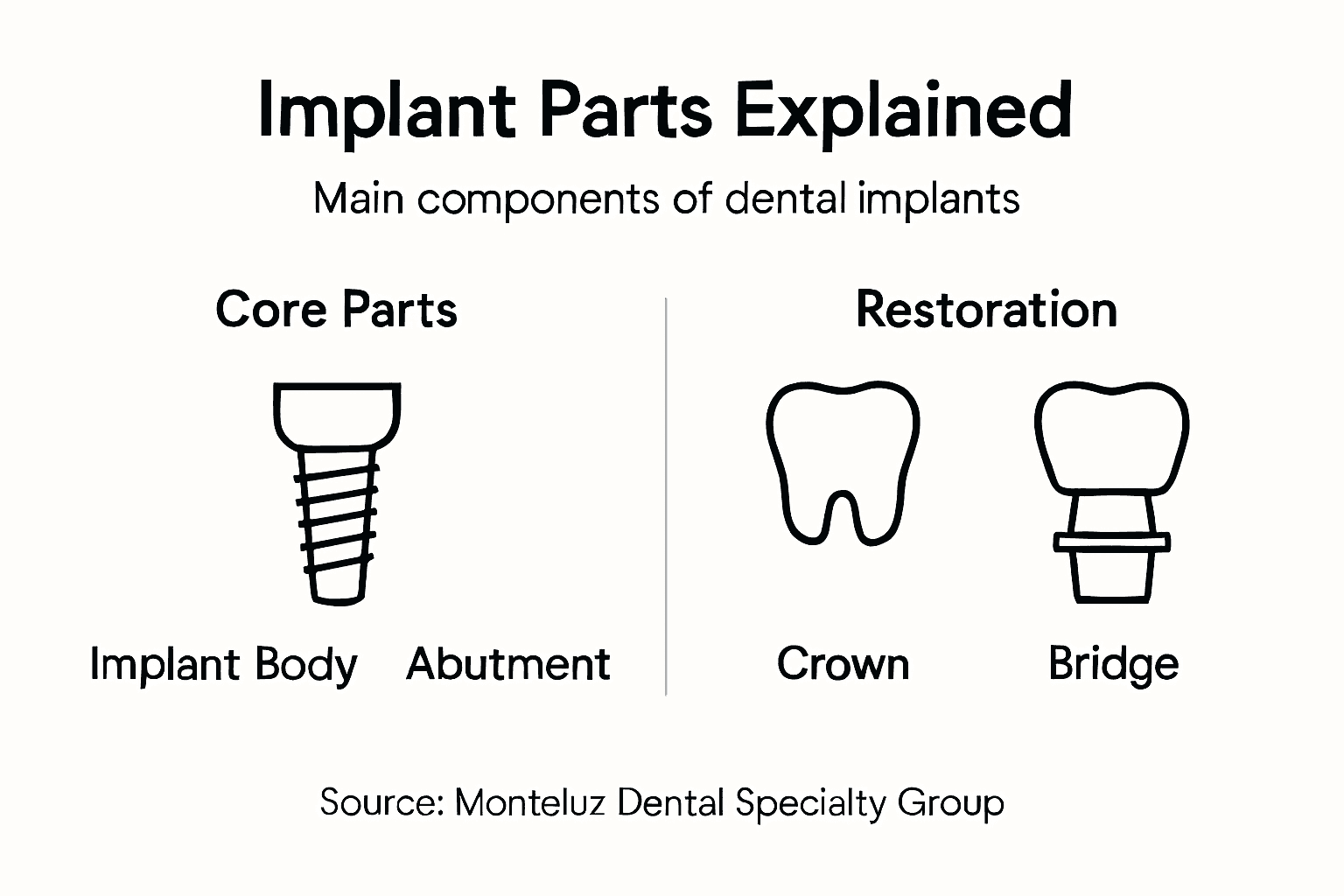
The three main parts of a dental implant:
Dental implants consist of three distinct components working together. Think of it like a building—each part has a specific job.
- Implant body (fixture): The titanium screw inserted directly into your jawbone. This acts as the artificial tooth root.
- Abutment: A connector piece that sits on top of the implant body, holding your artificial tooth in place.
- Crown (restoration): The visible artificial tooth made from ceramic or porcelain that matches your natural teeth.
Each piece is critical. Without proper fit between all three, the implant won’t function correctly or look natural.
Understanding osseointegration
Osseointegration is the biological process where your jawbone bonds with the titanium implant body. This typically takes 3-6 months and is absolutely crucial for implant success. During this time, bone cells grow around the implant, anchoring it firmly in place.
Without osseointegration, the implant would fail. This is why patience matters during the healing period.
Osseointegration is what makes dental implants so durable—your own bone essentially accepts and stabilizes the artificial root.
Additional key terms you’ll encounter
When discussing dental implants and missing teeth replacement, professionals use several other important terms:
- Fixture screw: Another name for the implant body itself.
- Graft material: Bone added to your jaw if you don’t have enough natural bone for implant placement.
- Soft tissue: Your gums and surrounding tissues that frame the implant.
- Prosthesis: The full restoration (crown, bridge, or denture) attached to your implant.
- Prosthodontic terms00137-3/fulltext): Standardized definitions used by dental specialists for consistency and clarity.
Your dentist might also mention zygomatic implants (longer implants placed in cheekbone) or mini implants (smaller diameter implants for certain situations). Each serves specific needs depending on your bone structure and tooth loss pattern.
Why terminology matters for your treatment
Precise language prevents misunderstandings with your dental team. When you understand what osseointegration means or what an abutment does, you can ask better questions about your specific situation. This knowledge builds confidence in your treatment plan.
At Monteluz Dental Specialty Group, we explain each term clearly because we believe informed patients make better decisions about their oral health.
Pro tip: Write down unfamiliar terms during your consultation and ask your dentist to explain them in simple language—there’s no such thing as a silly question when it’s your health.
Types of dental implants and key components
Dental implants aren’t one-size-fits-all. Different implant types serve different needs based on your bone structure, budget, and missing tooth situation. Knowing the options helps you understand what your dentist recommends and why.
Main implant types
There are several types of dental implants designed for affordable family care:
- Endosteal implants: The most common type. These screw-shaped implants sit directly in your jawbone. They work best when you have adequate bone height and density.
- Subperiosteal implants: A metal frame fitted under your gum but above the jawbone. Used when bone is too thin or short for traditional implants.
- Zygomatic implants: Longer implants anchored to your cheekbone instead of the jaw. Reserved for severe bone loss cases.
- Mini implants: Narrower diameter implants for tight spaces or limited bone. Often used for temporary tooth replacement or denture stabilization.
Endosteal implants remain the gold standard because they offer the strongest foundation for replacement teeth.
Here’s a quick comparison of common dental implant types:
| Implant Type | Placement Area | Ideal For | Typical Longevity |
|---|---|---|---|
| Endosteal | Into jawbone | Most adults | 25+ years |
| Subperiosteal | Above jawbone, below gum | Limited bone volume | 10-15 years |
| Zygomatic | Cheekbone (zygomatic bone) | Severe bone loss | 20+ years |
| Mini | Jawbone (narrow space) | Denture support | 10-15 years |
Your bone anatomy determines which implant type works best for you—this is why a thorough evaluation matters before any procedure.
Understanding implant components in detail
Each implant system includes specific parts working as an integrated unit. The implant body is what anchors everything—it’s the critical foundation. The abutment connects your implant to the visible restoration.
The crown or bridge is your replacement tooth. Some implant systems use a single piece, while others have multiple components screwed together. Your dentist chooses based on your situation.
Size, material, and surface options
Implants vary in diameter (standard, narrow, or wide), length, and surface texture. Titanium remains the material of choice because bone accepts it naturally through osseointegration.
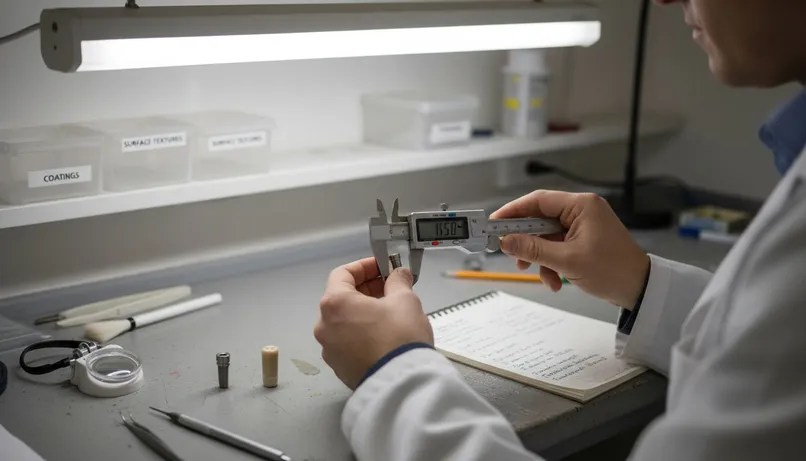
Surface coatings—like roughened or treated surfaces—can speed up bone integration. Different manufacturers use different approaches, but the goal is always the same: secure, long-lasting fusion with your bone.
Single implants versus implant-supported bridges
A single implant replaces one tooth with one implant and crown. A bridge uses two implants to support three or more artificial teeth between them. Multiple missing teeth sometimes need more implants—sometimes fewer—depending on their location and your bone quality.
Your dentist evaluates your specific tooth loss pattern to determine the most efficient, durable solution.
What happens with severe bone loss
If you’ve had missing teeth for years, bone resorption is common. Bone grafting can rebuild adequate volume before implant placement, or your dentist might recommend zygomatic implants that bypass the need for grafting.
At Monteluz Dental Specialty Group, we assess your bone thoroughly and explain all options before moving forward.
Pro tip: Ask your dentist which implant type they’re recommending and why it’s best for your bone structure and tooth loss pattern—understanding the reasoning builds confidence in your treatment plan.
Implant placement process and technical phrases
The implant placement process involves specific surgical steps and timing protocols that determine success. Understanding the terminology helps you follow your treatment timeline and know what to expect at each stage.
The surgical placement steps
Your dentist or oral surgeon follows a precise sequence during implant placement. First, the damaged or failing tooth is removed while protecting surrounding bone and soft tissue. The jawbone is then carefully prepared with specialized drills to create a precise socket for the implant.
The titanium implant post is then inserted into the prepared site. Stitches close the gum over the implant, and the healing phase begins. This entire process typically takes 1-2 hours depending on complexity.
Understanding implant placement timing
Implant placement timing is classified into three categories based on when surgery occurs after tooth extraction:
- Immediate placement: Implant inserted at the same time as tooth extraction (same appointment).
- Early placement: Surgery performed 4-16 weeks after tooth removal (allows initial healing).
- Late placement: Implant placed 6+ months after extraction (allows maximum bone stabilization).
Your situation determines which timing works best. Immediate placement saves time but requires excellent bone quality. Late placement is safer when bone needs time to heal after extraction.
The timing of your implant placement depends on your bone condition, extraction complexity, and healing speed—your dentist chooses the safest approach for your situation.
Loading protocols and prosthesis attachment
Loading means attaching your replacement tooth to the implant. This timing also has specific categories:
- Immediate loading: Crown attached within one week of implant placement.
- Early loading: Prosthesis placed between 1-2 months after surgery.
- Conventional loading: Crown installed after 2+ months of healing.
Conventional loading is most common because it allows complete osseointegration before bearing chewing forces. Your dentist may use a temporary prosthesis (temporary tooth) during healing while you wait for the final crown.
Key technical phrases during your treatment
You’ll hear several terms during your journey. Soft tissue grafting rebuilds gum if needed. Bone augmentation or grafting adds bone material when insufficient natural bone exists. Ridge preservation maintains bone dimensions after tooth extraction.
Flap design refers to how your surgeon accesses the jawbone. Torque is the rotational force used when inserting the implant—measured in Newton-centimeters (Ncm). Primary stability means the implant doesn’t move when first placed.
At Monteluz Dental Specialty Group, we explain each step clearly so you understand your personalized timeline.
Pro tip: Ask your dentist which placement and loading protocol they recommend and why—understanding your specific timeline builds confidence and helps you plan around recovery needs.
Common misconceptions and patient concerns
Misunderstandings about dental implants often prevent people from pursuing a treatment that could transform their quality of life. Let’s address the myths and real concerns so you can make an informed decision.
The cost myth
One persistent misconception is that implants are only for wealthy patients. The reality is more nuanced. While implants do cost more upfront than some alternatives, they last 25+ years with proper care. Spread across decades, the cost per year becomes reasonable.
At Monteluz Dental Specialty Group, we accept Denti-Cal and PPO insurance plans, offer flexible financing, and provide an affordable membership program starting at just $20 monthly for uninsured patients. Cost doesn’t have to be a barrier.
The age misconception
Another myth: implants are only for older adults. Actually, implants work for adults of almost any age—as long as your jawbone is fully developed (typically by late teens). Younger patients often benefit because they’ll have their implants for 40+ years.
The real factor isn’t age but rather bone health and overall wellness. Your dentist evaluates your individual situation, not your birthday.
Safety and surgical concerns
Many people worry about implant surgery complications. Dental implant safety is well-established with success rates around 95% when performed by trained specialists. Like any surgery, risks exist—infection or nerve irritation—but serious complications are uncommon.
Your surgeon’s experience and your careful post-care minimize risks significantly. Monteluz Dental Specialty Group uses advanced technology and follows strict surgical protocols.
The benefits of implants—restored chewing ability, natural appearance, and bone preservation—typically outweigh the minimal surgical risks when you’re evaluated properly.
Long-term maintenance concerns
Patients often wonder if implants require extensive ongoing care. The truth: implants need the same maintenance as natural teeth. Brush twice daily, floss, and attend regular checkups.
Unlike dentures, implants don’t slip or require daily removal. They also prevent bone loss that occurs with missing teeth, preserving your facial structure long-term.
Health condition concerns
Certain conditions like diabetes or smoking can affect implant success. This doesn’t mean you’re disqualified—it means your dentist needs to plan carefully and you may need additional monitoring.
Honest communication about your medical history helps your team create the safest approach.
The longevity question
Many patients wonder about dental implant longevity and whether they truly last. With proper care, implants typically last 25+ years and often much longer. The titanium post can last a lifetime, though the crown may need replacement eventually.
Compare this to bridges (10-15 years) or dentures (5-10 years) and implants look like a wise investment.
Pro tip: Write down your specific concerns and discuss them during your consultation—your dentist can address your exact worries with personalized information about your situation.
Costs, insurance, and risks for San Bernardino
Dental implants represent a significant investment, but understanding costs, insurance coverage, and potential risks helps you plan confidently. San Bernardino residents have access to affordable options through strategic planning and insurance knowledge.
Breaking down implant costs
Implant costs vary based on several factors. A single implant with crown typically ranges from $3,000-$6,000 in the San Bernardino area, but this depends on your specific situation. The number of teeth you’re replacing, whether you need bone grafts, and the type of restoration all affect pricing.
Understanding dental implant cost factors helps you budget accurately. Additional procedures like bone augmentation or sinus lifts add to the total. Your dentist provides a detailed breakdown during consultation.
Insurance coverage in San Bernardino
Most traditional dental insurance covers a portion of implant costs, but rarely the entire procedure. Coverage typically includes the crown restoration (usually up to $1,500 annually) but excludes the surgical implant placement itself.
Why dental insurance matters for San Bernardino families is critical when planning your treatment. Monteluz Dental Specialty Group accepts multiple insurance plans:
- PPO plans: Often cover 50% of restorative work (the crown)
- HMO plans: May have limited implant coverage; check your specific policy
- Denti-Cal (Medi-Cal): Covers some implant services for eligible patients
Always request a benefits estimate before treatment to understand your exact coverage.
Review the typical insurance coverage and costs for dental implants in San Bernardino:
| Coverage Type | Coverage Detail | Out-of-Pocket Estimate | Extra Notes |
|---|---|---|---|
| PPO Insurance | 50% restoration (crown) | $1,500-$3,000+ | Implant surgery usually excluded |
| HMO Insurance | Limited, varies by plan | $2,500-$5,500+ | Check policy for implant specifics |
| Denti-Cal | Partial, eligibility needed | $1,500-$6,000+ | Coverage mainly for select patients |
| Membership Program | Discounted rates | $20/month + procedure | Flexible payment, uninsured welcome |
Insurance rarely covers the entire implant, but combining coverage with flexible financing makes treatment affordable for San Bernardino families.
Affordable options for uninsured patients
No insurance? Monteluz Dental Specialty Group offers solutions. The in-house dental membership program starts at just $20 monthly and provides significant discounts on implant services. Flexible payment plans spread costs over 12-24 months, making implants accessible.
Some patients save by combining insurance coverage with these affordable programs, reducing out-of-pocket expenses substantially.
Understanding implant-related risks
While serious complications are rare, knowing potential risks helps you prepare. Infection at the surgical site can occur but is preventable with proper post-care. Implant failure (when bone doesn’t integrate) affects 2-5% of implants and may require retreatment.
Nerve damage, sinus problems, and excessive bleeding are uncommon when your surgeon is experienced. Monteluz Dental uses advanced technology and follows strict protocols to minimize these risks.
Long-term cost considerations
Implants require maintenance but avoid costs associated with dentures (adjustments, replacements) or bridges (underlying tooth decay). One implant costs more initially but lasts 25+ years, spreading the expense across decades.
Factoring longevity into your decision makes implants cost-effective compared to alternatives requiring replacement every 5-15 years.
Pro tip: Call Monteluz Dental for a free consultation where they’ll estimate your costs, verify your insurance benefits, and explain payment options specific to your San Bernardino situation.
Understand Dental Implant Terms With Confidence and Get Personalized Care at Monteluz Dental
Navigating dental implant terminology like “abutment,” “osseointegration,” or “implant body” can feel overwhelming when you are considering tooth replacement options. At Monteluz Dental Specialty Group, we recognize the importance of clear communication and education to ease your concerns about dental implants and empower you to make informed decisions about restoring your smile.
Discover trusted answers and expert care tailored to your unique needs in San Bernardino. Our team welcomes your questions and explains every term clearly while guiding you through affordable solutions that fit your situation. Visit our Dental Health to learn more and take the next step toward a confident, healthy smile. Schedule a consultation today at Monteluz Dental Specialty Group for personalized support and flexible financing options.
Frequently Asked Questions
What are the main parts of a dental implant?
Dental implants consist of three main components: the implant body (fixture), which is the titanium screw placed into the jawbone; the abutment, which connects the implant to the artificial tooth; and the crown (restoration), which is the visible artificial tooth that resembles natural teeth.
What is osseointegration and why is it important?
Osseointegration is the biological process where the jawbone bonds with the titanium implant body. This process typically takes 3-6 months and is essential for implant success as it stabilizes the implant in place.
What types of dental implants are available?
The main types of dental implants include endosteal implants (screw-shaped implants placed in the jawbone), subperiosteal implants (fitted under the gum but over the jawbone), zygomatic implants (anchored to the cheekbone), and mini implants (smaller diameter for tight spaces).
How long do dental implants typically last?
With proper care, dental implants can last 25 years or more, making them a durable investment compared to other tooth replacement options like bridges or dentures that may need replacement every 5-15 years.
Recommended
- Dental Implants Missing Teeth Tooth Replacement
- Dental Implant Procedure: Transforming Smiles in San Bernardino
- 7 Essential Dental Implant Maintenance Tips for Long-Term Health
- Role of Insurance in Dental Implants Access