
More than 45 million American adults have no dental insurance, yet so many families in San Bernardino struggle to pay for even basic care. For Spanish-speaking parents, knowing where to start can feel confusing when budgets are tight and kids’ health is on the line. Understanding how dental insurance works and what Denti-Cal covers gives your family the knowledge to make smart choices, protect your smiles, and avoid big surprise costs.
Table of Contents
- What Dental Insurance Covers and How It Works
- Major Types of Dental Insurance Plans in California
- Understanding Denti-Cal and Medicaid Dental Benefits
- Costs, Exclusions, and Important Limitations
- Common Dental Insurance Pitfalls to Avoid
Key Takeaways
| Point | Details |
|---|---|
| Understanding Coverage Levels | Dental insurance typically categorizes services into preventive, basic, and major treatments, affecting out-of-pocket costs. |
| Plan Options in California | Various dental insurance plans exist, including PPOs and DHMOs, each with different benefits and restrictions. |
| Denti-Cal Resources | Low-income residents can access Denti-Cal, which provides essential dental services to eligible individuals. |
| Awareness of Limitations | Patients should know common exclusions, annual maximums, and waiting periods to avoid unexpected expenses. |
What Dental Insurance Covers and How It Works
Dental insurance provides a financial safety net for individuals seeking comprehensive oral healthcare, helping make preventive and necessary treatments more accessible. Generally, these insurance plans cover a range of dental services designed to maintain and restore oral health, from routine checkups to more complex procedures.
Most dental insurance plans categorize services into three primary tiers: preventive, basic, and major treatments. Preventive care typically includes free or low-cost services like annual cleanings, routine x-rays, and oral examinations. Basic treatments often cover fillings, simple extractions, and periodontal treatments, usually requiring patients to pay a percentage of the total cost. Major treatments such as crowns, bridges, root canals, and dentures generally involve higher out-of-pocket expenses, with insurance covering approximately 50% of the total procedure cost.
The structure of dental insurance plans varies significantly. Some are provided through employer-sponsored programs, while others can be purchased independently through marketplace health plans. For families in California, particularly those with children, it’s crucial to understand that dental coverage details can differ widely between providers. Factors like premiums, copayments, annual maximums, and waiting periods will impact overall affordability and access to care.
Pro tip: Before selecting a dental insurance plan, carefully review the detailed coverage breakdown and calculate your potential annual out-of-pocket expenses to ensure the plan meets your specific healthcare needs.
Major Types of Dental Insurance Plans in California
California offers a diverse landscape of dental insurance plans designed to meet various healthcare needs and budgetary constraints. Dental insurance plans in the United States are typically categorized into six primary types, each with unique characteristics and benefits for patients seeking oral healthcare coverage.
The main types of dental insurance plans available in California include Preferred Provider Organizations (PPOs), which offer the most flexibility in choosing dentists and typically cover a percentage of treatment costs. Dental Health Maintenance Organizations (DHMOs) provide more affordable options with lower premiums, but restrict patients to a network of designated providers. Indemnity Plans offer complete freedom in selecting dental providers and reimburse a set percentage of treatment costs, while Direct Reimbursement Plans allow patients to receive payments directly after paying for services upfront.
For low-income residents, California’s Medi-Cal program offers critical dental coverage options. These publicly funded programs provide comprehensive dental benefits for children and select services for eligible adults, ensuring that financial constraints do not prevent access to essential oral healthcare. Additional options like Point of Service Plans and Discount or Referral Plans provide alternative ways for individuals to manage dental care expenses.
Pro tip: When selecting a dental insurance plan, carefully compare the network of providers, annual maximum coverage, and out-of-pocket expenses to find the most cost-effective option for your specific dental health needs.
Here is a comparison of the main dental insurance plan types in California:
| Plan Type | Flexibility in Dentist Choice | Average Premium Cost | Typical Coverage Limitations |
|---|---|---|---|
| PPO (Preferred) | High—large provider network | Moderate to high | Some out-of-network reimbursement |
| DHMO (Managed) | Limited—network only | Lower | Must use network dentists |
| Indemnity | Very high—any dentist | Highest | Set fee percentages, reimburse patient |
| Direct Reimbursement | High—any provider | Varies | Patient pays upfront, then reimbursed |
| POS (Point of Service) | Moderate | Medium | Mix of network flexibility |
| Discount/Referral | High—membership participation | Lowest | No insurance, discounts only |
Understanding Denti-Cal and Medicaid Dental Benefits
Denti-Cal represents California’s critical dental health program designed to provide essential oral healthcare services to low-income residents. Denti-Cal offers comprehensive dental coverage through Medi-Cal, ensuring that vulnerable populations can access necessary dental treatments without financial barriers.
The program provides a wide range of dental services tailored to different demographic groups. For children, Denti-Cal offers comprehensive coverage including preventive care, routine cleanings, x-rays, fillings, and emergency treatments. Adult dental benefits are more limited but still include critical services such as emergency extractions, pain management, and select restorative procedures. Eligibility is primarily based on income levels, with most services provided at low or no cost to qualifying individuals, including seniors, people with disabilities, and families with limited financial resources.
Medicaid dental benefits in California distinguish themselves by offering more robust coverage compared to many other states. The program prioritizes preventive care, understanding that early intervention can significantly reduce long-term healthcare expenses. Typical covered services include routine examinations, professional cleanings, fluoride treatments for children, basic fillings, and emergency dental procedures. Some specialized treatments may require additional approval, but the primary goal remains improving overall oral health for underserved communities.
Pro tip: Always verify your current eligibility and specific covered services with the local Medi-Cal office, as dental benefits can change periodically and vary based on individual circumstances.
Costs, Exclusions, and Important Limitations
Dental insurance plans in California involve complex cost structures and critical limitations that patients must carefully understand. While these plans offer essential coverage, they are not comprehensive solutions that address every possible dental scenario.

Most dental insurance plans impose specific financial restrictions to manage costs. Annual benefit maximums typically range from $1,000 to $1,500, meaning patients are responsible for expenses exceeding this limit. Certain procedures are often categorized into coverage tiers with different reimbursement rates: preventive services like cleanings and annual exams are usually covered at 80-100%, basic procedures like fillings at 50-70%, and major treatments such as crowns or root canals at 30-50%. Waiting periods are common for new enrollees, particularly for major treatments, which can range from 6 to 12 months before full coverage becomes available.
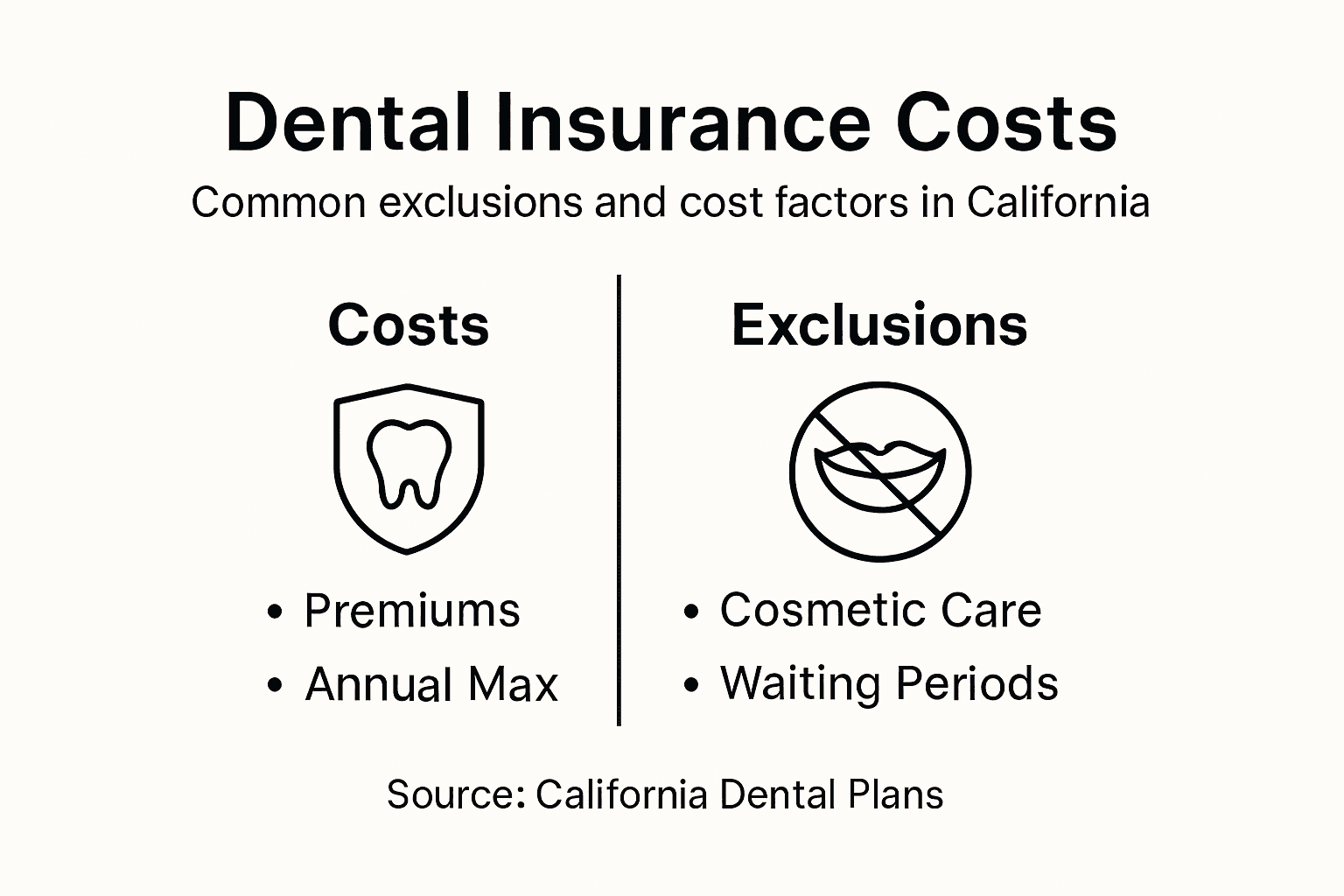
Critical exclusions exist that patients must understand before selecting a plan. Cosmetic dental procedures, including teeth whitening, veneers, and purely aesthetic treatments, are almost universally excluded from coverage. Pre-existing conditions may also face restrictions, with some plans requiring waiting periods or providing limited coverage for treatments related to existing dental issues. Orthodontic treatments like braces often require separate riders or additional premium payments, and are not automatically included in standard dental insurance packages.
Pro tip: Review your dental insurance plan’s detailed documentation carefully, paying special attention to the fine print about waiting periods, annual maximums, and specific procedure coverage percentages.
The following table summarizes common dental insurance cost structures and exclusions in California:
| Cost/Exclusion Type | Typical Range or Policy | Key Implication for Patients |
|---|---|---|
| Annual Coverage Maximum | $1,000–$1,500 per year | Pay full cost after maximum is reached |
| Preventive Service Rate | 80–100% covered | Low out-of-pocket for cleanings/exams |
| Major Treatment Rate | 30–50% covered | Higher out-of-pocket for crowns, dentures |
| Waiting Periods | 6–12 months for major procedures | Delay before full coverage starts |
| Cosmetic Procedure Rule | Not covered | Whitening, veneers excluded from benefits |
Common Dental Insurance Pitfalls to Avoid
Navigating dental insurance requires careful attention to avoid costly mistakes that can significantly impact your oral healthcare expenses. Preventing tooth loss starts with understanding how to maximize your insurance benefits while avoiding common traps that can leave you with unexpected financial burdens.
One of the most critical pitfalls is failing to understand network limitations. Many patients assume all dentists will accept their insurance, only to discover later that out-of-network providers can dramatically increase their out-of-pocket costs. Some insurance plans require pre-authorization for specific procedures, and skipping this crucial step can result in complete denial of coverage. Additionally, patients often overlook the importance of annual maximums, which can quickly be exhausted by a single complex procedure, leaving them responsible for subsequent treatments.
Another significant risk involves misunderstanding waiting periods and coverage restrictions. Dental insurance plans frequently impose waiting periods for major procedures, meaning you cannot immediately receive comprehensive treatment after enrolling. Cosmetic procedures are almost universally excluded, and patients who mistakenly believe all dental work will be covered can face substantial unexpected expenses. Some plans also have intricate rules about pre-existing conditions, potentially limiting coverage for ongoing or previously diagnosed dental issues.
Pro tip: Request a detailed breakdown of your dental insurance coverage before scheduling any significant procedures, and always confirm both network participation and specific treatment coverage with your insurance provider.
Make Dental Insurance Work for You with Monteluz Dental Specialty Group
Understanding dental insurance coverage and limitations can be overwhelming and frustrating. Many patients face challenges like confusing waiting periods, maximum benefit limits, and unexpected out-of-pocket costs when trying to receive quality dental care. If you are looking to navigate these complexities and find affordable, accessible dental solutions in California, Monteluz Dental Specialty Group is here to help.
Monteluz Dental Specialty Group serves the Inland Empire and surrounding communities with a clear commitment to removing financial and access barriers. We accept Denti-Cal (Medi-Cal), PPO, and HMO insurance plans while also offering an in-house dental membership program starting at just $20 per month for uninsured patients. Our bilingual team provides compassionate care in English and Spanish, ensuring everyone understands their benefits and treatment options. Visit our Dental Health to learn more about managing dental care effectively. Don’t wait to take control of your oral health — explore affordable dental care options today at Monteluz Dental Specialty Group.
Frequently Asked Questions
What types of dental services are typically covered by dental insurance?
Most dental insurance plans categorize services into three tiers: preventive care (like cleanings and exams), basic treatments (such as fillings and extractions), and major treatments (like crowns and dentures), each with varying coverage percentages.
How does Denti-Cal differ from standard dental insurance plans?
Denti-Cal is California’s dental health program for low-income residents, providing comprehensive coverage for children and select services for adults, focusing on preventive care to minimize healthcare expenses.
What are common limitations or exclusions in dental insurance plans?
Common exclusions include cosmetic procedures (whitening or veneers), pre-existing condition restrictions, and annual maximum coverage limits, often ranging from $1,000 to $1,500, after which patients pay out-of-pocket.
What should I consider before selecting a dental insurance plan?
Carefully review the plan’s coverage details, including network restrictions, waiting periods for major procedures, the annual maximum limit, and out-of-pocket expenses to ensure the plan meets your dental health needs.
Recommended
- The Benefits Of Regular Dental Checkups
- What Makes Innovative Dental Solutions Stand Out – Stop Oral Care