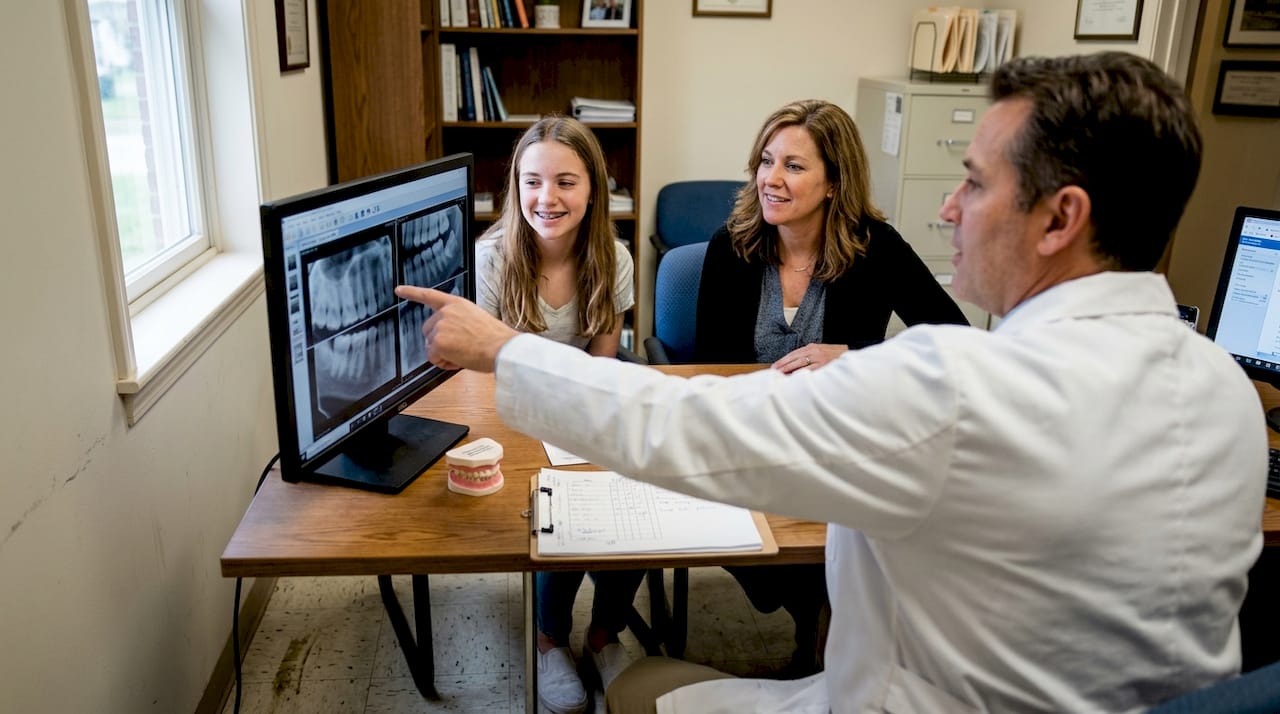

Many Spanish-speaking families believe Denti-Cal covers all dental procedures, but specialty services like dental implants require prior authorization and proof of medical necessity. Understanding your coverage helps you access quality dental care and avoid surprise denials. This guide clarifies Denti-Cal eligibility, specialty coverage for root canals and implants, and practical tips for maximizing your benefits with bilingual provider support.
Table of Contents
- What Is Denti-Cal? Foundational Context
- Eligibility And Enrollment For Denti-Cal
- Denti-Cal Coverage For Specialty Dental Services
- Coverage Limitations And Exceptions For Specialty Procedures
- Navigating Denti-Cal For Spanish-Speaking Families
- How To Find And Use Denti-Cal Specialty Providers
- Bridging Coverage Gaps: Membership Plans And Financing Options
- Common Misconceptions About Denti-Cal Coverage
- Explore Monteluz Dental’s Specialty Care And Support For Denti-Cal Patients
- Frequently Asked Questions
Key takeaways
| Point | Details |
|---|---|
| Denti-Cal eligibility | Income verification and Medi-Cal enrollment required with annual renewal |
| Specialty coverage | Root canals are fully covered; implants need prior authorization and medical necessity documentation |
| Language barriers | Bilingual providers improve access for Spanish-speaking families navigating Denti-Cal benefits |
| Coverage gaps | Supplemental membership plans help cover treatments outside Denti-Cal scope affordably |
| Common misconceptions | Not all procedures are covered; cosmetic treatments and elective implants are excluded |
What is Denti-Cal? Foundational context
Denti-Cal is California’s Medicaid dental program providing coverage for eligible low-income residents. The program operates through the California Department of Health Care Services, offering dental benefits to families enrolled in Medi-Cal health coverage.
Eligibility primarily depends on meeting specific income thresholds and maintaining active Medi-Cal enrollment. The program serves diverse populations including children, seniors, disabled individuals, and families who qualify based on household income and family size.
Denti-Cal focuses on providing access to medically necessary dental care rather than cosmetic treatments. The program aims to prevent dental disease, maintain oral health, and address urgent dental needs for vulnerable California residents.
Key populations served by Denti-Cal include:
- Children and adolescents under age 21 receiving comprehensive preventive and restorative care
- Adults over 21 with coverage for medically necessary procedures and emergency treatments
- Pregnant women requiring dental care during pregnancy and postpartum periods
- Seniors and disabled individuals needing specialized dental services
You can verify eligibility and find participating providers through the Denti-Cal official website, which offers resources in multiple languages. Income limits adjust annually based on federal poverty guidelines, so families should check current thresholds when applying.
Eligibility and enrollment for Denti-Cal
Enrollment in Denti-Cal requires meeting income thresholds and maintaining Medi-Cal eligibility, with annual renewal necessary. Your household income must fall within specified limits based on family size and federal poverty level percentages.
The enrollment process follows these essential steps:
- Apply for Medi-Cal health coverage through Covered California or your county social services office
- Complete income verification by submitting pay stubs, tax returns, or employer documentation
- Receive your Medi-Cal Benefits Identification Card listing your Denti-Cal dental coverage
- Wait for processing, which typically takes 45 days but may vary by county
- Complete annual renewal by updating income information and household changes to avoid benefit interruption
Denti-Cal enrollment links to but operates separately from Medi-Cal health coverage. Some families qualify for Medi-Cal health benefits but not dental coverage, while others receive both. Understanding this distinction prevents confusion when scheduling dental appointments.
Annual renewal requires careful attention to deadlines and documentation. Missing renewal dates can cause coverage gaps, leaving families without dental benefits for months. Keep copies of submitted documents and note renewal deadlines on your calendar.

Pro Tip: Request written confirmation of your Denti-Cal enrollment status before scheduling specialty dental procedures. This documentation helps verify coverage when booking appointments with endodontists or implant specialists.
Maintaining accurate contact information with your county social services office ensures you receive renewal notices and coverage updates. Report changes in income, household size, or address within 10 days to avoid eligibility issues. Find helpful Denti-Cal enrollment tips to streamline your application process.
Denti-Cal coverage for specialty dental services
Denti-Cal covers medically necessary specialty dental treatments like root canals, but implants have limited coverage and require prior authorization. Understanding which procedures qualify as medically necessary versus elective helps you plan dental care effectively.
Routine preventive services receive broad coverage under Denti-Cal. Cleanings, exams, X-rays, and fluoride treatments are fully covered for children and adults. Basic restorative procedures like fillings and simple extractions also fall within standard benefits.
Endodontic treatments including root canals are fully covered when dentists document medical necessity. These procedures prevent tooth loss and address infections, qualifying as essential dental care rather than elective treatments.
Dental implants present more complex coverage scenarios. Denti-Cal provides implant coverage in specific situations requiring prior authorization and comprehensive documentation:
- Severe bone loss preventing denture retention
- Congenital conditions affecting jaw structure
- Traumatic injuries causing tooth loss
- Medical conditions contraindicating other tooth replacement options
Cosmetic and elective procedures fall outside Denti-Cal’s coverage scope. Teeth whitening, veneers, and elective implants for aesthetic purposes receive no coverage, even with prior authorization requests.
| Service Category | Coverage Status | Authorization Required |
|---|---|---|
| Preventive cleanings | Fully covered | No |
| Root canal therapy | Fully covered | No |
| Dental implants | Limited coverage | Yes |
| Teeth whitening | Not covered | N/A |
| Orthodontics | Children only | Yes |
Pro Tip: Always request a treatment plan with coverage verification before starting specialty procedures. Your dentist can submit prior authorization requests and explain out-of-pocket costs for services Denti-Cal does not cover.
Explore detailed information about Denti-Cal implant coverage details to understand documentation requirements and approval processes for complex cases.
Coverage limitations and exceptions for specialty procedures
Denti-Cal excludes cosmetic treatments and requires prior authorization and documented medical necessity for implant coverage. These restrictions reflect the program’s focus on essential dental care rather than elective procedures.
Cosmetic treatments receive no coverage regardless of patient preference or dentist recommendations. Veneers, bonding, whitening, and gum contouring fall outside medically necessary care definitions. Even when these procedures improve appearance and confidence, Denti-Cal classifies them as elective.
Implant coverage requires extensive documentation proving medical necessity. Your dentist must demonstrate that alternative treatments like dentures or bridges cannot adequately address your dental needs. Simply preferring implants over dentures does not qualify for coverage.
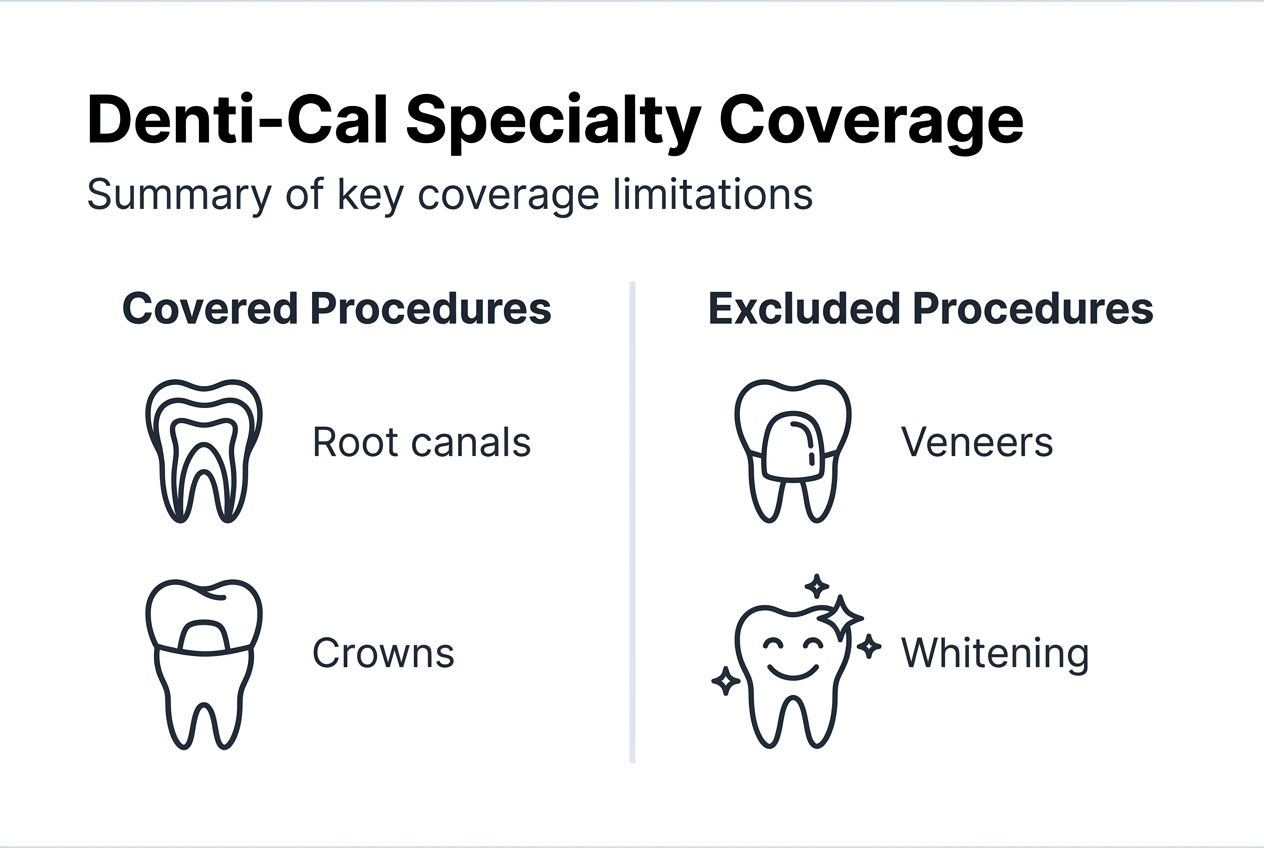
Common misconceptions create confusion about implant coverage. Many families assume Denti-Cal covers all tooth replacement procedures equally. In reality, the program prioritizes dentures and bridges over implants due to cost considerations.
Key coverage restrictions include:
- Cosmetic veneers and bonding materials
- Elective orthodontics for adults
- Teeth whitening and aesthetic gum procedures
- Implants without documented medical necessity
- Replacement of lost or stolen dental appliances
Comparing Denti-Cal to private dental insurance reveals significant differences in specialty coverage:
| Coverage Feature | Denti-Cal | Private PPO Insurance |
|---|---|---|
| Annual maximum | No limit | Typically $1,500-$2,500 |
| Implant coverage | Rare, requires authorization | Often 50% coinsurance |
| Cosmetic procedures | Not covered | Not covered |
| Specialist referrals | Required | Often optional |
| Prior authorization | Common | Less common |
Denti-Cal’s more restrictive scope reflects its mission to serve low-income families with essential dental care. The program balances comprehensive preventive coverage with limited specialty benefits to maximize resources.
Learn more about Denti-Cal implant coverage limits and strategies for managing treatments requiring prior authorization.
Navigating Denti-Cal for Spanish-speaking families
About 30% of Southern California Denti-Cal recipients report communication difficulties; bilingual providers like Monteluz Dental help bridge gaps. Language barriers create significant obstacles to accessing quality dental care and understanding coverage details.
Communication challenges lead to missed appointments, confusion about treatment plans, and misunderstandings about coverage limitations. Spanish-speaking families may struggle to understand prior authorization requirements or documentation needed for specialty procedures.
Bilingual dental providers offer crucial support by explaining treatment options, coverage details, and authorization processes in Spanish. These practices employ Spanish-speaking coordinators who help patients navigate Denti-Cal requirements and schedule appointments effectively.
Practical tips for maximizing your Denti-Cal benefits include:
- Request Spanish-speaking staff when scheduling appointments or calling dental offices
- Prepare questions in writing before appointments to ensure clear communication
- Bring a trusted family member or friend who speaks English if needed
- Keep copies of all Denti-Cal documentation including your Benefits Identification Card
- Ask for written treatment plans and cost estimates in Spanish
Culturally sensitive care improves patient satisfaction and health outcomes. Dental practices serving Spanish-speaking communities understand cultural preferences regarding family involvement in healthcare decisions and communication styles.
Pro Tip: Build a relationship with one dental practice accepting Denti-Cal rather than switching providers frequently. Consistent care improves communication and helps staff understand your family’s dental history and preferences.
Access to bilingual dental care for Denti-Cal patients removes barriers preventing Spanish-speaking families from receiving quality specialty dental services.
How to find and use Denti-Cal specialty providers
Specialty dental care requires locating approved Denti-Cal providers, securing referrals, and prior authorizations to ensure coverage. The provider network includes endodontists specializing in root canals and oral surgeons performing implant procedures.
Finding and accessing specialty providers follows specific steps:
- Search the Denti-Cal provider directory online or call the member services number on your Benefits Identification Card
- Contact potential providers to verify current Denti-Cal participation and availability for new patients
- Obtain a referral from your general dentist documenting the need for specialty care
- Work with your dentist to submit prior authorization requests when required for procedures like implants
- Schedule appointments early, as specialty providers often have longer wait times than general dentists
- Confirm coverage and authorization approval before your appointment to avoid surprise bills
Patients need referrals for specialty services including endodontics, oral surgery, and orthodontics. Your general dentist evaluates your condition and determines whether specialty care is medically necessary. This referral process ensures appropriate treatment pathways and proper documentation for Denti-Cal.
Wait times vary significantly based on provider availability and geographic location. Urban areas typically have more specialty providers accepting Denti-Cal, while rural communities may require traveling to larger cities for care. Scheduling appointments several weeks in advance improves access to preferred providers.
Verifying provider participation prevents coverage surprises. Some dental practices accept Denti-Cal for certain procedures but not others. Confirming coverage specifics before treatment protects you from unexpected out-of-pocket costs.
Documentation expedites care by ensuring prior authorizations process smoothly. Gather dental records, X-rays, and treatment history to support specialty referrals. Complete paperwork thoroughly and follow up on authorization requests to avoid delays.
Find resources for finding Denti-Cal specialty providers in Southern California communities.
Bridging coverage gaps: membership plans and financing options
Dental membership plans help cover treatments not included in Denti-Cal, offering affordable monthly fees and care benefits. These programs provide an affordable solution when you need specialty procedures outside your Denti-Cal coverage.
Membership plans operate differently from traditional insurance by offering discounted rates on dental services. You pay a monthly or annual fee and receive percentage discounts on treatments including implants, cosmetic procedures, and advanced restorative care.
These plans fill coverage gaps effectively by making specialty treatments affordable without insurance. When Denti-Cal denies implant coverage for cosmetic reasons, membership plans reduce your out-of-pocket costs through negotiated provider discounts.
Key benefits of supplemental membership plans include:
- Predictable monthly payments starting as low as $20 per person
- Discounts ranging from 20% to 50% on specialty procedures
- No annual maximums limiting treatment access
- Coverage for family members at reduced rates
- No waiting periods for most treatments
Plans improve budgeting by replacing unpredictable dental costs with fixed monthly fees and known discount rates. Families can plan for specialty treatments by understanding exact costs before starting procedures.
Comparing membership options helps identify the best supplement to Denti-Cal benefits. Consider factors including monthly costs, covered procedures, provider networks, and discount percentages. Some plans specialize in specialty care like implants and endodontics, while others offer broader general dentistry discounts.
Many dental practices serving Denti-Cal patients offer in-house membership programs designed specifically to complement public coverage. These programs understand common Denti-Cal coverage gaps and structure benefits accordingly.
Explore supplemental dental membership plans that work alongside Denti-Cal to provide comprehensive family dental care.
Common misconceptions about Denti-Cal coverage
Misconceptions include that Denti-Cal covers all procedures, that dental implants are routinely covered, and that eligibility is automatic with Medi-Cal health coverage. Debunking these myths empowers families to make informed decisions about dental care.
Denti-Cal primarily covers medically necessary treatments rather than all dental procedures. This distinction confuses families expecting comprehensive coverage similar to private insurance plans. Understanding medical necessity definitions helps set realistic expectations.
Implants require medical necessity approval and extensive documentation, not routine coverage. Many families believe all tooth replacement procedures receive equal coverage, leading to disappointment when implant requests receive denials. Denti-Cal prioritizes more affordable alternatives like dentures unless medical conditions require implants.
Eligibility involves separate verification from Medi-Cal health benefits. Some families qualify for health coverage but not dental benefits due to income calculations or program-specific rules. Always verify dental coverage specifically before scheduling treatments.
Common myths preventing effective benefit utilization:
- Myth: All dentists accept Denti-Cal coverage
- Reality: Only providers in the Denti-Cal network accept program coverage
- Myth: Specialty care requires no prior authorization
- Reality: Most specialty procedures need referrals and authorization documentation
- Myth: Cosmetic procedures receive coverage if medically recommended
- Reality: Denti-Cal excludes cosmetic treatments regardless of dentist recommendations
- Myth: Coverage continues automatically without annual renewal
- Reality: Missing renewal deadlines causes benefit interruption requiring reapplication
Understanding these realities helps families avoid coverage denial surprises and plan effectively for dental care needs.
Educating yourself about actual coverage parameters improves dental health outcomes. When you understand what Denti-Cal covers and what requires alternative payment arrangements, you can budget appropriately and seek care proactively rather than delaying treatment.
Learn more about Denti-Cal coverage myths and facts to maximize your family’s dental benefits.
Explore Monteluz Dental’s specialty care and support for Denti-Cal patients
Monteluz Dental Specialty Group serves Southern California families with bilingual English and Spanish support specifically designed for Denti-Cal patients. Our San Bernardino practice specializes in dental implant services and endodontic care services with experience navigating Denti-Cal requirements and prior authorization processes.
Our team understands the unique challenges Spanish-speaking families face when accessing specialty dental care. We provide clear communication about coverage, help with documentation, and guide you through prior authorization requirements. When Denti-Cal coverage has limitations, our affordable dental membership plans starting at $20 monthly offer discounted rates on treatments outside program scope. Schedule a consultation to discuss your family’s dental needs and explore all available coverage and payment options.
Frequently asked questions
What types of dental services does Denti-Cal cover?
Denti-Cal covers preventive services including cleanings, exams, and X-rays for all eligible patients. Children receive comprehensive coverage including fillings, extractions, and limited orthodontics. Adults receive preventive care plus medically necessary treatments like root canals, extractions, and dentures. Cosmetic procedures and most dental implants are not covered.
How do I qualify for and maintain Denti-Cal dental benefits?
You qualify by meeting income thresholds based on household size and enrolling in Medi-Cal. Maintain benefits by completing annual renewal with updated income verification and reporting household changes within 10 days. Missing renewal deadlines causes coverage gaps requiring reapplication.
Are dental implants always covered by Denti-Cal?
No, dental implants require prior authorization and documented medical necessity. Coverage is rare and limited to cases where dentures cannot function due to severe bone loss, congenital conditions, or traumatic injuries. Elective implants for cosmetic purposes receive no coverage.
How can Spanish-speaking families get support with Denti-Cal dental care?
Seek bilingual dental providers offering Spanish-speaking staff and coordinators. Request Spanish language materials explaining coverage and treatment plans. Prepare questions in writing before appointments and keep copies of all Denti-Cal documentation including your Benefits Identification Card.
What should I do if Denti-Cal does not cover all my required dental treatments?
Explore supplemental dental membership plans offering discounted rates on treatments outside Denti-Cal scope. Many practices serving Denti-Cal patients offer affordable monthly membership programs with no annual maximums. Discuss payment plans and financing options with your dental provider to make necessary treatments affordable.
Recommended
- Dental implant guide 2026: 90% success for Denti-Cal patients
- ¿Por Qué Usar Denti-Cal En San Bernardino?
- Accessible Dental Care 2026: Options For Inland Empire Families
- Dental Insurance Explained: Making Care Affordable in California