
Types of Root Canal Procedures: Which One Do You Need?
Not all root canal treatments are the same. Depending on your condition, you may need root canal therapy, retreatment, an apicoectomy, or a pulpotomy. Our San Bernardino endodontists explain each option and help you choose the right one.
- Board-certified endodontists
- Same-week appointments available
- Denti-Cal & most insurance accepted
What is a root canal procedure?
A root canal procedure treats infection or damage inside a tooth's pulp — the soft tissue containing nerves and blood vessels. When the pulp becomes inflamed or infected due to deep decay, cracks, or trauma, a root canal removes the damaged tissue, disinfects the canals, and seals the tooth to prevent further problems. The goal is always to save your natural tooth whenever possible.
Who it's for
- Severe toothache or sensitivity to hot and cold
- Darkening or discoloration of a tooth
- Swelling or tenderness in nearby gums
- Pain when chewing or biting down
- A previously treated tooth with recurring symptoms
Benefits
- Relieves pain and eliminates infection
- Saves your natural tooth from extraction
- Prevents further infection from spreading
- Restores healthy chewing function
- Protects neighboring teeth and jawbone
The Monteluz process
1. Exam & 3D imaging
We examine the affected tooth and take digital X-rays or 3D scans to assess the extent of damage and determine which root canal procedure is right for you.
2. Personalized treatment plan
Based on your diagnosis, we recommend root canal therapy, retreatment, apicoectomy, or pulpotomy — and explain why each option fits your case.
3. Comfortable, precise treatment
Using modern endodontic tools and anesthesia options, we perform your procedure with minimal discomfort. Most patients return to normal activities the same day.
4. Restoration & follow-up
After the root canal, we place a permanent crown or filling to protect the tooth. Follow-up visits ensure complete healing and long-term success.
How much does a root canal cost?
Root canal costs vary depending on which tooth is treated and which procedure is needed. Front teeth typically cost less than molars. We provide a clear, written estimate at your consultation and verify your insurance benefits before treatment begins.
Flexible financing and monthly payment plans available. We accept most major insurance and Medi-Cal / Denti-Cal.
Before & after
Real results shared with patient consent.
Frequently asked questions
What are the 4 types of root canal procedures?
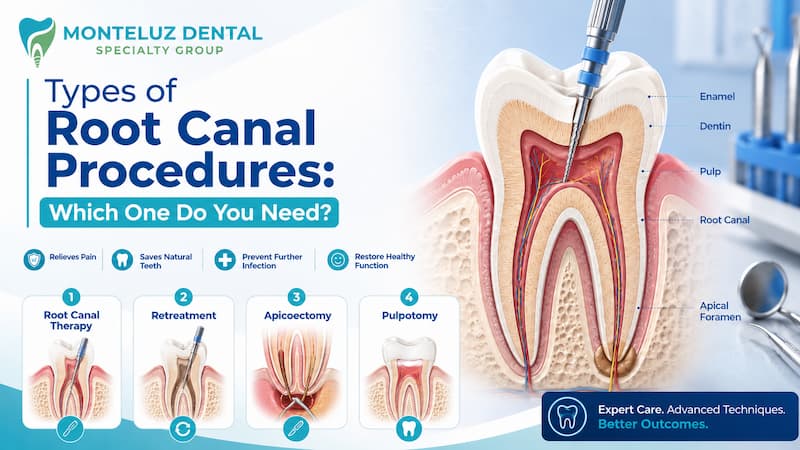
The four main types are: (1) Root Canal Therapy — the standard procedure to remove infected pulp and seal the tooth; (2) Retreatment — performed when a previously treated tooth develops new infection; (3) Apicoectomy — a surgical procedure removing the root tip when standard treatment isn't enough; and (4) Pulpotomy — removal of infected pulp in the crown portion, often used for children or as an emergency measure.
How do I know which root canal procedure I need?
The right procedure depends on your specific condition. A standard root canal therapy is usually the first choice. If infection persists after treatment, retreatment or an apicoectomy may be needed. A pulpotomy is typically for pediatric cases or when the infection is limited to the crown. Our endodontist will diagnose and recommend the best option after an exam and imaging.
Is a root canal painful?
Modern root canal treatment is not painful — in fact, it relieves pain. We use local anesthesia and offer sedation options to keep you comfortable. Most patients compare the sensation to getting a routine filling and are back to normal activities the same day.
How long does a root canal take?
A standard root canal therapy typically takes 60–90 minutes. Retreatment or apicoectomy may take slightly longer. We complete most cases in a single visit, though complex cases may require two appointments.
Can a root canal fail and need retreatment?
Yes, in a small percentage of cases, a tooth may not heal properly after the initial root canal due to complex canal anatomy, delayed crown placement, or new decay. Retreatment involves reopening the tooth, cleaning the canals again, and resealing them to give the tooth a second chance.
What is an apicoectomy and when is it needed?
An apicoectomy is a minor surgical procedure where the tip of the tooth root and surrounding infected tissue are removed. It is needed when a standard root canal or retreatment cannot fully resolve the infection — usually the last option to save the tooth before extraction.
What is a pulpotomy vs. a root canal?
A pulpotomy removes only the infected pulp tissue in the crown portion of the tooth, leaving the root canals intact. It is often used for baby teeth or as a temporary emergency procedure. A full root canal removes all pulp tissue from both the crown and roots.
Does insurance or Denti-Cal cover root canals?
Yes. Most dental insurance plans cover root canal treatment, and Denti-Cal covers medically necessary endodontic procedures for eligible Medi-Cal members. We verify your benefits and handle all prior authorization paperwork on your behalf.


Ready to be seen by a specialist?
Same-week appointments available. Most insurances accepted.