A specialty focused on saving teeth
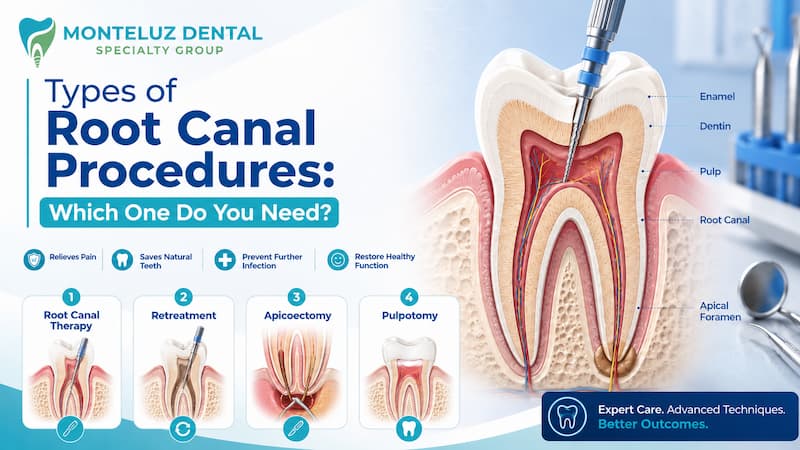
Endodontics is the branch of dentistry that treats the soft tissue inside your tooth — the pulp — when it becomes inflamed or infected. The pulp contains the nerves, blood vessels, and connective tissue that nourished the tooth as it developed. When decay reaches the pulp, when a tooth cracks, or when trauma damages the inner chamber, infection can spread quickly into the bone around the root. An endodontist's job is to stop that infection, relieve pain, and preserve the natural tooth so you never need an extraction or implant.
When you need an endodontist
- Persistent tooth pain that doesn't go away
- Sensitivity to hot or cold that lingers more than a few seconds
- Swelling near a tooth or along the gumline
- A darkened or discolored tooth
- Pain when chewing or applying pressure
- A pimple-like bump on the gum (a sign of an abscess)
What happens during root canal treatment
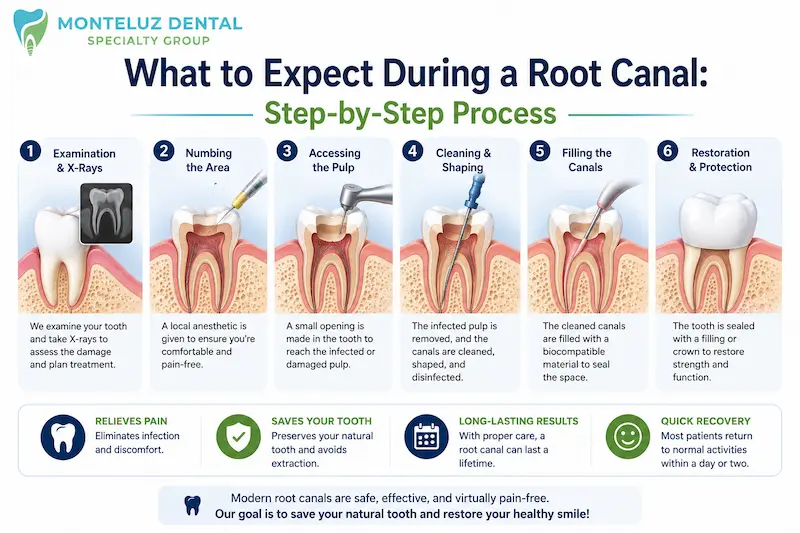
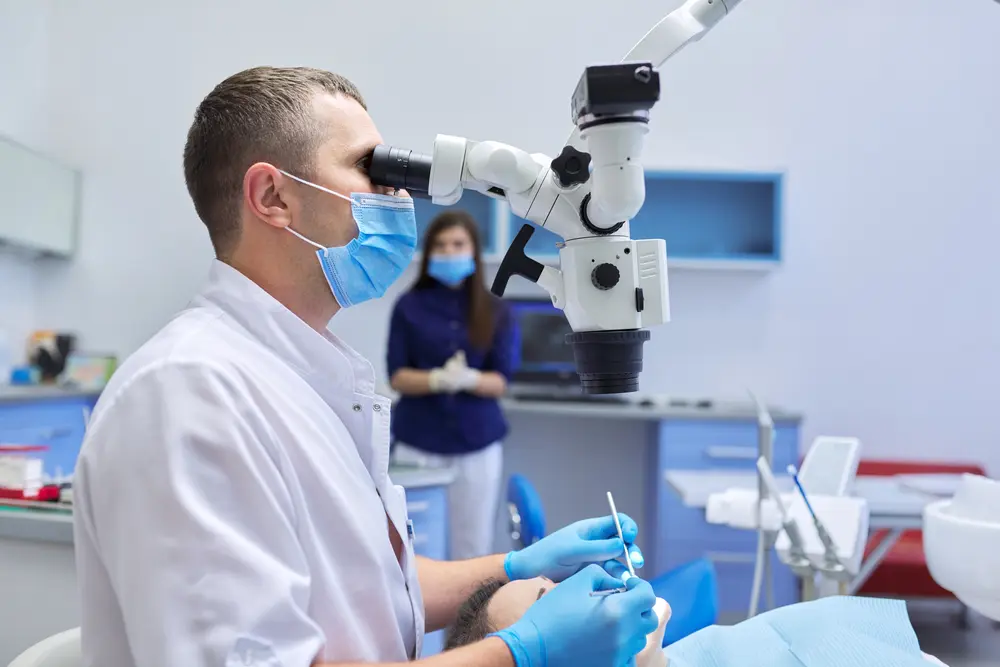
Modern root canal therapy is comfortable, predictable, and usually completed in one or two visits. Your endodontist begins by numbing the area with local anesthetic — most patients feel nothing during the procedure itself. Using a surgical microscope and ultra-fine rotary instruments, the doctor creates a small access opening in the top of the tooth, gently cleans the canal system, disinfects every surface with medicated irrigants, and then seals the canals with a biocompatible material called gutta-percha.
Most patients describe the experience as no more uncomfortable than a routine filling, and many fall asleep during treatment.
Recovery and follow-up care
A mild ache for 24–48 hours is normal as the surrounding tissue settles. Over-the-counter ibuprofen handles it well for most people. You'll want to avoid chewing hard foods on the treated tooth until your general dentist places a permanent crown — usually within two to four weeks. The crown protects the now-hollow tooth from fracturing under bite pressure and seals it against future infection.
With proper restoration, a tooth treated endodontically can last a lifetime. At Monteluz Dental Specialty Group, we've helped thousands of San Bernardino patients keep their natural teeth instead of losing them — because nothing replaces what nature gave you.
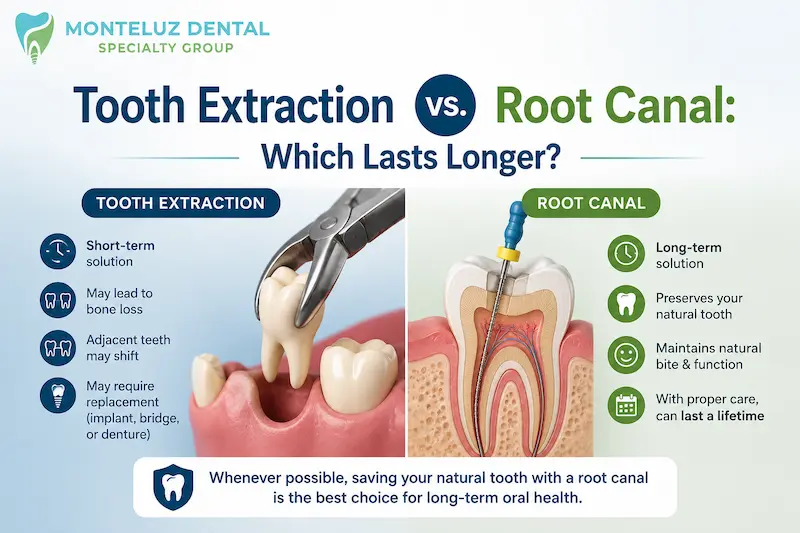
Root canal vs. extraction: why saving the tooth wins
Patients often ask whether it's simpler to "just pull it." In almost every case, keeping your natural tooth is the better long-term choice. Extracting a tooth triggers bone loss in the jaw within months, shifts neighboring teeth out of alignment, and changes the way you bite and chew. Replacing the missing tooth with an implant or bridge then costs significantly more than the original root canal would have. A well-restored endodontically treated tooth, by contrast, behaves and feels like every other tooth in your mouth.
Common myths about root canals
- "Root canals are painful." The pain people remember is the infection that brought them in — the treatment itself relieves it. Modern anesthetics and microscope-guided technique make the procedure quiet and comfortable.
- "It's better to just extract the tooth." Natural teeth preserve bone, support neighboring teeth, and last decades when properly restored.
- "Antibiotics alone can fix the infection." Antibiotics may calm symptoms briefly, but the infected pulp must be physically cleaned out for the tooth to heal.
Why patients across the Inland Empire choose Monteluz
Our endodontists use surgical microscopes, 3D cone-beam imaging, and the latest rotary and irrigation systems for predictable, single-visit outcomes whenever possible. We coordinate directly with your general dentist so the crown placement after treatment is seamless. If you're in pain or have been told you need a root canal, request a consultation — we'll give you a clear, honest plan and a realistic estimate before any work begins.