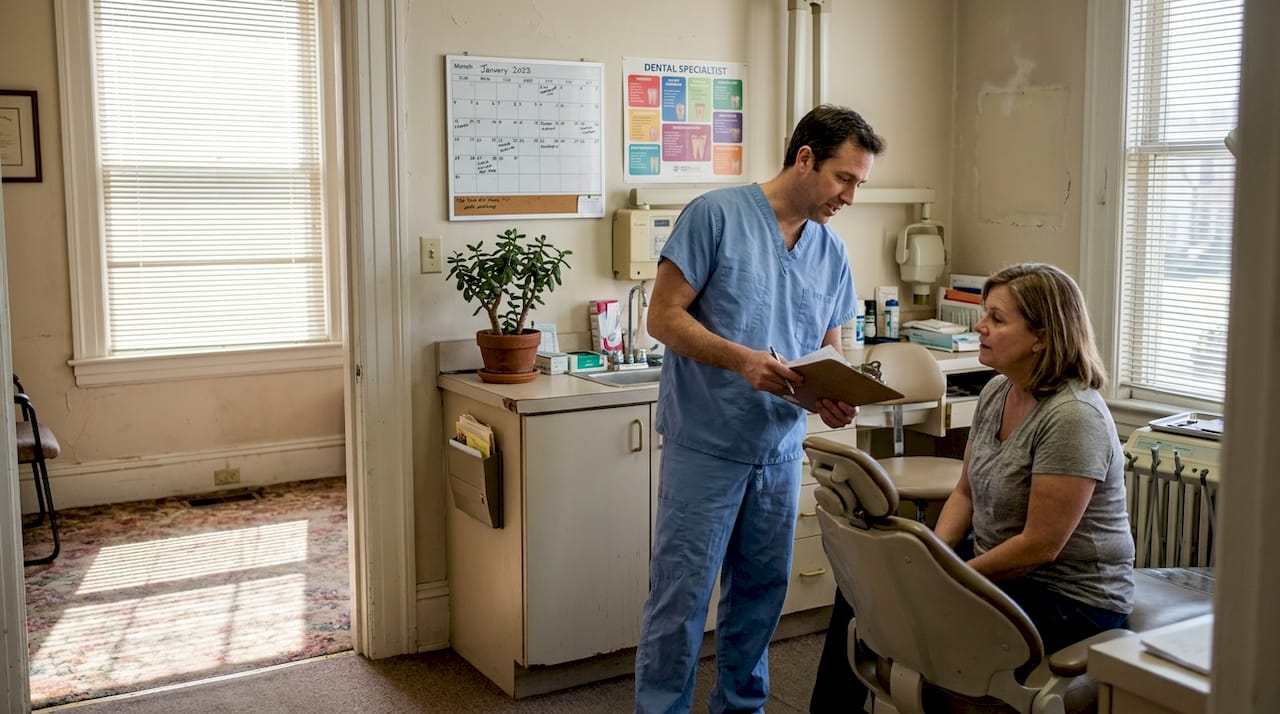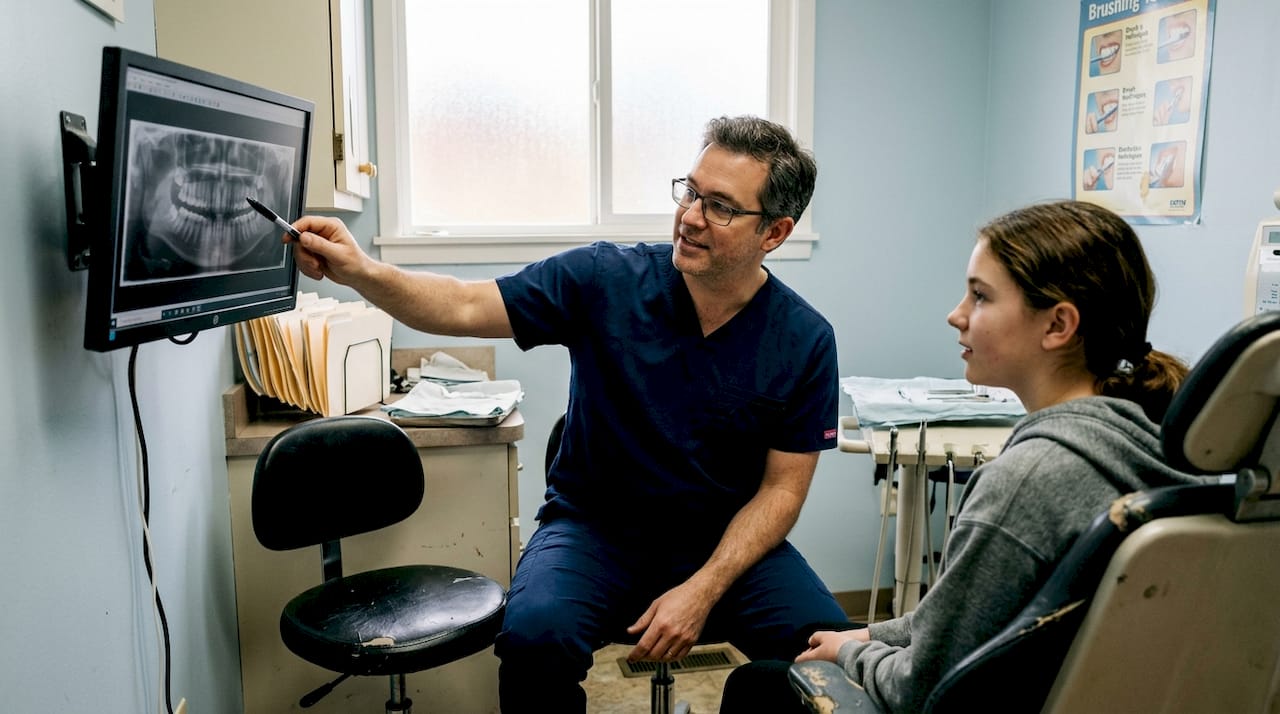
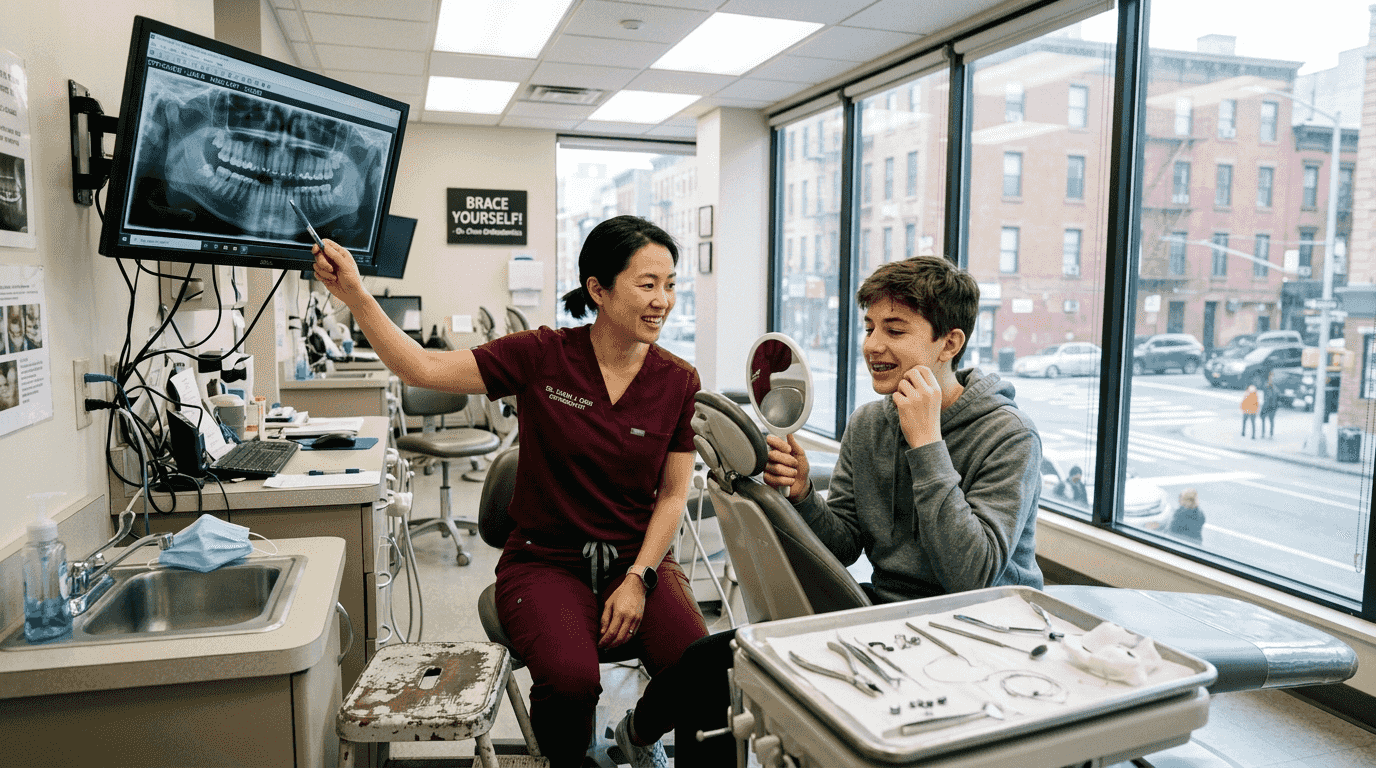
Many believe orthodontic treatment is purely about straightening teeth for a better smile, but it’s actually essential for dental health and function. Misaligned teeth can lead to jaw pain, difficulty chewing, and increased tooth decay. Families in San Bernardino have access to affordable, effective orthodontic solutions that address both health and aesthetic concerns. This guide breaks down what orthodontic treatment involves, how it works, and what you can expect from start to finish.
Table of Contents
- Understanding Orthodontic Treatment: How And Why It Works
- Comparing Orthodontic Appliances: Braces Versus Clear Aligners
- How Long Does Orthodontic Treatment Take? Factors That Affect Timing
- Post-Treatment Care And Maintaining Your New Smile
- Affordable, Expert Orthodontic Care In San Bernardino
- Frequently Asked Questions About Orthodontic Treatment
Key takeaways
| Point | Details |
|---|---|
| Treatment mechanics | Orthodontic forces of 1-2 pounds per tooth guide movement through natural bone remodeling. |
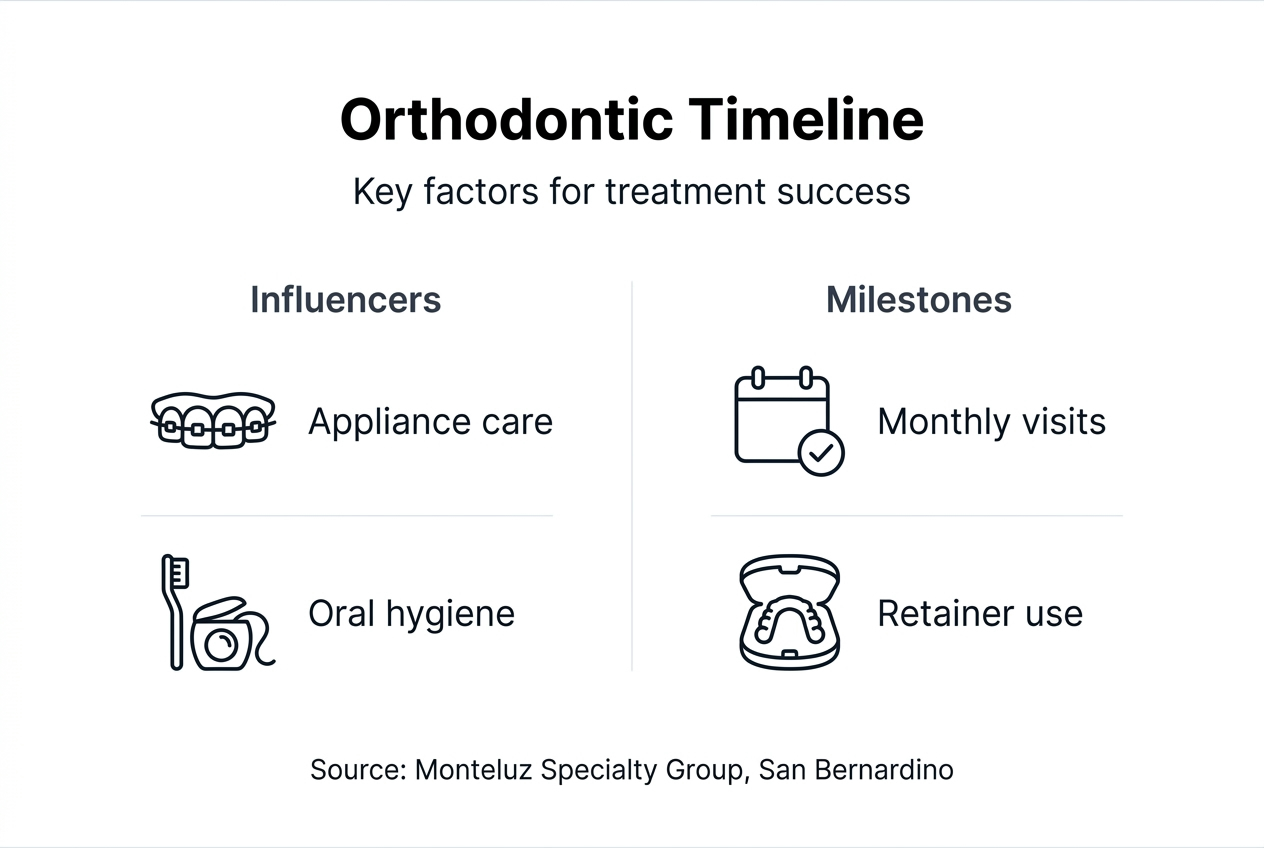
| Duration varies widely | Treatment typically spans 6 months to 3 years depending on case complexity, patient age, and appliance choice. |
| Appliance options | Metal braces excel at complex cases while clear aligners offer aesthetics but demand 20-22 hours daily wear. |
| Age affects speed | Adolescents experience faster results due to growing bones while adult bone density slows tooth movement. |
| Retention is critical | Post-treatment retainers prevent teeth from shifting back and maintain your new alignment permanently. |
Understanding orthodontic treatment: how and why it works
Orthodontic treatment isn’t magic. It relies on precise, controlled forces that gently guide your teeth into better positions over time. Orthodontic appliances apply forces of about 1 to 2 pounds per tooth, triggering a natural biological process called bone remodeling.
When consistent pressure is applied to a tooth, the bone surrounding the root responds by breaking down on one side and rebuilding on the other. This allows the tooth to shift gradually without damage. The key word here is gradual. Rushing the process or applying excessive force can harm tooth roots or surrounding bone, which is why professional monitoring is essential.
Common orthodontic devices include:
- Traditional metal braces with brackets and wires
- Ceramic brackets that blend with tooth color
- Lingual braces placed behind teeth
- Clear aligners like Invisalign that fit over teeth
- Functional appliances that guide jaw growth in children
Each device type works differently but shares the same goal: applying controlled forces to achieve proper tooth alignment and bite correction. Your orthodontist at Orthodontics will select the best option based on your specific needs, lifestyle, and budget.
Pro Tip: Consistent adjustment appointments are crucial. Missing scheduled visits can extend your treatment time significantly because forces need regular monitoring and adjustment to stay effective.
“Orthodontic treatment transforms not just smiles but overall dental health, reducing risk of decay, gum disease, and jaw problems throughout life.”
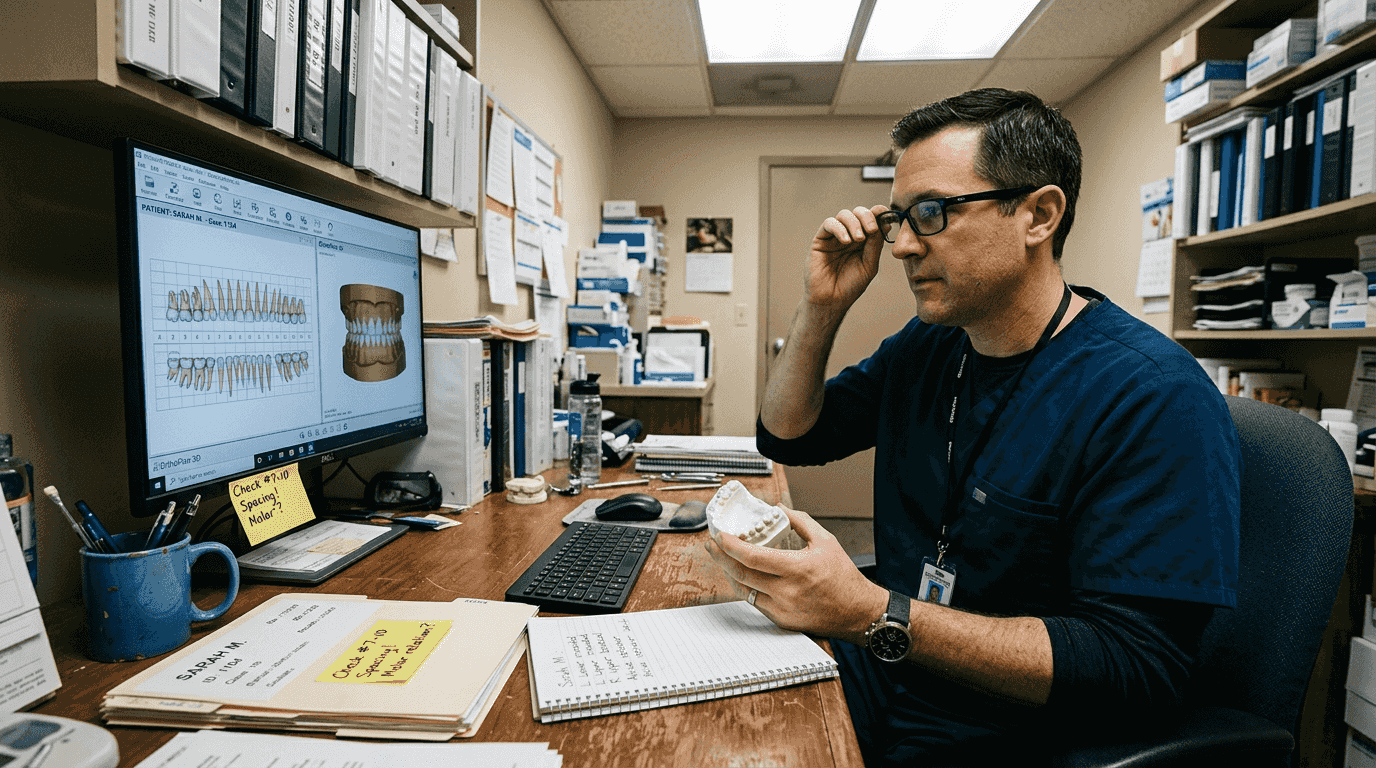
The precision required in orthodontics makes it a true specialty. Treatment planning involves detailed analysis of your teeth, bite, jaw relationship, and facial structure. Digital imaging and 3D models help orthodontists predict tooth movement and plan the most efficient path to your ideal smile. This scientific approach ensures safety while maximizing results, making modern orthodontics more predictable than ever before. Advances in materials and techniques have also made treatment more comfortable, with lighter forces and smoother surfaces reducing discomfort. Understanding how zirconia implants integrate with orthodontics can benefit patients needing both services.
Comparing orthodontic appliances: braces versus clear aligners
Choosing between traditional braces and clear aligners depends on your case complexity, lifestyle, and personal preferences. Both options effectively move teeth, but they work differently and suit different situations.
Traditional metal braces remain the gold standard for complex orthodontic cases. They consist of metal brackets bonded to teeth connected by wires that apply continuous pressure. Because they’re fixed in place, there’s no compliance issue. You can’t forget to wear them. They handle severe crowding, significant bite problems, and complex tooth rotations better than any other option.
Clear aligners like Invisalign have proven effectiveness for mild to moderate cases but demand high patient discipline. You must wear them 20 to 22 hours daily, removing them only for eating and brushing. The aesthetic advantage is obvious since they’re nearly invisible. Oral hygiene is easier because you can remove them to brush and floss normally.
| Feature | Metal Braces | Clear Aligners |
|---|---|---|
| Visibility | Highly visible metal brackets | Nearly invisible plastic trays |
| Removability | Fixed, cannot remove | Removable for eating and cleaning |
| Treatment duration | 18-36 months typically | 12-24 months for eligible cases |
| Case complexity | Handles all severity levels | Best for mild to moderate cases |
| Compliance requirement | None, always working | Critical, must wear 20-22 hours daily |
| Oral hygiene | Requires special cleaning tools | Normal brushing and flossing |
| Cost range | Generally more affordable | Often costs more upfront |
Ceramic braces offer a middle ground. They function like metal braces but use tooth-colored brackets for better aesthetics. They’re slightly more fragile than metal and may cost more, but they’re less visible while handling complex cases effectively.
Pro Tip: If you choose aligners, set phone reminders to put them back in after meals. Forgetting to wear them even a few hours daily can add months to your treatment time.
Your lifestyle matters when selecting appliances. Athletes involved in contact sports might prefer aligners they can remove during games. Musicians playing wind instruments often adapt better to aligners. People with demanding professional appearances may prioritize the invisibility of clear aligners despite higher costs. However, if your case involves significant jaw misalignment or severe crowding, traditional braces might be your only effective option.
The role of orthodontics with implants becomes important for patients needing both services. Proper tooth alignment before implant placement improves outcomes and longevity. Understanding dental implants versus dentures helps patients make comprehensive treatment decisions when multiple options exist. Monteluz Specialty provides expert orthodontic care with all appliance types, helping you choose what fits your needs and budget best.
How long does orthodontic treatment take? Factors that affect timing
Asking how long orthodontic treatment takes is like asking how long a road trip takes. It depends on where you’re starting, where you’re going, and how you’re traveling. Treatment typically spans 6 months to 3 years, with most cases falling between 18 and 24 months.
Several key factors influence your treatment timeline:
-
Case complexity: Minor spacing issues might resolve in 6 to 12 months while severe crowding with bite problems can require 30 to 36 months. The more your teeth need to move, the longer it takes.
-
Patient age: Adolescents experience faster movement because their bones are still growing and more responsive to orthodontic forces. Adults have denser, fully developed bone that adapts more slowly to pressure.
-
Appliance type: Fixed braces typically work continuously and efficiently. Clear aligners depend entirely on patient compliance. If you’re not wearing aligners as prescribed, treatment stalls.
-
Bone density and jaw location: The lower jaw has denser bone than the upper jaw, which can slow tooth movement in that area. Individual bone density variations affect how quickly your body remodels bone around moving teeth.
-
Patient cooperation: Keeping appointments, maintaining excellent oral hygiene, wearing rubber bands as directed, and following all instructions dramatically impacts treatment speed. Missing appointments or neglecting care adds weeks or months.
| Age Group | Typical Duration | Why |
|---|---|---|
| Children (7-11) | 12-24 months | Growing bones, interceptive treatment |
| Adolescents (12-18) | 18-30 months | Peak growth period, comprehensive correction |
| Adults (18+) | 24-36 months | Denser bone, slower adaptation |
The best age for braces often falls in early adolescence when growth spurts make tooth movement more efficient. However, orthodontic treatment works at any age. Adults achieve excellent results but should expect slightly longer treatment times.
“Your orthodontic timeline is personalized. Two patients with seemingly similar problems might have different treatment lengths based on individual biology and cooperation.”
Your orthodontist monitors progress at regular adjustment appointments, typically every 4 to 8 weeks. During these visits, they evaluate tooth movement, adjust forces, and determine if treatment is progressing as planned. Consistent attendance ensures optimal results in the shortest reasonable time.
Pro Tip: Take progress photos every few months. Orthodontic changes happen gradually, and photos help you see improvements that feel invisible day to day. This motivation boost often improves compliance and speeds treatment.
Factors you can control, like wearing appliances as directed and maintaining oral hygiene, directly affect your timeline. Factors you can’t control, like bone density and age, are simply part of your biological reality. Working with experienced providers through affordable orthodontic care programs ensures you get realistic timeline expectations and expert guidance throughout treatment.
Post-treatment care and maintaining your new smile
Finishing active orthodontic treatment is exciting, but your journey isn’t complete. Retainers are absolutely essential after treatment because teeth naturally want to shift back toward their original positions. Without retention, you risk losing months or years of progress.
Retainers hold teeth in their new positions while surrounding bone, gums, and ligaments stabilize. This retention phase typically involves wearing retainers full time for the first few months, then transitioning to nighttime wear indefinitely. Some patients receive permanent retainers, which are thin wires bonded behind front teeth for continuous retention.
Maintaining your orthodontic results requires ongoing attention:
- Wear retainers exactly as prescribed: Skipping even a few nights can allow shifting that’s difficult to reverse.
- Practice excellent oral hygiene: Brush twice daily, floss once daily, and clean retainers regularly to prevent decay and gum disease.
- Attend regular dental checkups: Professional cleanings and exams catch problems early and keep your mouth healthy.
- Avoid problematic foods initially: Hard, sticky, or chewy foods can damage teeth or retainers during the early retention phase.
- Communicate issues promptly: If retainers feel tight, break, or teeth seem to shift, contact your orthodontist immediately.
Pro Tip: Retainer neglect is the number one cause of orthodontic relapse. Treat nighttime retainer wear like brushing your teeth—a non-negotiable part of your routine. Set a bedside reminder if needed.
Your newly aligned teeth improve more than appearance. Proper alignment reduces excessive wear on enamel, decreases tooth decay risk by eliminating hard-to-clean crowded areas, and relieves jaw strain that causes headaches or TMJ problems. These health benefits last only if you maintain your results through consistent retention.
Regular dental visits become easier after orthodontic treatment because properly aligned teeth are simpler to clean thoroughly. Your dentist and hygienist can access all surfaces more effectively, reducing plaque buildup and gum disease risk. This improved oral health often translates to fewer cavities and less invasive dental work throughout your lifetime.
Monteluz Specialty provides comprehensive orthodontic services including post-treatment retention planning and retainer replacement when needed. Their team ensures you understand retention requirements and provides ongoing support to protect your investment. Combining orthodontics with other dental services like implants or general care creates a complete approach to long-term oral health.
Affordable, expert orthodontic care in San Bernardino
Achieving a healthy, beautiful smile shouldn’t strain your budget. Monteluz Specialty Group offers expert orthodontic care including traditional braces and Invisalign to San Bernardino families at prices that make treatment accessible. Their experienced orthodontists create personalized treatment plans addressing your unique dental needs and goals.
Affordability is built into their practice model. They accept Denti-Cal, PPO, and HMO insurance plans, and offer dental membership plans starting at just $20 monthly for uninsured patients. Flexible financing options spread treatment costs over manageable monthly payments. Bilingual staff provide support in English and Spanish, ensuring clear communication throughout your orthodontic journey.
Beyond orthodontics, Monteluz Specialty delivers comprehensive dental services including implants, root canals, and general dentistry. This integrated approach means your orthodontic treatment coordinates seamlessly with other dental needs. Whether you need braces before implant placement or general care during orthodontic treatment, one trusted practice handles everything. Visit Monteluz Dental Specialty Group to explore how they make quality orthodontic care accessible and affordable for Inland Empire families.
Frequently asked questions about orthodontic treatment
How long does orthodontic treatment usually take?
Most orthodontic treatment takes between 18 and 24 months, though simple cases may finish in 6 to 12 months while complex cases can extend to 36 months. Your specific timeline depends on case severity, age, appliance type, and how well you follow treatment instructions.
What are the main differences between braces and clear aligners?
Braces are fixed appliances bonded to teeth that work continuously and handle all case complexities, while clear aligners are removable trays that offer better aesthetics and easier hygiene but require disciplined wear of 20 to 22 hours daily. Braces suit complex cases better whereas aligners work best for mild to moderate problems in compliant patients.
Why is patient compliance important in orthodontic treatment?
Wearing appliances exactly as directed ensures teeth move according to plan and treatment stays on schedule. Skipping aligner wear time, missing adjustment appointments, or neglecting oral hygiene can slow progress, extend treatment duration, and compromise final results significantly.
Do children and adults experience the same orthodontic treatment time?
Children and adolescents typically achieve results faster because their bones are still growing and more responsive to orthodontic forces, often completing treatment in 18 to 24 months. Adults generally require 24 to 36 months because fully developed bone is denser and adapts more slowly to tooth movement pressures.
Why are retainers necessary after orthodontic treatment?
Retainers prevent teeth from shifting back toward their original positions after active treatment ends. Teeth naturally want to return to where they started, and retainers hold them in place while surrounding tissues stabilize. Skipping retainer wear is the most common cause of losing orthodontic results and may require retreatment. Visit Monteluz Specialty’s orthodontic services for expert retention planning and ongoing care.
Recommended
- Expert Orthodontic Care in San Bernardino | Braces & Aligners
- Affordable Orthodontic Care Guide for Local Families
- Dental Implantology: Transforming Smiles in San Bernardino
- Role of Orthodontics in Implants: 25% Lower Failure in 2026
- SET ORTODONTIC ÎN BUCUREȘTI - YTS Dental View