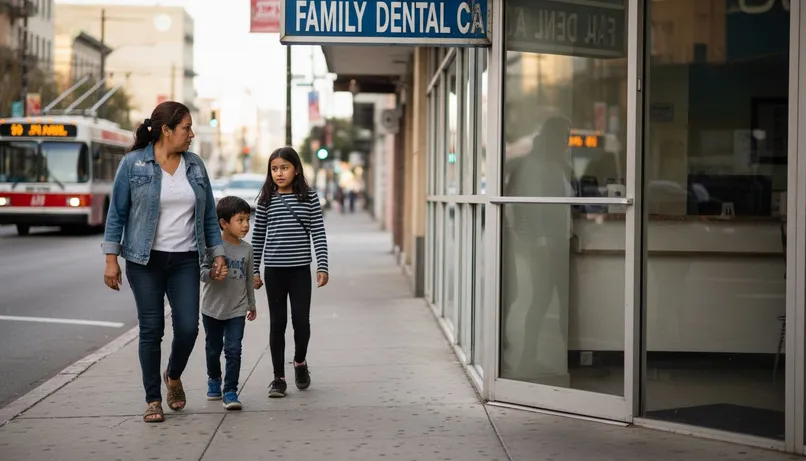
Every family in San Bernardino faces tough choices when dental costs seem out of reach. For Spanish-speaking households, the challenge of balancing everyday expenses with specialty dental needs like implants or root canals is more than just numbers. Research shows that financial barriers—including insurance gaps and out-of-pocket costs—often prevent quality care. Discover options like Denti-Cal and in-house membership plans designed to make affordable dental care a reality for your family.
Table of Contents
- Defining Affordability In Dental Care
- Types Of Affordable Dental Service Options
- How Insurance Plans Influence Cost
- Specialty Dental Treatments And Their Expense
- Financial Barriers Faced By Spanish-Speaking Families
- Comparing In-House Membership To Insurance Plans
Key Takeaways
| Point | Details |
|---|---|
| Affordability Influences Access | Affordability in dental care significantly impacts a patient’s ability to access necessary treatments, often leading to delays due to perceived financial constraints. |
| Diverse Service Models | Various affordable dental service options, such as community health centers and mobile clinics, are designed to improve access for individuals from differing economic backgrounds. |
| Insurance Coverage Gaps | Dental insurance often has limitations that can create financial barriers, especially in accessing specialty treatments where out-of-pocket expenses can be substantial. |
| Comparing Care Financing | Patients should evaluate in-house membership programs against traditional insurance plans, as membership programs may offer more predictable costs and greater financial transparency. |
Defining Affordability in Dental Care
Affordability in dental care is more complex than simply understanding price tags. It represents the intersection between a patient’s financial capacity and their ability to access essential oral health services. Research indicates that affordability directly impacts oral health outcomes, creating significant barriers for individuals seeking necessary dental treatments.
According to recent studies examining national health data, affordability encompasses multiple dimensions beyond just immediate treatment costs. Dental care accessibility patterns reveal that patients frequently delay or avoid critical treatments due to perceived financial constraints. These challenges extend beyond insurance coverage, involving out-of-pocket expenses, treatment complexity, and individual economic circumstances.
The public perception of dental care affordability reflects broader socioeconomic challenges. Social media analysis demonstrates that many individuals experience significant stress around dental expenses, often reporting strategies like postponing treatments, seeking alternative payment methods, or completely foregoing necessary dental interventions. This trend highlights the critical need for comprehensive approaches that make quality dental care financially accessible to diverse population segments.
Pro tip: Consider exploring dental membership programs or sliding scale payment options that can help make professional dental care more financially manageable for your specific situation.
Types of Affordable Dental Service Options
Dental care accessibility has evolved to offer multiple affordable service options for patients with diverse financial backgrounds. Dental care service models demonstrate a range of innovative approaches designed to reduce financial barriers and improve oral health access across different community segments.
These affordable options typically include community health centers, dental school clinics, public health programs, and nonprofit organizations. Public clinics and federally qualified health centers provide sliding scale fees based on patient income, ensuring that individuals with limited financial resources can still receive essential dental treatments. Some healthcare facilities offer comprehensive services at reduced rates, including preventive care, basic treatments, and even specialized procedures for underserved populations.
Nontraditional dental service models have also emerged to address affordability challenges. These include mobile dental clinics, telemedicine consultations, dental membership programs, and collaborative community health initiatives. Such approaches aim to reduce overhead costs and create more flexible, patient-centered care options that make professional dental services more accessible to a broader range of individuals.
Pro tip: Research local community health centers and dental schools in your area, as they often provide high-quality dental services at significantly reduced rates compared to traditional private practices.
Here’s a summary comparing accessible dental service models and how they address affordability:
| Service Model | Typical Cost Approach | Target Population | Unique Advantage |
|---|---|---|---|
| Community Health Centers | Sliding fees based on income | Low-income families | Broad preventive care access |
| Dental School Clinics | Reduced fees for teaching cases | All income levels | Supervised care by trainees |
| Mobile Dental Clinics | Lower overhead, discounted care | Rural/underserved areas | On-site convenience |
| Telemedicine Dental Consults | Transparent flat rates | Adults, remote patients | Quick access, minimal travel |
| Nonprofit Dental Organizations | Grants, donation-supported fees | Vulnerable groups | Culturally adapted, bilingual care |
How Insurance Plans Influence Cost
Dental insurance plays a critical role in determining patient affordability and access to care. Dental insurance structures reveal complex mechanisms that significantly impact out-of-pocket expenses for patients across different coverage types.
Public insurance programs like Medicaid and Children’s Health Insurance Program (CHIP) provide foundational coverage, but often come with significant limitations. These plans typically cover preventive services and basic treatments, yet frequently exclude more comprehensive or specialized dental procedures. Private insurance plans similarly demonstrate varied coverage levels, with many implementing annual benefit caps, waiting periods, and specific restrictions that can leave patients facing substantial personal expenses.
The traditional separation of dental insurance from general health insurance creates additional financial barriers. Coverage disparities in dental care highlight how insurance design can dramatically influence patients’ ability to access necessary treatments. Many plans require high deductibles, impose strict network limitations, and provide minimal coverage for advanced procedures, effectively making comprehensive dental care financially challenging for many individuals.
Pro tip: Always review your dental insurance policy’s detailed coverage document and ask your insurance provider about specific limitations, waiting periods, and out-of-pocket maximum expenses before scheduling complex dental procedures.
Specialty Dental Treatments and Their Expense
Specialty dental treatments represent some of the most complex and financially challenging healthcare services patients encounter. Cost variations in dental procedures reveal significant price disparities across different advanced treatments, creating substantial financial barriers for patients requiring specialized care.

Complex dental procedures such as dental implants, orthodontic interventions, endodontic treatments, and surgical extractions frequently exceed standard insurance coverage limits. These specialty services can range from several hundred to thousands of dollars, with patients often responsible for significant out-of-pocket expenses. Factors influencing treatment costs include the complexity of the procedure, required technology, specialized expertise, geographical location, and the specific materials used in treatment.
The financial landscape for specialty dental treatments is particularly challenging for patients with limited insurance coverage. High expense of advanced dental care demonstrates how procedures like full-mouth reconstructions, advanced periodontal treatments, and complex surgical interventions can quickly become financially overwhelming. Many patients find themselves navigating a complex system where their medical needs compete directly with their financial constraints, often resulting in delayed or postponed essential treatments.
Pro tip: Request comprehensive cost breakdowns and explore flexible financing options or dental membership programs before committing to expensive specialty dental treatments to manage your financial investment effectively.
Financial Barriers Faced by Spanish-Speaking Families
Systemic financial challenges significantly impact dental care access for Spanish-speaking families in the United States. Hispanic populations face unique cost barriers that create substantial obstacles to maintaining oral health and receiving comprehensive dental treatments.
Multiple socioeconomic factors contribute to these financial barriers. Low-income Hispanic households often lack comprehensive dental insurance, with many working in industries that do not provide robust healthcare benefits. Language barriers compound these challenges, making it difficult to navigate complex insurance systems, understand treatment options, and negotiate healthcare costs. Limited English proficiency can result in reduced communication with healthcare providers, potentially leading to higher treatment expenses and missed preventive care opportunities.
The economic landscape for Spanish-speaking families reveals profound disparities in dental care accessibility. Dental care challenges for minority groups demonstrate how lack of culturally competent care, combined with high out-of-pocket expenses, creates significant barriers. Many families must choose between essential dental treatments and other critical living expenses, often resulting in delayed care, increased long-term health risks, and more expensive emergency interventions.
Pro tip: Seek out community health centers and dental clinics offering sliding scale fees, bilingual services, and payment plans specifically designed for Spanish-speaking families to help manage dental care expenses more effectively.
Comparing In-House Membership to Insurance Plans
Dental care financing models represent complex choices for patients seeking affordable healthcare solutions. Dental care financing strategies reveal significant differences between traditional insurance plans and innovative in-house membership programs that fundamentally reshape how patients access and pay for dental services.
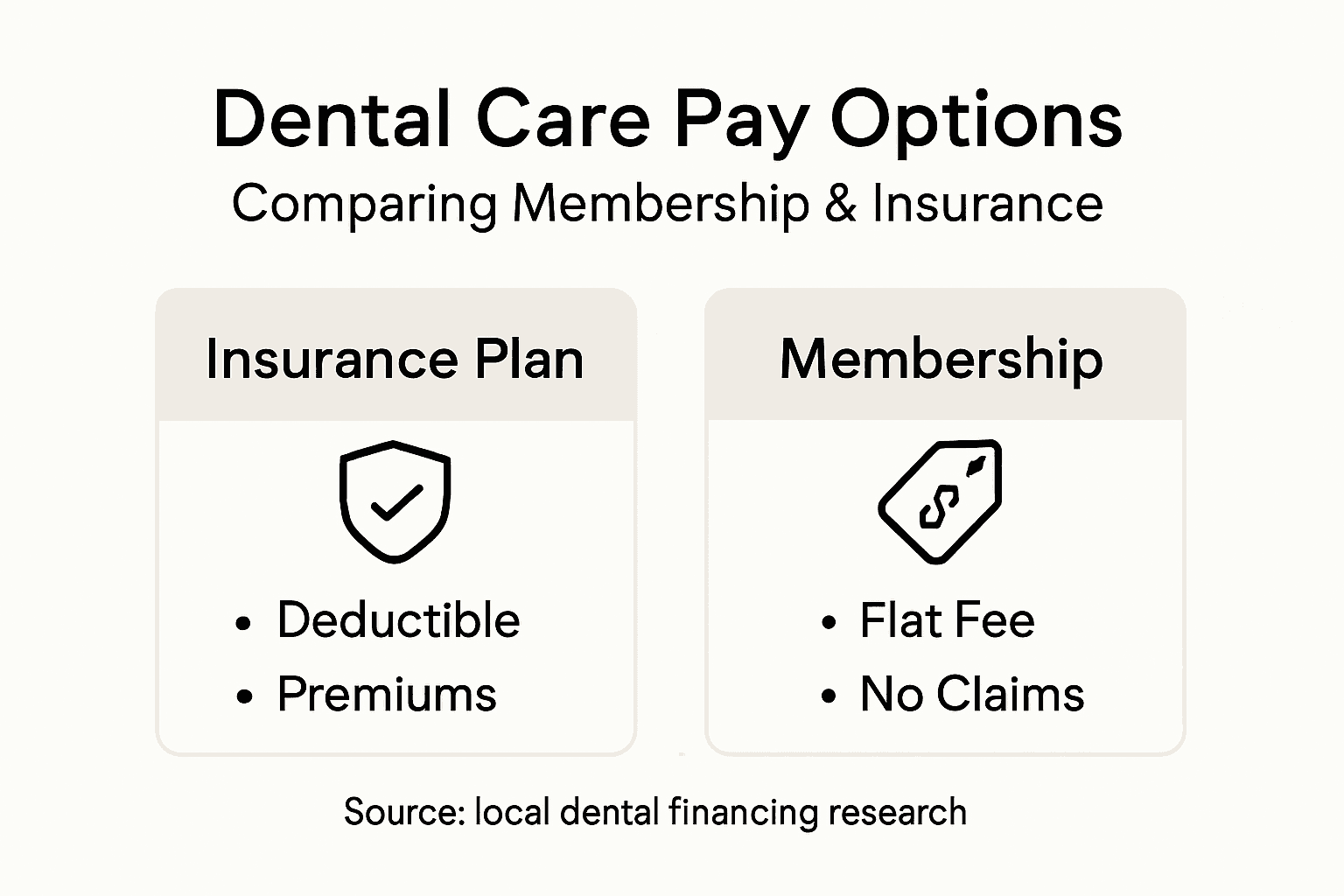
Traditional dental insurance plans typically operate through complex reimbursement structures involving annual deductibles, percentage-based coinsurance, and strict coverage limits. These plans often require patients to navigate intricate networks of approved providers and face substantial out-of-pocket expenses. In contrast, in-house membership plans offer more transparent pricing models with fixed fees, direct discounts, and predictable costs that can provide more financial clarity for patients seeking consistent dental care.
The key distinctions between these financing models extend beyond simple cost comparisons. Dental care access and financing models demonstrate that in-house membership plans can provide more direct patient-provider relationships, reduced administrative complexity, and potentially lower overall healthcare expenses. While traditional insurance plans offer broader coverage, they often come with more bureaucratic hurdles and less predictable financial outcomes for patients.
Pro tip: Calculate your total annual dental expenses by comparing traditional insurance premiums and out-of-pocket costs against fixed-rate membership plans to determine the most financially advantageous option for your specific healthcare needs.
This table highlights key differences between dental insurance plans and in-house membership programs:
| Feature | Traditional Insurance Plan | In-House Membership Program |
|---|---|---|
| Pricing Model | Monthly premium plus copayments | Fixed annual or monthly fee |
| Coverage Limits | Annual maximum, exclusions | Discounts, usually unlimited use |
| Administrative Complexity | Claims, paperwork, networks | Direct payment, fewer forms |
| Predictability of Costs | Varies by procedure covered | Consistent for routine care |
Take Control of Your Dental Care Affordability Today
Affordability challenges can make it difficult to access the dental treatments you need. From navigating insurance limitations to managing out-of-pocket expenses for specialty care, these barriers often cause patients to delay or avoid essential services. At Monteluz Dental Specialty Group, we understand these struggles and offer real solutions that prioritize accessibility, flexibility, and financial clarity to help you maintain your oral health without compromise. Explore insights and tips on managing dental costs in our Dental Health to empower your decisions.
Ready to overcome financial obstacles with affordable, high-quality dental care designed for all families including Spanish-speaking patients Our in-house dental membership plan starts as low as $20 per month We accept Denti-Cal (Medi-Cal), PPO, and HMO plans offering bilingual support and flexible financing options to fit your needs Visit us now at Monteluz Dental Specialty Group to schedule your appointment and take the first step toward healthier smiles with confidence.
Frequently Asked Questions
What factors contribute to the affordability of dental care?
Affordability in dental care is influenced by various factors, including insurance coverage, out-of-pocket expenses, treatment complexity, and individual economic circumstances. These elements together create significant barriers that can affect a patient’s access to necessary dental services.
How does dental insurance impact out-of-pocket expenses for treatments?
Dental insurance can significantly affect out-of-pocket expenses through its coverage policies, which often include limitations on procedures, annual maxima, and deductibles. Patients may find that many plans do not cover specialized treatments, leading to higher personal costs.
What options are available for affordable dental services?
There are several options for affordable dental services, including community health centers, dental school clinics, mobile dental clinics, and nonprofit organizations. These services often use sliding scale fees or reduced rates to make dental care more accessible to low-income individuals and families.
How can Spanish-speaking families navigate financial barriers in dental care?
Spanish-speaking families can overcome financial barriers by seeking community health centers that offer bilingual services, sliding scale fees, and tailored payment plans. These resources can help them gain access to necessary dental treatments while managing expenses effectively.
Recommended
- Affordable Dental Care Explained: Real Options in California
- Dental Membership Plans: Making Care Affordable Locally
- Accessibility in Dental Care: Removing Barriers in San Bernardino
- 7 Essential Tips for Maximizing Your Dental Insurance