

Every parent faces the challenge of balancing dental care needs with budget concerns, especially in communities across San Bernardino County. Affordable options matter when families rely on programs like Denti-Cal or consider in-house membership plans to manage expenses. By focusing on gathering thorough patient information and understanding coverage choices, you can make smarter decisions that lead to better oral health for every family member.
Table of Contents
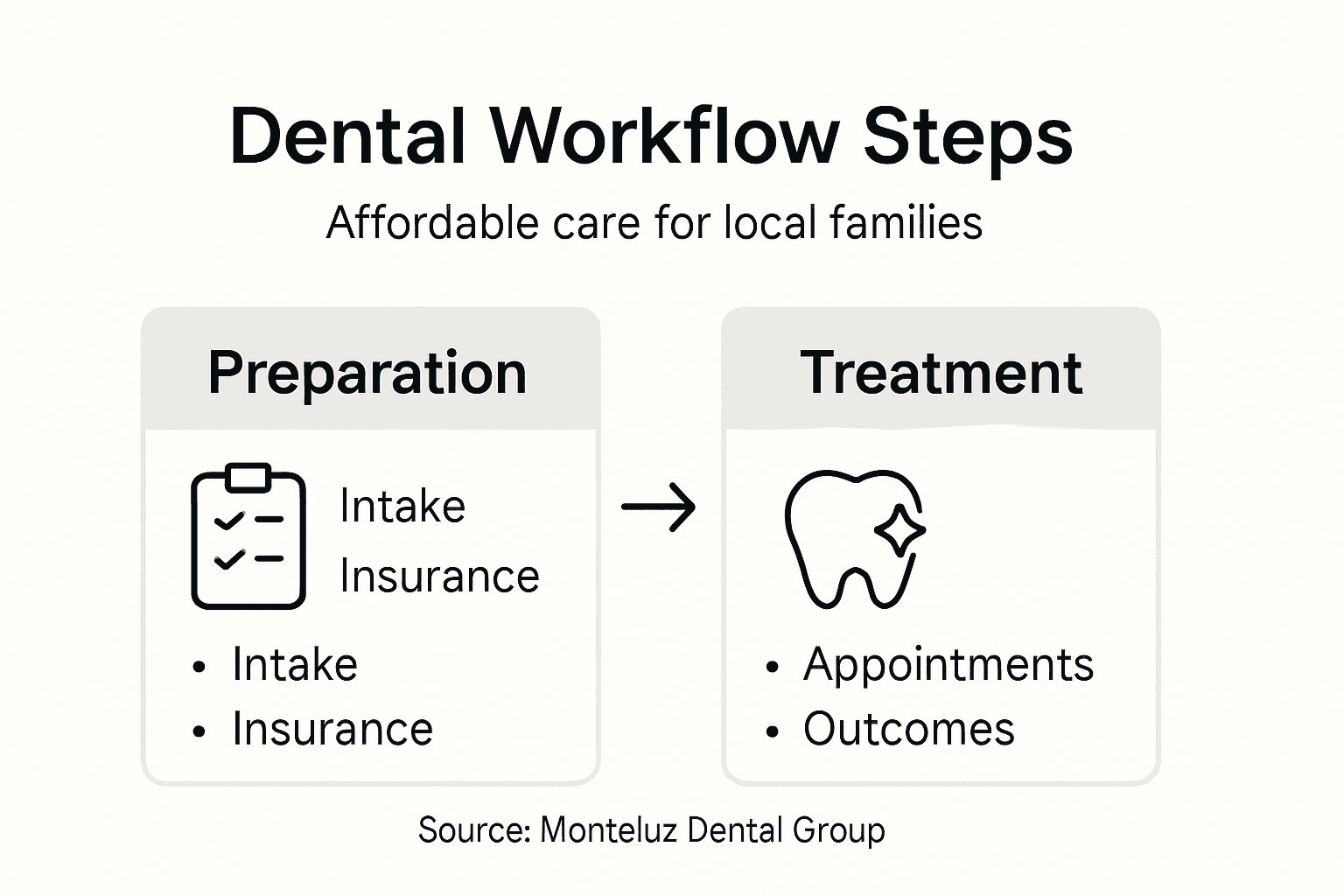
- Step 1: Evaluate Dental Care Needs And Gather Patient Details
- Step 2: Verify Insurance Or Choose Membership Plan
- Step 3: Schedule Appointments And Arrange Flexible Payments
- Step 4: Receive Treatments And Monitor Dental Outcomes
- Step 5: Confirm Satisfaction And Plan Ongoing Oral Care
Quick Summary
| Main Insight | Explanation |
|---|---|
| 1. Gather Comprehensive Patient Details | Collect critical information to tailor dental care and strategies for individual family members. |
| 2. Verify Insurance or Membership Plans | Review coverage options to find affordable dental care solutions and reduce financial burdens. |
| 3. Schedule Appointments Effectively | Align appointment times with family schedules while ensuring payment options are manageable. |
| 4. Monitor Treatment Outcomes | Track progress and document experiences to optimize dental health management over time. |
| 5. Establish a Personalized Oral Care Plan | Create a dynamic strategy for ongoing dental health with tailored hygiene routines and regular check-ups. |
Step 1: Evaluate Dental Care Needs and Gather Patient Details
Gathering comprehensive patient details is the foundational first step in creating an effective dental care workflow for families. This process helps healthcare providers understand individual oral health requirements and develop personalized treatment strategies.
Begin by collecting critical information through a systematic approach that considers both medical history and current oral health status. The CDC Oral Health Surveillance Report highlights the importance of detailed demographic data in tailoring dental interventions.
Key patient details to gather include:
- Full legal name and contact information
- Age and birth date
- Insurance coverage type
- Medical history
- Current medications
- Previous dental treatments
- Family dental history
- Specific oral health concerns
During the initial consultation, create a comfortable environment that encourages open communication. Ask patients about their dental experiences, concerns, and any specific symptoms they might be experiencing. This approach helps build trust and ensures a more comprehensive assessment.
Pay special attention to unique family needs, especially for pediatric or multigenerational patients. Understanding each family member’s specific oral health requirements allows for more targeted and effective care planning.
Pro tip: Develop a standardized intake form that captures comprehensive patient information while remaining user-friendly and easy to complete.
Step 2: Verify Insurance or Choose Membership Plan
Navigating dental insurance and membership options is crucial for families seeking affordable dental care. This step involves carefully reviewing available coverage options to ensure comprehensive and cost-effective oral healthcare for every family member.

Start by exploring dental coverage options in the U.S. Health Insurance Marketplace, which offers multiple approaches to securing dental benefits. Families can choose between integrated health plans with dental coverage or standalone dental insurance plans tailored to their specific needs.
Key considerations for insurance verification include:
- Current insurance policy details
- Coverage limits and exclusions
- Waiting periods for specific treatments
- In-network provider options
- Monthly premium costs
- Copayment and deductible structures
For families in California, Medi-Cal Dental provides an excellent alternative with comprehensive services for eligible members. This program covers essential dental treatments, including preventive, emergency, and restorative care, potentially reducing out-of-pocket expenses.
Understanding your insurance options can save your family significant money on dental care.
If traditional insurance seems complex, consider exploring in-house membership plans offered by dental practices. These plans often provide predictable costs and comprehensive coverage without the complications of traditional insurance.
Here’s a quick comparison of common dental insurance, Medi-Cal Dental, and in-house membership plans to help families evaluate their options:
| Plan Type | Main Advantage | Key Limitation | Best For |
|---|---|---|---|
| Dental Insurance | Broad provider network | Complex coverage details | Families with varied needs |
| Medi-Cal Dental | Low or no out-of-pocket costs | Eligibility restrictions | Eligible California residents |
| Membership Plans | Simple, predictable payments | Limited to specific practice | Uninsured or self-pay families |
Pro tip: Always request a detailed breakdown of covered services and potential out-of-pocket costs before finalizing any dental insurance or membership plan.
Step 3: Schedule Appointments and Arrange Flexible Payments
Scheduling dental appointments and managing payment options are critical steps in accessing quality dental care for your family. This process involves finding convenient appointment times and exploring financial solutions that make dental treatment affordable and accessible.
Begin by exploring dental appointment scheduling options that accommodate your family’s unique needs. Many dental practices now offer multiple scheduling channels, including online booking, phone consultations, and mobile app reservations.
Key steps for effective appointment scheduling include:
- Determine preferred appointment times
- Check provider availability
- Verify insurance coverage for specific time slots
- Consider family members’ individual schedules
- Select convenient location and time
- Confirm appointment details
Payment flexibility is crucial for managing dental care expenses. Dental clinics often provide comprehensive financial counseling to help families navigate treatment costs effectively. Many practices offer:
- Installment payment plans
- Sliding scale fees
- Discounts for multiple family members
- Extended payment options
- Third-party financing
Strategic scheduling and payment planning can significantly reduce your family’s dental care financial burden.
Remember to communicate openly with dental office staff about your financial constraints and explore all available options. Many providers are willing to work with patients to develop personalized payment solutions that make quality dental care achievable.
Pro tip: Request a detailed cost breakdown and discuss all available payment options before finalizing your dental treatment plan.
Step 4: Receive Treatments and Monitor Dental Outcomes
Receiving dental treatments and systematically tracking your oral health progress are crucial components of comprehensive family dental care. This step focuses on understanding what happens during treatments and how to effectively monitor your dental health journey.
Begin by carefully following the evidence-based dental treatment protocols recommended by your dental professionals. These protocols are designed to ensure optimal treatment efficacy and long-term oral health maintenance.
Key aspects of treatment and outcome monitoring include:
- Carefully following treatment instructions
- Tracking post-procedure healing progress
- Documenting any changes or concerns
- Attending follow-up appointments
- Maintaining detailed dental health records
- Reporting unexpected symptoms promptly
Tracking Treatment Effectiveness involves multiple strategies:
- Complete recommended follow-up appointments
- Photograph treatment areas for visual comparison
- Keep a symptom and recovery journal
- Discuss progress with your dental provider
Consistent monitoring transforms dental treatment from a one-time event into a comprehensive health management strategy.
Understand that some dental services may have specific coverage considerations. Medicare dental coverage can be complex, particularly for medically necessary procedures connected to broader health treatments.
The following table highlights ways to effectively track family dental treatment outcomes:
| Tracking Method | Benefit | Implementation Tip |
|---|---|---|
| Symptom Journal | Monitors healing and discomfort levels | Update after each treatment |
| Treatment Photos | Provides visual progress documentation | Use consistent angles and timing |
| Appointment Records | Ensures no missed follow-ups | Record every visit and outcome |
| Professional Discussion | Allows timely adjustments in care plans | Share observations at each visit |
Pro tip: Create a dedicated digital or physical folder to track all dental treatment records, ensuring you have a comprehensive history for future reference.
Step 5: Confirm Satisfaction and Plan Ongoing Oral Care
The final step in your dental care journey involves carefully evaluating your treatment experience and establishing a sustainable long-term oral health strategy. This process ensures continuous improvement and proactive management of your family’s dental wellness.
Begin by completing a comprehensive patient satisfaction survey that allows you to provide detailed feedback about your recent dental treatments. These surveys help dental practices improve their services and address any potential concerns you might have encountered.
Key components of confirming satisfaction and planning ongoing care include:
- Discussing treatment outcomes with your dental provider
- Reviewing the effectiveness of recent procedures
- Understanding recommended future interventions
- Identifying potential preventative measures
- Establishing a personalized oral care routine
- Scheduling regular follow-up appointments
Developing a Personalized Oral Care Plan requires several strategic steps:
- Review current oral health status
- Set specific health goals
- Create a tailored hygiene routine
- Establish consistent check-up schedules
Your ongoing oral care plan is a dynamic roadmap to long-term dental health, not a static document.
Remember that oral health recommendations emphasize personalized approaches developed in consultation with dental professionals. These recommendations typically include maintaining proper hygiene, following a balanced diet, and avoiding harmful habits.
Pro tip: Create a digital or physical health journal to track your dental progress, recording treatments, recommendations, and personal observations for more informed future consultations.
Take Control of Your Family’s Dental Health Today
Navigating affordable dental care for your family can feel overwhelming. This article highlights the importance of understanding insurance options, scheduling flexible appointments, and tracking treatment outcomes to build a lasting oral health plan. If you are seeking a dental practice that understands these challenges and offers solutions tailored for families, explore the resources in our Dental Health.
At Monteluz Dental Specialty Group, we are committed to breaking down barriers to quality care. With acceptance of Medi-Cal, PPO, and HMO plans plus an in-house membership program starting at only $20 per month, your family can access advanced dental treatments without financial stress. Benefit from bilingual support, flexible financing, and a patient-centered approach designed specifically for Inland Empire communities. Take the next step now by visiting Monteluz Dental Specialty Group and scheduling your appointment to start a personalized and affordable dental care journey today.
Frequently Asked Questions
What information should I gather before scheduling a dental appointment for my family?
To effectively prepare for a dental appointment, collect each family member’s full legal name, contact information, age, insurance details, medical history, current medications, and any specific oral health concerns. Organize this information to ensure a smooth intake process at the dental office.
How can I verify my dental insurance coverage before an appointment?
You can verify your dental insurance by reviewing your current policy details, including coverage limits, exclusions, and provider networks. Contact your insurance company or your dental office to confirm these details and ensure comprehensive coverage for the treatments your family needs.
What are the key steps to schedule a dental appointment for multiple family members?
To schedule appointments for your family, determine preferred times and check provider availability. Be sure to verify insurance coverage for each family member’s appointment and consider convenient locations to minimize travel time.
How can I arrange flexible payment options for my family’s dental care?
You can arrange flexible payment options by discussing them directly with your dental office staff. Many practices offer installment plans, sliding scale fees, or discounts for multiple family members, which can help make dental care more affordable.
What are the best practices for monitoring dental treatment outcomes for my family?
To effectively monitor treatment outcomes, keep a symptom journal, take photographs of treatment areas, and attend all follow-up appointments. Document any changes or concerns promptly to ensure timely adjustments to your family’s dental care plan.
How can I ensure my family is satisfied with the dental care they receive?
To confirm your family’s satisfaction, discuss treatment outcomes with your dental provider and review the effectiveness of recent procedures. Provide feedback through patient satisfaction surveys to help your provider improve services, ensuring your family’s ongoing needs are met.
Recommended
- Affordable Dental Care Explained: Real Options in California
- Guía para cuidado dental familiar: pasos clave para salud integral
- Affordable Orthodontic Care Guide for Local Families
- 7 Essential Tips for Maximizing Your Dental Insurance