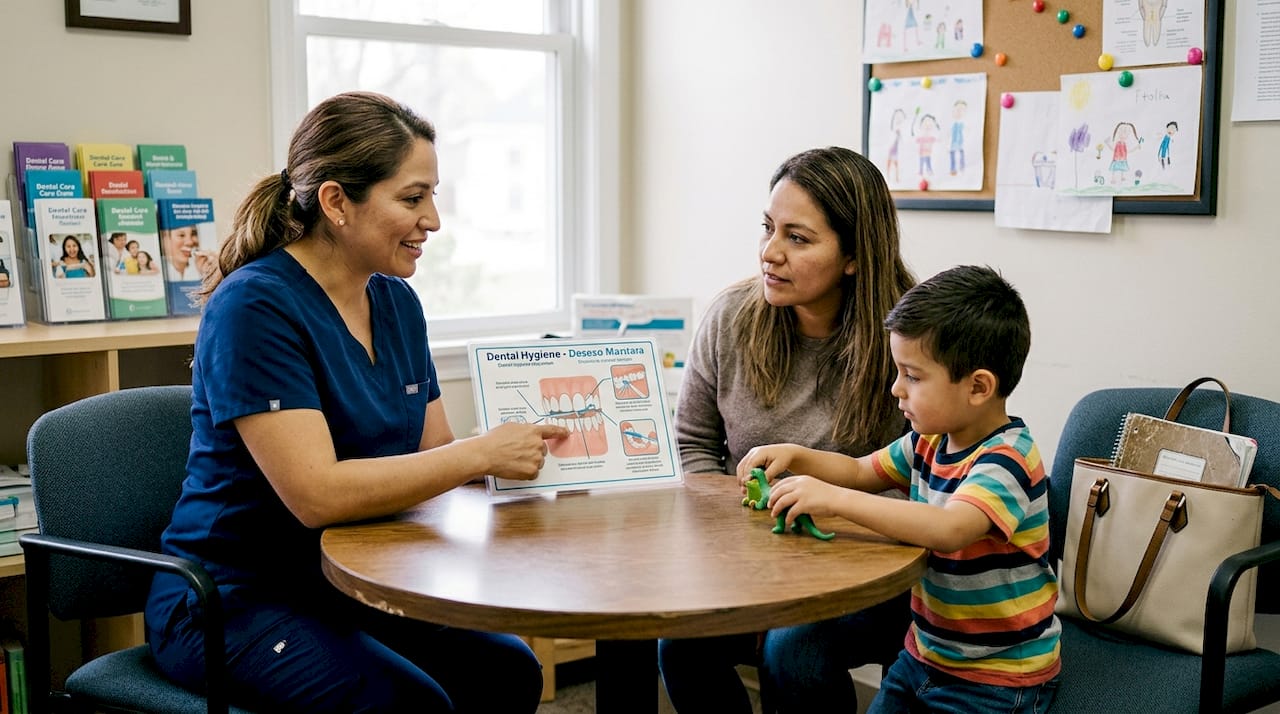
Dental care is not one-size-fits-all, and for Spanish-speaking families, the difference between a provider who speaks your language and one who does not can be the difference between getting the right treatment and walking away confused or undertreated. Language concordance reduces communication barriers for Spanish-speaking patients, leading to better understanding of treatments, reduced anxiety, and improved trust in providers. This guide walks you through why bilingual dental care matters, what the research says, and how your family can access the specialized services you deserve right here in San Bernardino.
Table of Contents
- Understanding language barriers in dental care
- How bilingual dental care builds trust and improves outcomes
- Why it matters: Dental health disparities tied to language gaps
- When bilingual care isn’t perfect: Interpreters, provider continuity, and real-life tradeoffs
- Finding affordable, bilingual dental care and specialty services in San Bernardino
- Explore your options for affordable bilingual dental care
- Frequently asked questions
Key Takeaways
| Point | Details |
|---|---|
| Language matters in dentistry | Speaking your language at the dentist can improve trust, comfort, and treatment results. |
| Bilingual care reduces disparities | Spanish-speaking families face fewer delays and health risks with language-concordant providers. |
| Expertise and continuity both count | Provider familiarity and direct communication are both valuable, with interpreters as a backup. |
| Affordable options exist locally | Affordable, bilingual dental care—from checkups to specialty services—can be found through local programs and memberships. |
Understanding language barriers in dental care
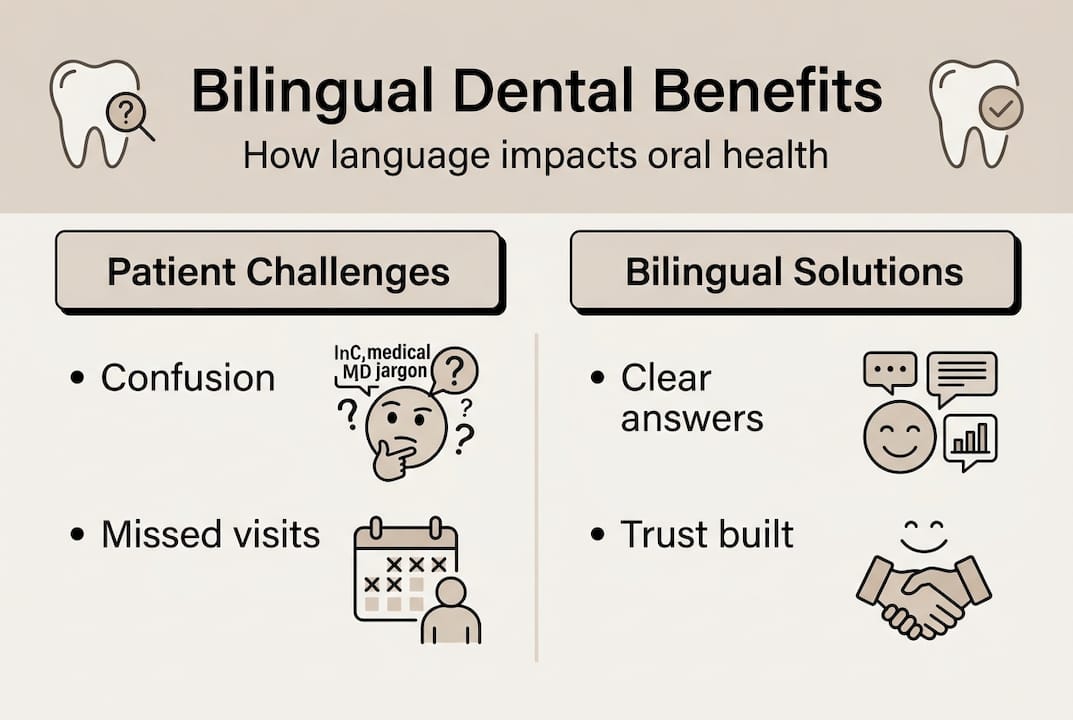
A language barrier in a dental office is more than just a translation problem. It shows up when a dentist explains a root canal procedure and the patient nods along without truly understanding the steps, the risks, or the aftercare. It appears when a treatment plan is handed over in English to a family that primarily speaks Spanish, leaving them unsure whether to sign or ask questions. These gaps are not rare.
Oral health disparities among Hispanic populations include higher dental anxiety, delayed treatments, and poorer adherence to care plans, all tied directly to language barriers. For families already navigating cost concerns and busy schedules, these added obstacles can push dental care to the bottom of the priority list.
Common consequences of language barriers in dental settings include:
- Higher anxiety before and during appointments
- Misunderstanding of diagnosis or treatment options
- Delayed or skipped follow-up care
- Medication errors due to unclear instructions
- Lower trust in the provider and the practice
More than 42 million people in the United States speak Spanish as their primary language at home. For a significant portion of this population, finding a dental provider who communicates in Spanish is not a preference. It is a health necessity.
These challenges connect directly to removing barriers in dental care and affordability in dental care, two issues that often compound each other for Spanish-speaking families. When you cannot fully understand your care plan, you are less likely to follow through, and that has a real impact on your family’s dental health over time.
How bilingual dental care builds trust and improves outcomes
The evidence is clear. Bilingual dental care reduces communication barriers and leads to better understanding and trust between patients and providers. But what does that actually look like in practice?
Here is a side-by-side comparison of the dental experience with and without a bilingual provider:
| Experience factor | Without bilingual provider | With bilingual provider |
|---|---|---|
| Understanding of diagnosis | Often unclear or incomplete | Clear and confirmed |
| Anxiety level | Higher, especially for new patients | Noticeably lower |
| Trust in provider | Takes longer to build | Builds faster and more naturally |
| Adherence to care plan | Lower, due to confusion | Higher, due to clear instructions |
| Comfort asking questions | Limited | Open and encouraged |
A typical bilingual dental appointment for a Spanish-speaking family looks like this:
- Check-in and intake forms are available in Spanish
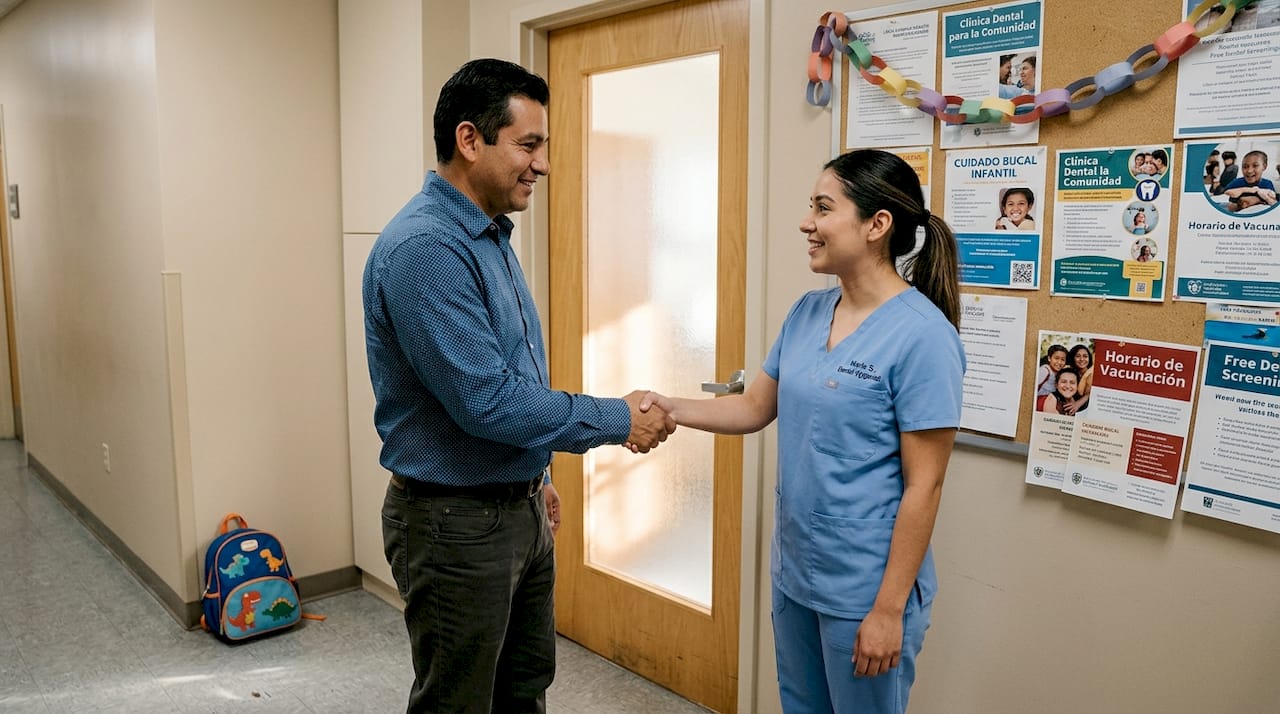
- The dental team greets you in your preferred language
- The dentist explains your exam findings clearly, in Spanish
- Treatment options are discussed with time for your questions
- Aftercare instructions are given verbally and in writing, in Spanish
- Follow-up scheduling is handled with full understanding on both sides
Pro Tip: Before your appointment, write down your questions or concerns in Spanish. Bring that list with you. A bilingual provider will welcome it, and it helps ensure nothing important gets missed during your visit. This is especially useful when discussing reducing dental anxiety with your care team.
If you are searching for a provider, look specifically for practices that advertise bilingual staff, not just translation services. You can access bilingual dental clinics in the Inland Empire that are built around serving Spanish-speaking communities.
Why it matters: Dental health disparities tied to language gaps
Language gaps do not just create awkward appointments. They create measurable health disparities. Migrants and Spanish-preferring patients show high rates of untreated cavities and tooth loss due to access gaps made worse by language barriers.
Here is a look at how oral health outcomes differ for Spanish-preferring patients compared to English-speaking patients:
| Oral health indicator | Spanish-preferring patients | English-speaking patients |
|---|---|---|
| Untreated cavities | Significantly higher | Lower |
| Tooth loss rates | Higher, especially in adults | Lower |
| Delayed treatment | More common | Less common |
| Preventive care visits | Less frequent | More frequent |
The connection between language access and health outcomes extends beyond dentistry. Research shows a 62% greater probability of uncontrolled diabetes when patients see non-language-concordant physicians. Dental health follows a similar pattern. When patients cannot communicate clearly with their provider, chronic conditions worsen and preventable problems become expensive emergencies.
Language gaps worsen oral health disparities in several specific ways:
- Patients miss key aftercare instructions following procedures like extractions or root canals
- Medication dosages or timing are misunderstood
- Appointments are skipped because the experience felt stressful or confusing
- Patients avoid specialty referrals because they fear another language barrier
- Symptoms go unreported because patients lack the vocabulary to describe them in English
Untreated tooth decay does not stay contained. It spreads, causes infections, and can lead to costly emergency visits or tooth loss. The financial and physical cost of delayed dental care is almost always higher than the cost of early treatment.
For families looking for a structured solution, exploring integral dental care plans designed for Spanish-speaking communities can be a strong first step toward consistent, affordable care.
When bilingual care isn’t perfect: Interpreters, provider continuity, and real-life tradeoffs
Bilingual care is not always a perfect solution, and it is worth being honest about that. Research shows that patients often prefer provider continuity over a perfect language match. In other words, if you have built a strong relationship with a dentist over several years, you may prefer to stay with that provider even if they do not speak Spanish fluently.
Interpreters play an important role, but they come with tradeoffs:
Pros of using interpreters:
- Improve basic understanding of procedures
- Available in many community health settings
- Can bridge gaps when no bilingual provider is available
Cons of using interpreters:
- Formal interpreters can feel impersonal
- Medical nuance is sometimes lost in translation
- Adds time to appointments, which can feel rushed
- Patients may feel less comfortable sharing sensitive concerns
Even with a bilingual provider, visits can feel rushed. This is a real challenge in busy dental practices, and it affects the quality of communication regardless of language. Patients sometimes leave without fully processing what was discussed.
Pro Tip: At every appointment, advocate for yourself. If something is unclear, say so. Ask the provider to repeat or rephrase. A good dental team will take the time to make sure you leave with a clear understanding of your care plan. This is especially important when scheduling preventive care visits for your whole family.
Building a long-term relationship with a dental provider who knows your history, speaks your language, and understands your family’s needs is one of the most proactive investments you can make in your oral health.
Finding affordable, bilingual dental care and specialty services in San Bernardino
Language-concordant dental care is crucial for reducing disparities and ensuring equal access to specialty treatments like implants and root canal therapy. Here is how your family can find the right provider in San Bernardino.
Steps to find bilingual, affordable dental care:
- Search online for dental practices that specifically list Spanish-speaking staff, not just translation services
- Ask for referrals from family, friends, or community organizations in the Inland Empire
- Call the office before your first visit and ask directly: Do you have bilingual dentists and staff?
- Ask whether the practice accepts Denti-Cal, Medi-Cal, PPO, or HMO insurance
- Inquire about dental membership programs if you are uninsured or underinsured
- Confirm that specialty services like implants and root canals are available on-site
Services to prioritize when choosing a provider:
- Comprehensive dental exams and cleanings
- Dental implants for missing teeth
- Root canal therapy (endodontics) for infected or damaged teeth
- Orthodontics for children and adults
- Preventive care and patient education in Spanish
- Flexible payment options and membership programs
For families without insurance, affordable family dental memberships can make consistent care possible at a predictable monthly cost. And if you have not had a checkup recently, learning why regular dental checkups matter for San Bernardino families is a great place to start.
Quick decision checklist when choosing a provider:
- Does the practice have bilingual dentists and front-desk staff?
- Do they accept your insurance or offer a membership plan?
- Are specialty services available in-house?
- Is the location accessible for your family?
- Do they offer flexible scheduling and appointment reminders in Spanish?
Explore your options for affordable bilingual dental care
Finding a dental team that speaks your language and offers real, affordable options is not just convenient. It is a meaningful step toward better health for your entire family. At Monteluz Dental Specialty Group, we offer bilingual English and Spanish support, advanced specialty services, and affordable dental memberships starting at just $20 per month for patients without insurance.
Whether your family needs routine checkups, dental implants in San Bernardino, or the care of our gentle root canal experts, we are here to make sure language is never a barrier to the treatment you deserve. We accept Denti-Cal, PPO, and HMO plans, and our team is ready to walk you through every option in the language you are most comfortable with. We invite you to reach out and schedule a consultation with our team today.
Frequently asked questions
How does bilingual dental care reduce dental anxiety?
Language barriers lead to higher dental anxiety and poorer adherence, so when a provider explains procedures clearly in your preferred language, fear decreases and comfort increases. Bilingual care removes the uncertainty that makes dental visits stressful for many Spanish-speaking patients.
Are interpreters as effective as bilingual providers?
Formal interpreters improve understanding but often feel impersonal, and most patients prefer direct communication with a bilingual provider for stronger trust and a more natural conversation. Interpreters are a helpful bridge, but they are not a full substitute for a provider who speaks your language.
Where can I find affordable bilingual dental care in San Bernardino?
Look for community clinics and specialty practices that list bilingual staff, ask about Denti-Cal or Medi-Cal acceptance, and explore dental membership programs to lower out-of-pocket costs. Language-concordant care ensures equal access to specialty treatments, so do not settle for a practice that cannot communicate with you clearly.
Does language-concordance improve dental treatment results?
Yes. Studies show that language concordance improves health outcomes in dentistry and beyond, with patients showing better adherence, fewer complications, and higher satisfaction when their provider speaks their preferred language.
Recommended
- Access bilingual dental services in Inland Empire 2026
- Why choose specialty dentistry for families in San Bernardino
- Why Interdisciplinary Dental Care Matters in San Bernardino
- Rol del dentista general: Impacto en familias hispanas