Navigating dental implant treatment in Southern California can feel overwhelming, especially when managing Denti-Cal or PPO insurance while seeking affordable, quality care. Many Spanish-speaking families face confusion about procedure steps, insurance coverage, and upfront costs. This comprehensive guide walks you through every phase of the dental implant process, from initial health checks to final restoration, with clear timelines and practical tips designed to help low- to middle-income patients achieve successful outcomes without financial stress.
Table of Contents
- Prerequisites And Preparation Before Getting A Dental Implant
- Step-By-Step Dental Implant Procedure
- Insurance And Affordability Considerations
- Common Mistakes And Troubleshooting During And After Implant Treatment
- Expected Timeline And Outcomes After Dental Implant Placement
- Affordable Dental Implants At Monteluz Specialty In Southern California
- Frequently Asked Questions About Dental Implants For Denti-Cal And PPO Patients
Key takeaways
| Point | Details |
|---|---|
| Prerequisites matter | Verify jawbone health, insurance eligibility, and oral health status before starting treatment to improve success rates above 90%. |
| Multiple treatment phases | Implant placement requires 3 to 9 months including surgery, healing, and crown placement with careful follow-up at each stage. |
| Insurance reduces costs | Denti-Cal and PPO plans can cover 30% to 50% of implant expenses when verified early, lowering out-of-pocket payments significantly. |
| Patient compliance is critical | Skipping appointments or neglecting oral hygiene increases failure risk; proper care ensures long-term implant stability. |
Prerequisites and preparation before getting a dental implant
Before scheduling implant surgery, you need to meet several medical and financial criteria. Your jawbone must have adequate density to support the implant. If bone loss has occurred due to missing teeth or gum disease, your dentist may recommend bone grafting. Patients who do not meet medical prerequisites such as adequate jawbone density may require bone grafting, which adds time and cost but improves implant success from 75% to over 90%.
Verify your Denti-Cal or PPO insurance coverage before starting treatment. Coverage varies by county and plan type, so contact your insurer to confirm eligibility for implant procedures. Some Denti-Cal plans cover implants only in specific circumstances, while PPO plans typically offer partial coverage. Early verification prevents unexpected bills later.
Complete a thorough oral health assessment with your dentist. Active infections, untreated cavities, or advanced gum disease must be resolved before implant placement. Infections compromise healing and increase failure rates. Your dentist will also review your medical history, including conditions like diabetes or osteoporosis that affect bone healing.
Financial planning is equally important. Even with insurance, you may face out-of-pocket expenses. Review the dental implant financing options available through your provider. Payment plans or membership programs starting at $20 per month can make treatment affordable for families on tight budgets.
Language support matters too. Ensure your dental practice offers bilingual services in English and Spanish. Clear communication about treatment steps, costs, and care instructions reduces confusion and improves outcomes. Southern California clinics serving diverse communities typically provide this support.
Pro Tip: Create a dental implant checklist for SoCal patients that includes insurance documents, medical records, and a list of questions about the importance of bone grafting and healing timelines. Bring this checklist to your consultation to cover all bases.
Step-by-step dental implant procedure
The dental implant process unfolds in distinct phases, each critical to long-term success. Understanding what happens at every stage helps you prepare mentally and logistically.
-
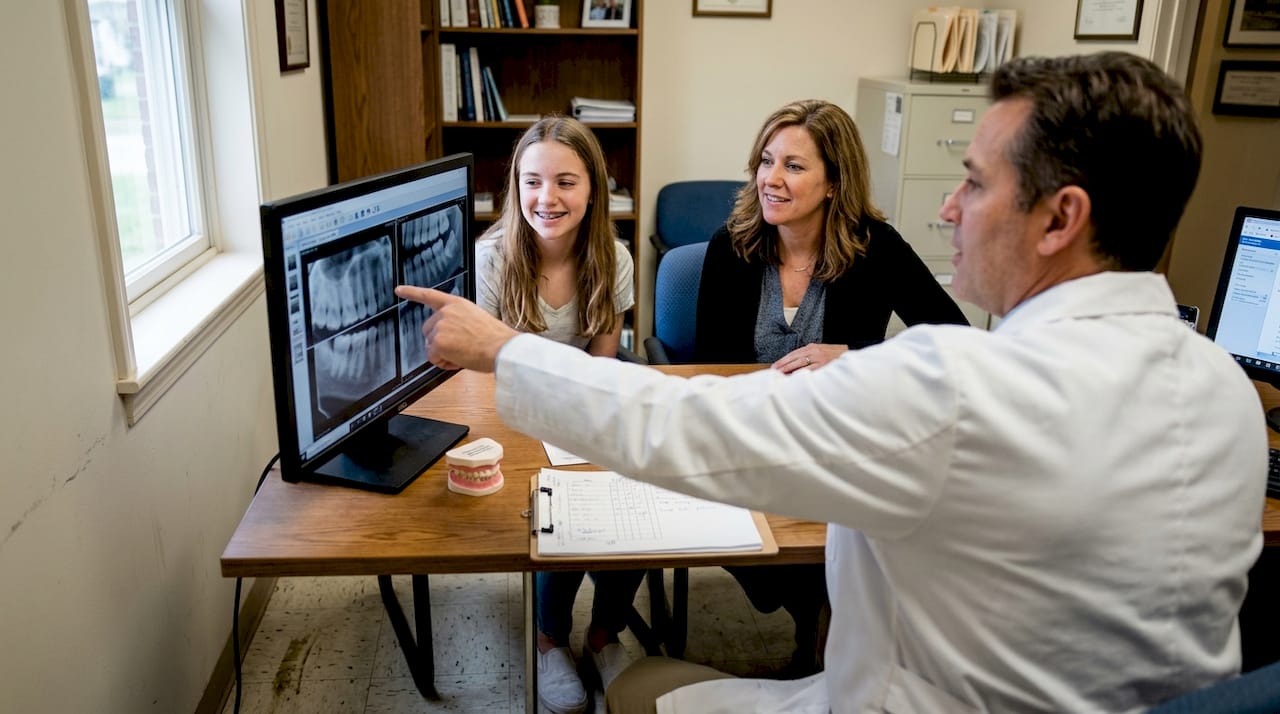
Initial consultation and imaging: Your dentist performs a comprehensive exam including X-rays or 3D scans to assess bone structure, sinus location, and nerve pathways. This imaging creates a detailed treatment plan tailored to your anatomy.
-
Insurance verification and payment setup: Before surgery, the office verifies your Denti-Cal or PPO benefits and provides a cost breakdown. You finalize payment arrangements, whether through insurance, financing, or membership plans. This step prevents treatment delays.
-
Surgical implant placement: Under local anesthesia, the dentist places a titanium post into your jawbone through a small incision in the gum. The procedure typically takes 1 to 2 hours per implant. You may experience mild discomfort, but sedation options are available if needed.
-
Osseointegration healing phase: Successful osseointegration, a critical implant success factor, typically takes 3 to 6 months post-surgery before loading the implant with a crown. During this time, bone cells grow around the implant, securing it firmly. You’ll wear a temporary restoration if the implant is visible.
-
Abutment placement: Once osseointegration is complete, the dentist attaches an abutment, a small connector piece, to the implant. This minor procedure requires local anesthesia and heals in about 2 weeks.
-
Crown fabrication and placement: Your dentist takes impressions to create a custom crown that matches your natural teeth in color and shape. The final crown is cemented or screwed onto the abutment, completing your restoration.
Pro Tip: Follow the preparation and step-by-step implant process guide provided by your dentist. Attend every scheduled appointment, as missing follow-ups can delay healing and compromise results.
| Phase | Duration | Key Activity |
|---|---|---|
| Consultation | 1 visit | Imaging, planning, insurance verification |
| Surgery | 1 visit | Implant placement under anesthesia |
| Healing | 3-6 months | Osseointegration, bone bonding |
| Abutment | 1 visit | Connector placement |
| Crown | 2-3 visits | Impressions, fabrication, final placement |
For more details on what to expect during recovery, review this dental implant process guide and check the implant healing timeline research for clinical insights.
Insurance and affordability considerations
Understanding how Denti-Cal and PPO insurance impact implant costs is essential for financial planning. Denti-Cal coverage for dental implants varies significantly by county and eligibility category. Some counties offer limited implant coverage for specific medical conditions, while others do not cover implants at all. Contact your local Denti-Cal office to verify whether your situation qualifies.
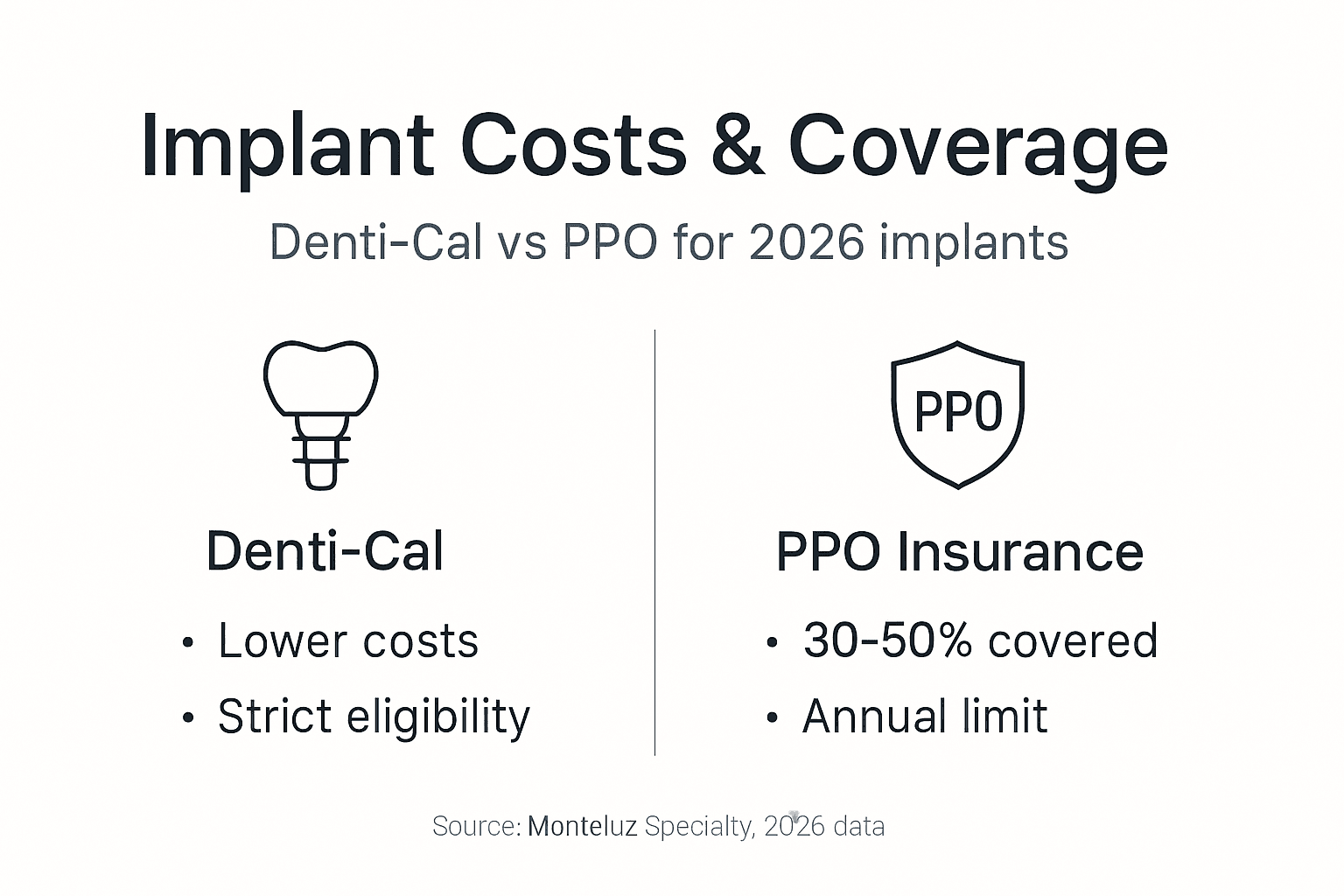
PPO insurance typically covers 30% to 50% of implant costs, including surgery, abutment, and crown. However, annual maximums often range from $1,000 to $2,000, which may not cover the full treatment. Review your policy’s exclusions and waiting periods before starting treatment. Some plans require a waiting period of 6 to 12 months for major procedures.
For families without adequate insurance coverage, flexible payment plans and membership programs offer relief. Monteluz Specialty provides affordable dental membership plans starting at $20 per month, covering preventive care and offering discounts on major treatments like implants. These plans work well for uninsured patients or those with limited Denti-Cal benefits.
Cost comparison helps illustrate the financial benefit of insurance:
| Scenario | Estimated Total Cost | Insurance Coverage | Out-of-Pocket |
|---|---|---|---|
| Uninsured | $3,000-$5,000 | $0 | $3,000-$5,000 |
| PPO insured | $3,000-$5,000 | $1,000-$2,500 | $1,500-$3,000 |
| Denti-Cal eligible | $3,000-$5,000 | Varies by county | $0-$3,000 |
| Membership plan | $3,000-$5,000 | Discounts applied | $2,000-$3,500 |
Financial planning prevents treatment abandonment. Many patients start implant treatment but stop midway due to unexpected costs. Verify all expenses upfront, including potential bone grafting, extractions, or temporary restorations. Ask for a detailed written estimate.
Key affordability tips:
- Verify insurance coverage for dental implants before booking surgery.
- Compare total costs across providers, but prioritize experience and success rates over price alone.
- Use implant financing options like third-party lenders or in-house payment plans to spread costs over time.
- Consider membership plans if you’re uninsured or have minimal benefits.
Common mistakes and troubleshooting during and after implant treatment
Avoiding common pitfalls dramatically improves implant success. Many patients unknowingly sabotage their outcomes through poor habits or missed steps.
Skipping or delaying follow-up appointments is a top mistake. Your dentist monitors healing, checks for infections, and adjusts treatment plans as needed. Missing these visits allows small problems to escalate into implant failure. Schedule all appointments in advance and prioritize attendance.
Poor post-op oral hygiene leads to peri-implantitis, an infection around the implant that causes bone loss and eventual failure. Brush twice daily with a soft-bristle toothbrush, floss gently around the implant, and use an antibacterial rinse as directed. Regular cleanings every 3 to 6 months are essential.

Starting treatment without verified insurance or a financial plan creates stress and may force you to abandon treatment midway. Confirm coverage and payment options before surgery. If your financial situation changes, contact your dentist immediately to discuss alternatives.
Smoking dramatically increases failure rates during healing. Nicotine restricts blood flow to the gums, slowing osseointegration and raising infection risk. If you smoke, quit at least 2 weeks before surgery and avoid smoking throughout the healing phase.
Neglecting bone health assessment leads to implant failure. Proper imaging, including 3D scans, reveals bone density and structure. If imaging shows insufficient bone, postpone implant placement until grafting is complete. Rushing this step sets you up for complications.
Troubleshooting tips:
- If you notice swelling, persistent pain, or implant movement, contact your dentist immediately.
- Review implant care tips after surgery for detailed hygiene instructions.
- Avoid hard or sticky foods during the healing phase to prevent implant stress.
- Follow implant safety tips to minimize complications.
Expected timeline and outcomes after dental implant placement
Total treatment time ranges from 3 to 9 months, depending on individual healing rates, bone grafting needs, and the number of implants placed. Simple cases with healthy bone may take 3 to 4 months, while complex cases requiring grafting can extend to 9 months or longer.
Successful osseointegration typically takes 3 to 6 months post-surgery before the implant can support a crown. Rushing this phase risks implant failure. Patience during healing pays off with long-term stability.
Proper bone preparation and patient compliance improve implant success rates above 90%. Patients who follow post-op care instructions, attend all appointments, and maintain excellent oral hygiene experience fewer complications. Success rates drop to 75% or lower when patients neglect care protocols.
Complication rates remain low, typically 5% to 10%, with adherence to proper protocols. Common complications include infection, nerve damage, or implant loosening. Most complications are treatable if caught early through regular monitoring.
Patient compliance with post-op care strongly influences final outcomes. Your dentist provides specific instructions about diet, hygiene, and activity restrictions. Following these guidelines reduces failure risk and speeds healing. Non-compliance is the leading preventable cause of implant failure.
“Understanding the timeline reduces frustration and supports realistic treatment planning. Dental implants are a long-term investment requiring patience during the healing process, but the payoff is a permanent, natural-looking tooth replacement that can last decades with proper care.”
For more information on healing phases and success factors, review research on implant success and healing timelines.
Affordable dental implants at Monteluz Specialty in Southern California
If you’re ready to restore your smile, Monteluz Specialty offers expert Dental Implants Missing Teeth Tooth Replacement designed for Denti-Cal and PPO patients in the San Bernardino area and Inland Empire. Our team provides comprehensive treatment planning, from initial consultation through final crown placement, with bilingual support in English and Spanish.
We understand affordability matters. That’s why we offer flexible payment plans and affordable dental membership plans starting at just $20 per month for families without insurance. Our staff assists with insurance help for dental implants, verifying benefits and maximizing coverage to reduce your out-of-pocket costs. Schedule a consultation today to discuss your implant options and financial plan.
Frequently asked questions about dental implants for Denti-Cal and PPO patients
Does Denti-Cal cover dental implants in 2026?
Denti-Cal coverage for dental implants varies by county and eligibility status. Some counties provide limited coverage for medically necessary cases, while others do not cover implants at all. Contact your local Denti-Cal office or dental provider to verify your specific benefits and eligibility.
How long does the entire dental implant process take?
The complete process typically takes 3 to 9 months from initial consultation to final crown placement. Simple cases with healthy bone heal faster, while cases requiring bone grafting extend the timeline. Most of this time is spent on osseointegration, the healing phase where bone bonds to the implant.
Will I experience pain during or after implant surgery?
Most patients report minimal discomfort during surgery due to local anesthesia. Post-surgery, you may experience mild swelling and soreness for a few days, manageable with over-the-counter pain relievers. Your dentist provides pain management instructions and prescriptions if needed.
What can I do to improve my chances of implant success?
Follow all post-op care instructions, attend every follow-up appointment, maintain excellent oral hygiene, avoid smoking, and eat a soft diet during healing. Patients who comply with these guidelines achieve success rates above 90%. Early detection of any issues through regular monitoring also prevents complications.
Are payment plans available if my insurance doesn’t cover the full cost?
Yes, many dental practices including Monteluz Specialty offer flexible payment plans and financing options. Third-party lenders, in-house payment plans, and membership programs help spread costs over time, making implants accessible even with limited insurance coverage. Discuss financial options during your consultation to find a plan that fits your budget.
Recommended
- Dental Implant Checklist 2026: 20% Higher CA Costs & Tips
- Dental Implant Financing Guide 2026: 30% More Affordable
- How to Prepare for Dental Implants for Success
- Role of Insurance in Dental Implants Access
- Implantati – zobni vsadki | Artident