TL;DR:
- Dental implants are generally not covered by Denti-Cal and require documented medical necessity.
- The referral process involves multiple steps, including examinations, documentation, and potential delays.
- Alternatives like dentures or financing plans can help patients access affordable tooth replacement options.
Getting a dental implant through Denti-Cal or an HMO plan can feel like navigating a maze with no clear exit. Dental implants are generally not covered by Denti-Cal for adults, and prior authorization is granted only in rare, well-documented cases. The steps involved require coordination between your general dentist, a specialist, and the insurance program itself. Many patients in the Inland Empire give up before they even start. This guide walks you through every stage of the referral process, what to prepare, what to expect if you’re denied, and how to find a realistic path to the smile you deserve.
Table of Contents
- Understanding dental implant coverage with Denti-Cal and HMO
- Preparing for your dental implant referral: What you need
- Step-by-step dental implant referral process
- Your options if denied: Alternatives and financing strategies
- A closer look: Why dental implant referrals are complex (and what really works)
- Take your next steps toward affordable dental implants
- Frequently asked questions
Key Takeaways
| Point | Details |
|---|---|
| Denti-Cal rarely covers implants | Dental implants require complex prior authorization and are usually only approved for exceptional medical cases. |
| Referrals need complete records | Success depends on thorough exams, X-rays, and clear reasons why other treatments won’t work. |
| Know your alternatives | Be ready to pursue appeals, dentures, or membership financing if your implant is denied. |
| Work with experienced providers | Choose dental offices familiar with the Denti-Cal system for the best chance at approval or affordable care. |
Understanding dental implant coverage with Denti-Cal and HMO
Before you schedule a single appointment, it helps to understand exactly what your insurance will and won’t pay for. Dental implants are considered elective under Denti-Cal for adults, meaning they require prior authorization and are only approved in rare, medically justified situations. Knowing this upfront saves you from surprises later.
Denti-Cal (California’s Medi-Cal dental program) covers a defined set of services for adults. These typically include:
- Routine exams and X-rays
- Tooth extractions
- Full and partial dentures
- Some crowns and root canals (when medically necessary)
- Emergency dental care
Dental implants are not on that standard list. HMO dental plans often mirror Denti-Cal’s limitations because many HMO networks route low-income patients directly into the Medi-Cal dental system. PPO plans are more flexible and may cover a portion of implant-related costs like the crown or abutment, but rarely the implant post itself.
One of the biggest barriers patients face is simply finding a provider. Only 21% of dentists in California accept Denti-Cal, which means your options are already limited before the referral process even begins. That access gap is real, and it affects families across San Bernardino and the wider Inland Empire every day.
To have any chance at implant coverage, two key prerequisites must be met:
| Prerequisite | What it means for you |
|---|---|
| Medical necessity documentation | Your dentist must show the implant is clinically required, not just preferred |
| Alternative treatments explored | Dentures and bridges must be considered and ruled out in writing |
| Supporting X-rays and records | Current imaging must accompany any prior authorization request |
| Referral from a participating provider | Only a Denti-Cal or HMO dentist can initiate the process |
Understanding insurance coverage for dental implants before your first visit puts you in a much stronger position. We also recommend reviewing our Denti-Cal implant guide for a deeper look at what the program allows in 2026.
Preparing for your dental implant referral: What you need
With coverage limits in mind, let’s look at the must-have documents and preparations before your first visit. Preparation is where most patients either gain or lose momentum. Showing up without the right records can delay your case by weeks.
Your first step is scheduling an exam with a dentist who participates in Denti-Cal or your HMO network. This is not optional. Only a participating provider can initiate the referral and submit a prior authorization request on your behalf. When you go to that appointment, bring everything you have:
- Recent dental X-rays (taken within the last 6 to 12 months)
- Your Denti-Cal or HMO insurance card
- Any referral notes from previous providers
- A written summary of your dental history, especially past extractions or failed restorations
- Medical records if a systemic condition like diabetes or bone loss is relevant to your case
Your dentist must also document why simpler alternatives won’t work for you. Dentists must document that other treatments like dentures or bridges are not suitable before prior authorization can even be considered. This written clinical justification, paired with X-rays, forms the backbone of your request.
“The strength of your prior authorization request depends almost entirely on how thoroughly your dentist documents your case. Incomplete submissions are the number one reason requests stall or get denied.”
Organization matters more than most patients realize. Create a folder (physical or digital) that holds every document, every date, and every provider name involved in your case. Delays in the Denti-Cal system are common, and having a clear paper trail helps you follow up effectively.
Pro Tip: If you’re not sure whether your current dentist accepts Denti-Cal, use the official Medi-Cal Dental provider directory to confirm before your visit. Choosing the wrong provider resets the entire process.
If language is a barrier, look for offices with bilingual staff. You can access bilingual dental services in the Inland Empire that can guide you through paperwork in both English and Spanish. And when choosing the right dentist, make sure they have experience submitting prior authorization requests, not just general Denti-Cal billing.
Step-by-step dental implant referral process
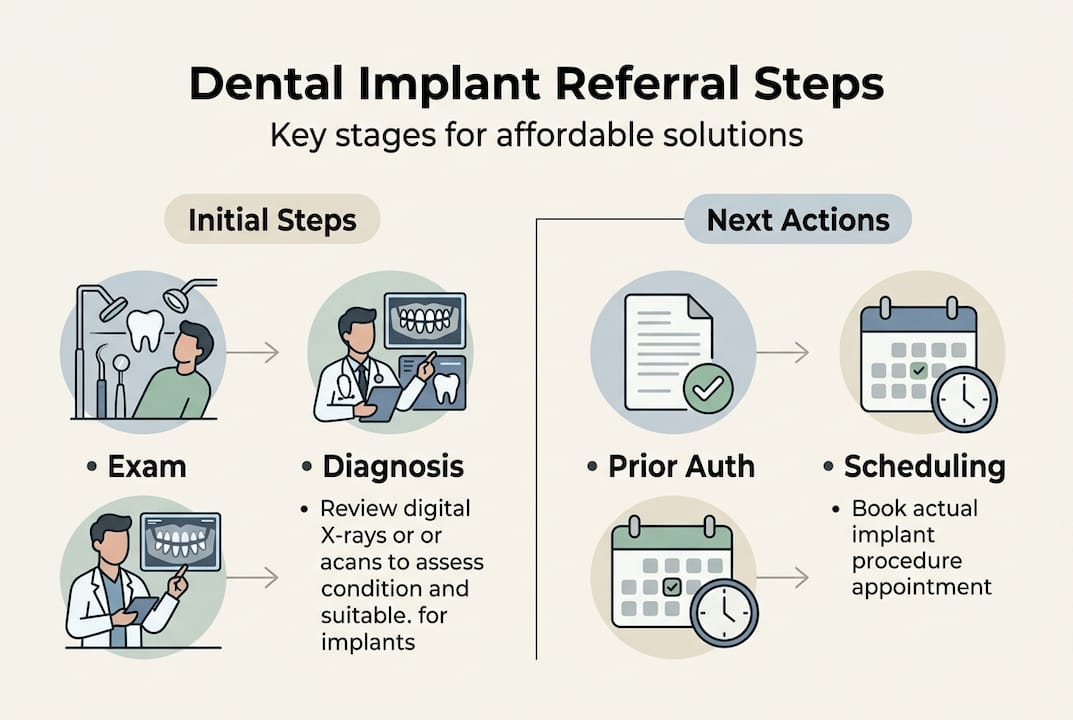
Once you’re fully prepared, here’s what actually happens, step-by-step, during the referral process. Each stage builds on the last, so skipping or rushing any one of them can derail your case.
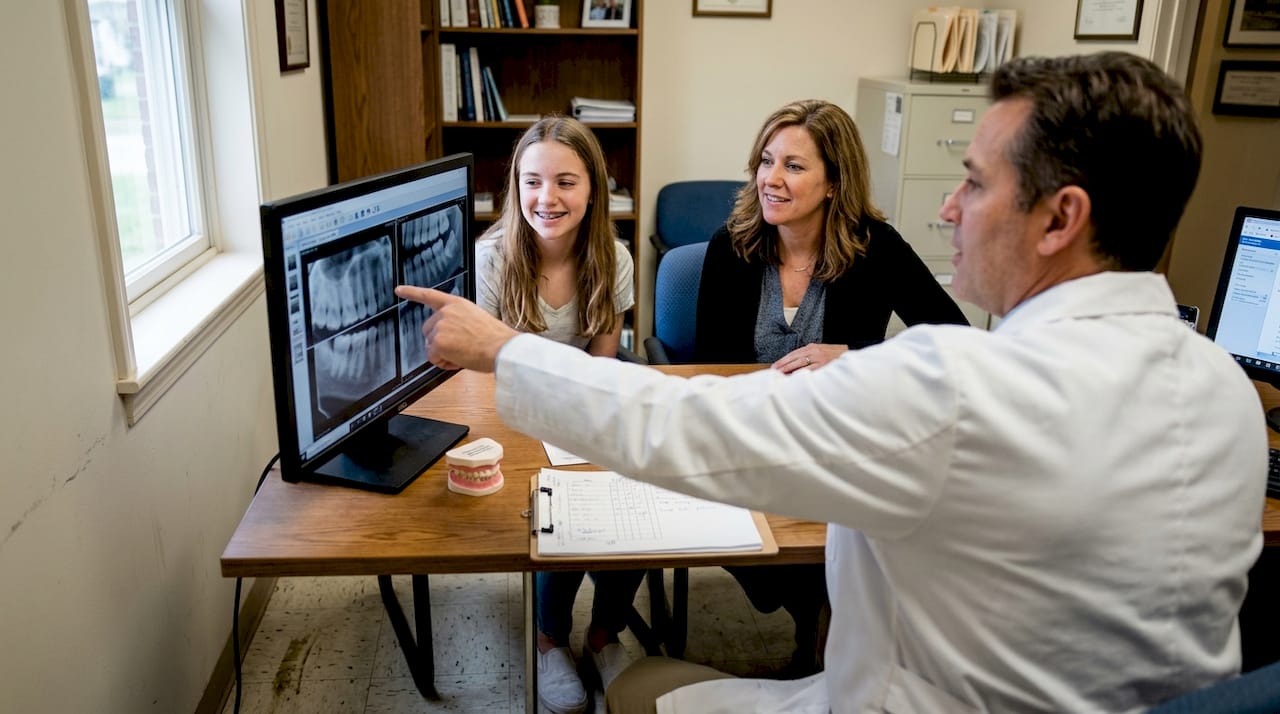
- Initial exam and diagnosis. Your Denti-Cal or HMO dentist evaluates your oral health, takes X-rays, and identifies the missing tooth or teeth. They document your bone density, gum health, and overall candidacy for implants.
- Alternatives discussed and documented. The dentist must formally explore dentures, bridges, and partial dentures as options. If those alternatives are not suitable for your specific situation, that reasoning must be written into your clinical record.
- Referral to an oral surgeon or specialist. If the general dentist determines a specialist evaluation is needed, they submit a referral within the Denti-Cal or HMO network. Not all networks have oral surgeons available, which can add time.
- Prior authorization request submitted. Your dentist (or the specialist) submits the full prior authorization package to Denti-Cal or your HMO. This includes X-rays, clinical notes, and the documented rationale. The process requires a dentist evaluation, exploration of alternatives, referral if needed, submission to Denti-Cal, and then an approval decision or appeal.
- Await approval or prepare to appeal. Decisions can take weeks. If approved, treatment planning begins. If denied, you have the right to appeal.
| Stage | Typical timeline | Key action needed |
|---|---|---|
| Exam and diagnosis | 1 to 2 weeks | Schedule with Denti-Cal provider |
| Documentation and referral | 2 to 4 weeks | Gather all records |
| Prior auth submission | 1 to 3 weeks | Provider submits package |
| Decision or appeal | 4 to 8 weeks | Follow up regularly |
Pro Tip: Call your Denti-Cal plan or HMO every two weeks to check the status of your prior authorization. Proactive follow-up can prevent your request from sitting unreviewed. If you need help understanding financing options for implants while you wait, explore those early so you’re not caught off guard. You can also review accessible dental care options in the Inland Empire that work alongside your insurance.
Your options if denied: Alternatives and financing strategies
But what if your request is denied? Here’s how to keep moving forward without getting stuck. A denial is not the end of the road. It’s a signal to regroup and choose your next move carefully.
Appealing the decision is always your first option. You have the right to request a formal review, and a well-documented appeal that addresses the specific reason for denial can sometimes succeed where the initial request did not. Ask your dentist to strengthen the clinical justification and resubmit.
If the appeal doesn’t go your way, most Denti-Cal implant requests are denied, but alternatives and financing options can close that access gap. Here’s what Denti-Cal does typically cover as alternatives:
- Full dentures for patients missing all teeth in an arch
- Partial dentures for patients missing several teeth
- Fixed bridges in some cases, depending on adjacent tooth health
These options restore function and appearance, even if they don’t replicate the permanence of implants.
For patients who want implants but can’t get them covered, financing is a realistic path. Here’s a quick comparison:
| Financing option | Best for | Key detail |
|---|---|---|
| CareCredit | Patients with decent credit | Low or no interest promotional periods |
| In-house membership plan | Uninsured or underinsured patients | Starts at $20 per month at Monteluz |
| Payment plans through the office | Flexible budgeters | Spread cost over time with no third party |
Pro Tip: Combining Denti-Cal for covered services (like extractions or X-rays) with a financing plan for the implant itself is often the most affordable real-world strategy. You can review financing options explained in detail, or explore membership plans for dental care that make ongoing care more predictable and affordable.
A closer look: Why dental implant referrals are complex (and what really works)
We want to be honest with you about something most guides skip over. The Denti-Cal implant referral process is not just complicated on paper. It’s genuinely difficult in practice, and the odds are stacked against approval from the start.
Only 21% of California dentists accept Denti-Cal, which means access is limited even before a single form is filed. Most patients are discouraged by the low approval rate and never complete the process. But here’s what we’ve seen work: the patients who succeed are the ones who come in with complete documentation, stay persistent through delays, and work with a dental team that knows the system.
Bilingual offices matter more than most people realize. When patients can communicate clearly with their provider in their preferred language, documentation is more accurate and referrals are more complete. That reduces errors and speeds up the process.
The most realistic strategy we recommend is using Denti-Cal for what it does cover (exams, extractions, dentures) and layering in financing or a membership plan for implant costs. You can also explore dentures and bridges in the Inland Empire as a strong interim or permanent solution while you plan for implants. Persistence, preparation, and the right team make all the difference.
Take your next steps toward affordable dental implants
You’ve learned the step-by-step path. Now let Monteluz Dental Specialty Group help you move from information to action.
Whether you’re navigating Denti-Cal, an HMO plan, or have no insurance at all, we have options designed for patients exactly like you. Our dental implants for missing teeth services are built around accessibility and long-term results. For uninsured patients, our dental membership plans start at just $20 per month and make consistent care affordable. If you’re ready to take the next step toward permanent dental implants, our bilingual team in San Bernardino is here to guide you through every part of the process, from referrals to financing.
Frequently asked questions
Are dental implants covered by Denti-Cal insurance?
Dental implants are elective under Denti-Cal and require prior authorization, which is only granted in rare cases of documented medical necessity. Most adult patients will not receive implant coverage through Denti-Cal without a strong clinical justification.
How long does the dental implant referral process take?
The full process, from your initial exam to a final decision, can take anywhere from several weeks to several months. Prior authorization can result in delays, especially if an appeal becomes necessary after an initial denial.
What options do I have if my dental implant referral is denied?
You can file a formal appeal with your plan, or explore covered alternatives like dentures or bridges. Financing and affordable alternatives such as membership plans are also available to help you access implant care outside of Denti-Cal coverage.
Can I choose any dentist for the implant referral process?
No. You must begin with a dentist who participates in Denti-Cal or your HMO plan. Only a participating provider can initiate the referral, submit documentation, and request prior authorization on your behalf.
Recommended
- Top 6 Best Dental Implant Options in 2026 for Affordable Care
- 6 Key Types of Dental Implants for Affordable Family Care
- Dental implant guide 2026: 90% success for Denti-Cal patients
- Dental Implant Checklist 2026: 20% Higher CA Costs & Tips