Losing a tooth can mean more than just a gap in your smile for families in San Bernardino. Missing teeth often make eating and speaking difficult, affecting daily life and confidence. For those using Denti-Cal and searching for options within a limited budget, understanding dental implants as a lasting, natural-feeling solution can help you make the right choice for your health and finances. This guide uncovers what implants really offer and clears up common myths so you can plan for a healthier future.
Table of Contents
- Defining Dental Implants And Common Myths
- Types Of Dental Implants And Their Uses
- How Dental Implants Improve Oral Health
- Cost, Insurance, And Financial Accessibility
- Comparing Dental Implants To Alternative Solutions
Key Takeaways
| Point | Details |
|---|---|
| Understanding Dental Implants | Dental implants are a permanent solution for replacing missing teeth, consisting of a titanium screw, abutment, and artificial tooth. They integrate into the jawbone, providing both function and aesthetics. |
| Addressing Common Myths | Many patients fear dental implants due to misconceptions about pain and suitability. Modern procedures are generally comfortable, and age is not a limiting factor for candidacy. |
| Types of Dental Implants | There are two primary types of implants: endosteal and subperiosteal, each catering to different dental restoration needs based on bone structure. |
| Long-Term Benefits | Dental implants not only improve functionality and appearance but also support overall oral health by preventing bone loss and maintaining surrounding teeth’s alignment. |
Defining Dental Implants and Common Myths
Dental implants represent an advanced solution for replacing missing teeth, offering patients a permanent and natural-looking alternative to traditional tooth replacement methods. Dental implants are medical devices designed to replicate both the root and crown of a lost tooth, consisting of three critical components: a titanium screw, an abutment, and an artificial tooth.
The implant process begins with surgical placement of a titanium screw directly into the jawbone, which serves as an artificial tooth root. This screw is made from biocompatible materials that allow it to integrate seamlessly with the bone through a process called osseointegration. Once healed, an abutment is attached above the gumline, and a custom-designed artificial tooth or crown is mounted, creating a replacement that looks, feels, and functions like a natural tooth.
Despite their effectiveness, several persistent myths surround dental implants that can discourage potential patients. Common misconceptions include beliefs that implants are excessively painful, unsuitable for older adults, or prohibitively expensive. In reality, modern implant procedures are relatively comfortable, with most patients reporting minimal discomfort. Age is not a primary disqualifying factor; instead, candidates are evaluated based on overall oral health, bone density, and individual medical history.
Pro tip: Before pursuing dental implants, schedule a comprehensive consultation to assess your specific oral health needs and determine your candidacy for the procedure.
Types of Dental Implants and Their Uses
Dental implants are not a one-size-fits-all solution. Dental implants are primarily classified into two main categories: endosteal and subperiosteal implants, each designed to address specific dental restoration needs. Endosteal implants, the most common type, are surgically placed directly into the jawbone and can be screw-shaped, cylindrical, or blade-shaped. These versatile implants are ideal for patients with sufficient bone density and can replace single or multiple teeth with remarkable stability and natural functionality.
Subperiosteal implants offer an alternative for patients with limited bone structure. Positioned on top of the jawbone but underneath the gum tissue, these implants are typically recommended when traditional endosteal implants are not feasible. They provide a foundation for supporting dentures or bridges, offering a solution for patients who might otherwise be considered poor candidates for dental implant procedures. Dental implant materials primarily include biocompatible options like titanium and ceramic, which integrate seamlessly with the body’s natural tissues.
Beyond the basic classification, dental implants can be further customized to meet individual patient needs. Single-tooth implants replace individual missing teeth with a standalone prosthetic, while multiple-tooth implants can support bridges or partial dentures. Full-arch implants represent the most comprehensive solution, providing support for complete sets of replacement teeth. The selection depends on factors such as bone quality, overall oral health, number of missing teeth, and the patient’s specific functional and aesthetic requirements.
Here’s a concise comparison of dental implant types and their typical uses:
| Implant Type | Placement Location | Ideal Candidate | Common Uses |
|---|---|---|---|
| Endosteal | Directly in jawbone | Healthy bone density | Replacing single/multiple |
| Subperiosteal | Above jawbone, below gums | Limited bone volume | Supporting dentures/bridges |
Pro tip: Consult with a dental specialist who can perform a comprehensive oral assessment to determine the most appropriate type of dental implant for your unique dental anatomy and health needs.
How Dental Implants Improve Oral Health
Dental implants play a crucial role in comprehensive oral health restoration, addressing far more than just aesthetic concerns. By replacing missing teeth, these advanced prosthetics help patients regain essential functional abilities like proper chewing and clear speech. When a tooth is lost, the surrounding bone begins to deteriorate, which can lead to significant structural changes in the jaw and facial appearance. Dental implants counteract this process by providing a stable, permanent root replacement that stimulates and preserves bone density.

Beyond bone preservation, dental implants contribute to overall oral health by maintaining the alignment and stability of surrounding teeth. When a tooth is missing, adjacent teeth can gradually shift, creating misalignment that leads to bite problems, increased risk of tooth decay, and potential gum disease. Dental implants restore natural function by filling these gaps and preventing the domino effect of dental complications. The implant acts as a standalone solution that doesn’t require modifying neighboring healthy teeth, which is often necessary with traditional bridge treatments.
The long-term benefits of dental implants extend to psychological and nutritional health. Patients with complete, stable tooth replacements can eat a more diverse diet, ensuring proper nutrition and preventing potential health issues related to dietary restrictions. Moreover, the confidence gained from a full, natural-looking smile can significantly improve mental well-being, reducing social anxiety and enhancing overall quality of life. By mimicking natural tooth roots and providing a permanent solution, dental implants represent a holistic approach to oral health that goes far beyond simple cosmetic enhancement.
Pro tip: Schedule regular dental check-ups to monitor your implants and ensure ongoing oral health, treating them with the same care and attention you would give natural teeth.
Cost, Insurance, and Financial Accessibility
Dental implants are a significant investment in long-term oral health, with costs varying widely depending on individual patient needs and specific treatment requirements. For families in San Bernardino, understanding the financial landscape of dental implants is crucial. Dental implant treatments typically range from $1,500 to $6,000 per tooth, factoring in surgical placement, custom prosthetics, and potential additional procedures like bone grafting or sinus lifts. While these numbers might seem overwhelming, multiple financing options and insurance strategies can make this transformative treatment more accessible.
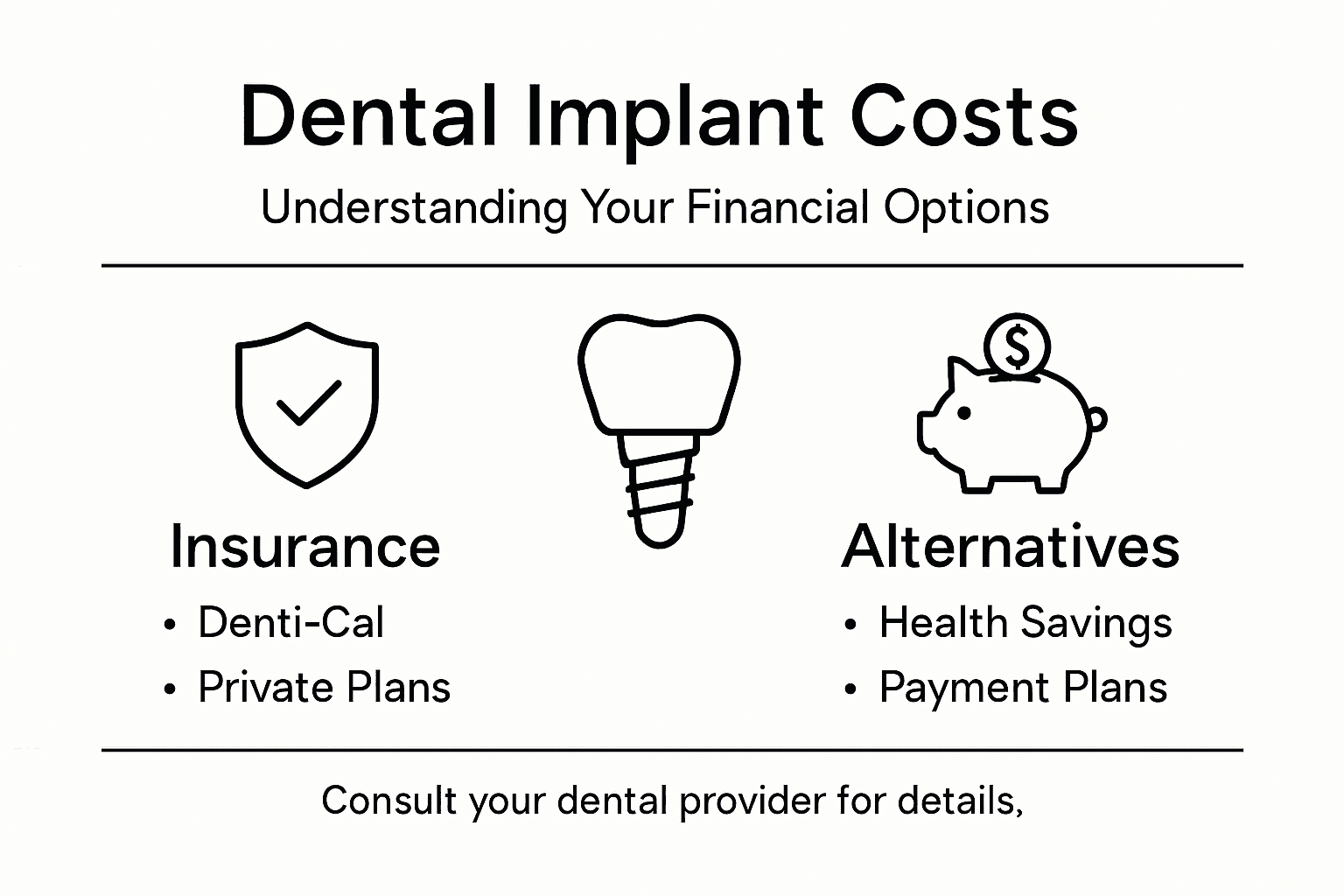
Navigating insurance coverage requires careful consideration of available programs. Denti-Cal, California’s Medicaid dental program, provides limited coverage for dental procedures, which may include partial reimbursement for implant-related treatments under specific medical necessity conditions. Patients with PPO or HMO insurance plans should thoroughly review their policy details, as some plans offer partial coverage for dental implants when deemed medically essential. Additionally, many dental practices in San Bernardino offer flexible payment plans, in-house membership programs, and financing options that can significantly reduce out-of-pocket expenses.
Beyond traditional insurance, patients can explore alternative financial strategies to manage dental implant costs. Health savings accounts (HSAs) and flexible spending accounts (FSAs) can be used to cover medical expenses, potentially providing tax advantages. Some dental offices offer sliding scale fees based on income, and medical credit lines like CareCredit can spread treatment costs over manageable monthly payments. Comparing multiple dental providers, asking about comprehensive treatment packages, and discussing all available financial options can help patients find a solution that fits their budget without compromising quality of care.
Below is an overview of financial options for dental implants, highlighting accessibility:
| Financial Option | Coverage Scope | Potential Advantages | Considerations |
|---|---|---|---|
| Dental Insurance | Partial, varies by plan | Reduces direct expense | Medical necessity often required |
| Patient Financing | Full amount, over time | Affordable monthly payment | May include interest charges |
| Health Savings/FSA | Qualifying medical costs | Tax benefits on expenses | Contribution limits apply |
| Sliding Scale Fees | Based on patient income | Increased accessibility | Availability varies per office |
Pro tip: Request a detailed, itemized treatment plan and discuss all potential financial options with your dental provider before proceeding, ensuring you understand the full scope of costs and available assistance programs.
Comparing Dental Implants to Alternative Solutions
Traditional tooth replacement options present significant limitations compared to modern dental implants. Dentures and bridges have been standard solutions for missing teeth, but they come with substantial drawbacks that compromise long-term oral health and patient comfort. Dentures require frequent adjustments, can slip during speech or eating, and accelerate bone loss in the jaw. Bridges, while more stable, require grinding down adjacent healthy teeth to create anchoring points, potentially damaging otherwise sound dental structures.
Dental implants stand out as a superior alternative by addressing the fundamental issues with traditional tooth replacement methods. Unlike dentures that sit on top of the gums and cause potential discomfort, implants are surgically integrated into the jawbone, providing a stable, permanent solution that mimics natural tooth roots. Implant-supported solutions offer unprecedented stability, preventing bone deterioration and maintaining facial structure. The ability to chew, speak, and smile with confidence makes implants a transformative option for patients seeking comprehensive dental restoration.
The long-term benefits of dental implants extend beyond immediate functional improvements. While bridges typically last 5-10 years and dentures require periodic replacement, implants can potentially last a lifetime with proper care. They prevent the sunken facial appearance associated with bone loss, maintain overall oral health by not compromising neighboring teeth, and provide a natural-looking solution that integrates seamlessly with existing dental structures. For patients in San Bernardino seeking a permanent, reliable tooth replacement option, dental implants represent the most advanced and patient-friendly approach available.
Pro tip: Consult with a dental specialist to conduct a comprehensive oral assessment and determine whether dental implants are the most suitable solution for your specific dental needs and health condition.
Discover How Dental Implants Can Restore Your Smile and Confidence in San Bernardino
If you are dealing with missing teeth or struggling with dentures that don’t feel secure, dental implants could be the solution you have been searching for. This advanced option offers a permanent, natural-looking way to improve your oral health and regain your quality of life. At Monteluz Dental Specialty Group, we understand the challenges many face with tooth loss, including bone loss, shifting teeth, and restricted diet choices. Our experienced team is dedicated to providing personalized implant treatments that fit your unique needs and help you overcome these obstacles.
Explore how our specialty-driven practice supports patients throughout the entire implant process with compassionate care, bilingual support, and affordable payment options. Don’t let financial concerns hold you back from achieving the long-term benefits of dental implants. Visit our Dental Health to learn more about implant solutions and oral health insights. Take the first step towards a healthier smile by contacting us today at Monteluz Dental Specialty Group. Your journey to lasting oral health and renewed confidence starts here.
Frequently Asked Questions
What are dental implants and how do they work?
Dental implants are permanent medical devices designed to replace missing teeth. They consist of a titanium screw that acts as a tooth root, an abutment, and an artificial tooth. The titanium screw is surgically placed into the jawbone and integrates with the bone through a process called osseointegration.
Are dental implants painful and what is the recovery time?
Modern dental implant procedures are generally comfortable, with many patients reporting minimal discomfort. Recovery time can vary, but most individuals can expect to resume normal activities within a few days, while the complete healing process may take several months.
How do dental implants compare to traditional dentures and bridges?
Dental implants are superior to traditional dentures and bridges as they provide a permanent solution and mimic natural tooth roots, preventing bone loss. While dentures can slip and require adjustments, and bridges necessitate altering healthy teeth, implants offer stability and do not compromise surrounding dental structures.
What financial options are available for dental implants?
Costs for dental implants vary widely, generally ranging from $1,500 to $6,000 per tooth. Patients can explore insurance coverage, financing options, health savings accounts, and sliding scale fees based on income to manage the financial aspects associated with dental implants.
Recommended
- Dental Implant Procedure: Transforming Smiles in San Bernardino
- Rol de los implantes dentales en familias de San Bernardino
- Dental Implants Center In San Bernardino California
- The Life-Changing Benefits of Dental Implants: Restore Your Smile