
Every parent faces the challenge of making daily dental care feel less like a chore and more like a routine everyone can enjoy. For families in San Bernardino, building strong dental habits at home matters because it shapes a child’s health for years to come and can help avoid expensive dental problems. This simple guide offers practical steps to prepare your home, establish fun routines, and find support, so your family’s dental health becomes a lasting source of strength.
Table of Contents
- Step 1: Prepare Your Home for Family Dental Health
- Step 2: Establish Daily Brushing and Flossing Routines
- Step 3: Schedule Regular Dental Visits for Everyone
- Step 4: Monitor Family Diet and Oral Habits
- Step 5: Review and Adjust Your Dental Care Plan
Quick Summary
| Key Point | Explanation |
|---|---|
| 1. Create a Family Dental Station | Set up a dedicated area for dental supplies in your bathroom to encourage daily use and engagement. |
| 2. Establish Daily Routines | Implement structured brushing and flossing routines to nurture consistent oral hygiene habits. |
| 3. Schedule Regular Checkups | Plan biannual dental visits for all family members to catch and address potential issues early. |
| 4. Monitor Dietary Choices | Limit sugary snacks and encourage nutritious foods to support oral health and prevent decay. |
| 5. Review Dental Care Plans | Perform regular assessments of family dental care strategies to ensure they meet everyone’s needs. |
Step 1: Prepare Your Home for Family Dental Health
Transforming your home into a dental health sanctuary starts with creating an environment that supports excellent oral hygiene for every family member. By strategically organizing your space and establishing consistent routines, you can make dental care feel less like a chore and more like a shared family activity.
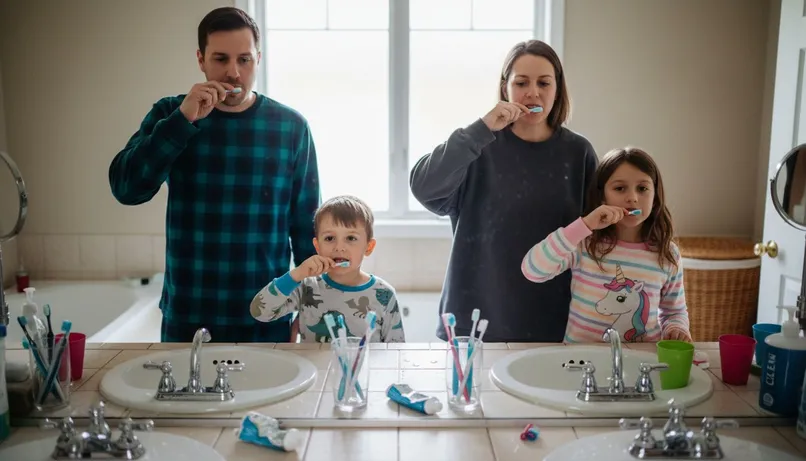
Begin by creating a dedicated dental care station in your bathroom that makes brushing accessible and engaging for all ages. Stock this area with essential supplies like soft-bristled toothbrushes sized for children and adults, fluoride toothpaste, and dental floss. Consider color-coding toothbrushes or using fun character designs to make dental tools more appealing to kids. The CDC recommends starting oral health practices early, which means even wiping an infant’s gums twice daily before teeth emerge.
Establish a family dental routine that transforms brushing from a mundane task into an interactive experience. Create a colorful wall chart to track everyone’s brushing times and reward consistent habits. Some families find success with two-minute timer apps or playing short songs during brushing to make the process more enjoyable. Focus on making dental care a positive, shared experience that teaches children the importance of oral hygiene through consistent modeling and gentle encouragement.

Here’s a summary of essential family dental care tools and their recommended use:
| Tool | Recommended User | Purpose |
|---|---|---|
| Soft-bristled toothbrush | Children and adults | Gentle cleaning of teeth |
| Fluoride toothpaste | All ages | Strengthens enamel, prevents decay |
| Dental floss | Children (with help), adults | Removes plaque between teeth |
| Timer or music | Young children, families | Ensures brushing for full 2 minutes |
| Color-coded holders | Households with multiple users | Prevents cross-contamination |
- Keep toothbrushes in separate holders to prevent bacterial transfer
- Replace toothbrushes every 3-4 months or after illness
- Store dental supplies in a clean, dry area away from toilet
Pro tip: Brush together as a family to make dental care a fun, bonding experience that children will look forward to and remember.
Step 2: Establish Daily Brushing and Flossing Routines
Creating consistent oral hygiene habits is the cornerstone of maintaining healthy teeth and gums for your entire family. By developing a structured yet engaging daily routine, you can transform dental care from a chore into a positive shared experience that protects everyone’s long-term health.
Master the proper brushing technique by selecting the right tools and following recommended practices. Disrupting tooth decay requires precise plaque removal through gentle circular motions at a 45-degree angle to your gumline. Choose soft-bristled toothbrushes appropriate for each family member’s age - smaller heads for children and standard sizes for adults. Use fluoride toothpaste with a pea-sized amount for kids and a stripe-length amount for adults. Focus on brushing all tooth surfaces: outer, inner, and chewing surfaces for a full two minutes, twice daily.
Flossing is equally critical in your daily oral hygiene routine. Proper flossing techniques prevent plaque buildup between teeth where brushes cannot reach. Use about 18 inches of floss, wrapping it around each tooth in a gentle C-shape and moving up and down carefully. Teach children flossing techniques gradually, starting with supervised practice and using child-friendly floss picks if traditional flossing seems challenging.
- Brush for exactly two minutes each session
- Replace toothbrushes every three to four months
- Floss at least once daily, preferably before bedtime
- Use fluoride toothpaste for added enamel protection
Pro tip: Create a fun bathroom chart with stickers to track and celebrate consistent brushing and flossing achievements for each family member.
Step 3: Schedule Regular Dental Visits for Everyone
Establishing a consistent dental visit schedule is crucial for maintaining your family’s oral health and catching potential issues before they become serious problems. By creating a systematic approach to dental checkups, you can transform preventive care into a proactive family tradition that protects everyone’s smile.
Regular dental checkups are essential for early detection of potential oral health issues across all age groups. For children, begin dental visits by their first birthday and continue every six months. Pediatric dental visits typically include professional cleaning, fluoride treatments, and developmental assessments that help monitor tooth and jaw growth. Adults should also maintain biannual checkups, which include comprehensive examinations, professional cleaning, and screenings for potential oral health concerns like cavities, gum disease, and early signs of oral cancer.
Creating a family dental calendar helps streamline the scheduling process and ensures no family member misses their critical checkups. Consider these strategies for maintaining consistent dental visits:
- Schedule all family dental appointments during the same timeframe
- Set digital reminders six months in advance of each appointment
- Coordinate visits with school breaks or work schedules
- Check insurance coverage and preferred provider networks
- Maintain a digital or physical family dental health record
Preventive dental care is an investment in your family’s long-term health and well-being.
Pro tip: Create a shared digital calendar with color-coded dental appointments to make tracking family dental visits both fun and efficient.
Step 4: Monitor Family Diet and Oral Habits
Protecting your family’s oral health goes far beyond brushing and flossing - what you eat and drink plays a crucial role in maintaining strong teeth and healthy gums. By understanding and strategically managing dietary choices, you can create a powerful defense against tooth decay and support long-term dental wellness.
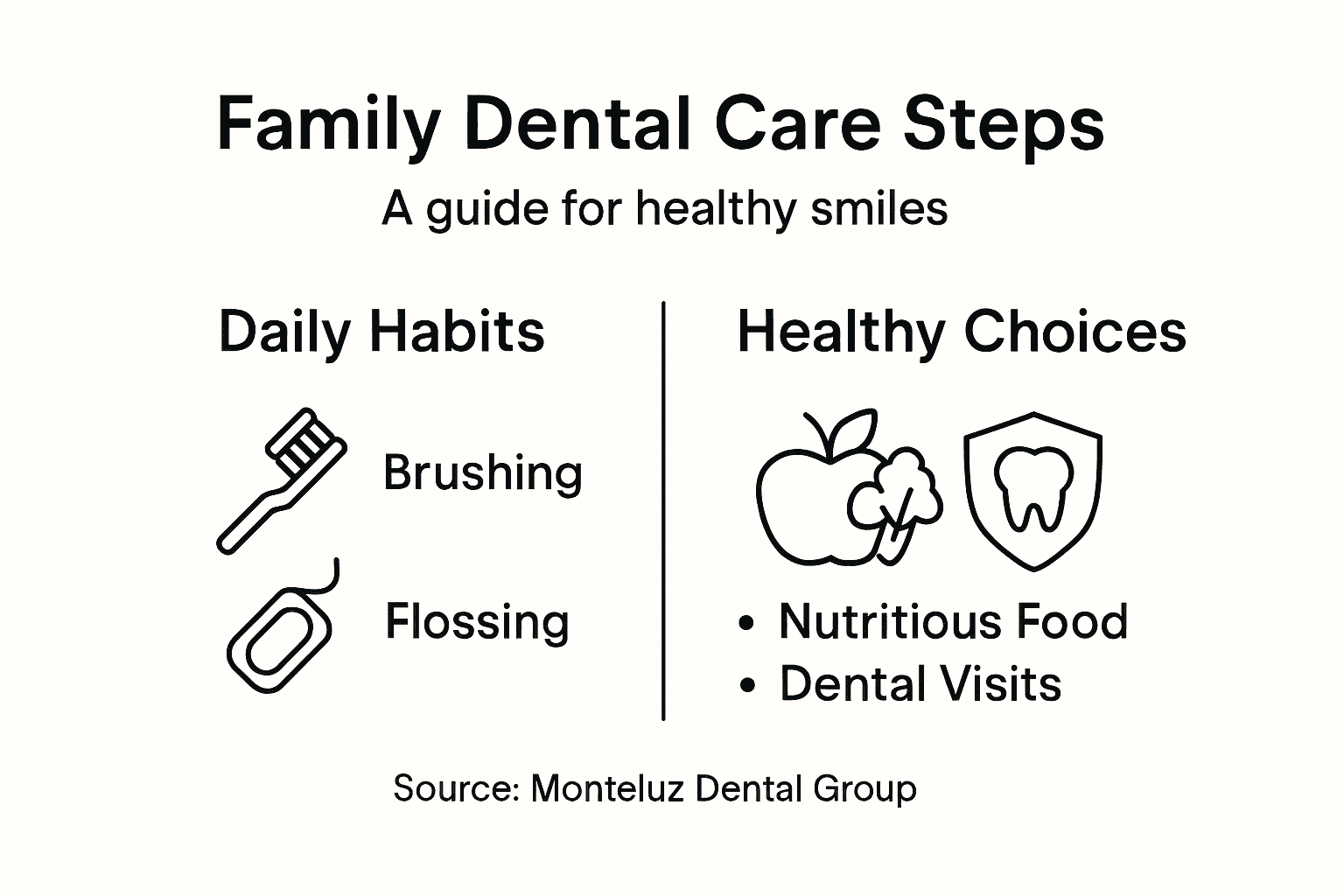
Diet directly influences tooth decay processes by providing fuel for harmful oral bacteria that produce enamel-eroding acids. Focus on minimizing sugary and starchy foods that contribute to rapid bacterial growth. Replace processed snacks with nutrient-rich alternatives like crunchy vegetables, nuts, and dairy products that naturally support tooth remineralization. Encourage water consumption over sugary beverages, as water helps rinse away food particles and maintains optimal saliva production that neutralizes harmful acids.
Establishing mindful eating habits requires a family-wide approach that transforms nutrition into a shared commitment to oral health:
This table compares the impact of dietary choices on family dental health:
| Food or Drink | Effect on Teeth | Oral Health Benefit |
|---|---|---|
| Sugary snacks | Increase decay risk | None |
| Crunchy vegetables | Clean teeth, stimulate gums | Promote remineralization |
| Dairy products | Strengthen enamel | Provide calcium |
| Acidic drinks | Erode enamel | None |
| Water | Rinses mouth, supports saliva | Reduces bacteria growth |
- Limit sugary snacks to specific meal times
- Choose whole foods over processed options
- Rinse mouth with water after consuming acidic foods
- Include calcium-rich foods in daily meals
- Teach children about nutrition’s impact on dental health
Small dietary changes can create significant long-term improvements in your family’s oral wellness.
Pro tip: Create a colorful family nutrition chart that tracks healthy food choices and rewards consistent nutritious eating.
Step 5: Review and Adjust Your Dental Care Plan
A successful family dental care strategy requires ongoing evaluation and adaptation to ensure everyone’s unique oral health needs are consistently met. By implementing a systematic approach to reviewing and updating your dental care plan, you can proactively protect your family’s long-term dental wellness.
Regularly revisiting dental care plans helps identify potential improvements in oral hygiene practices, dietary habits, and preventive care strategies. Conduct a comprehensive family dental health assessment every six months, examining each member’s brushing techniques, flossing consistency, dietary choices, and professional dental visit frequency. Pay special attention to changes in age, lifestyle, and individual oral health challenges that might require customized interventions.
Create a dynamic dental care tracking system that allows for continuous monitoring and adjustment:
- Schedule biannual family dental health reviews
- Track individual oral hygiene performance
- Document any changes in dental health conditions
- Update brushing and flossing techniques as needed
- Adjust dietary recommendations based on dental checkup findings
Proactive dental care planning transforms reactive treatments into preventive strategies.
Pro tip: Develop a shared digital spreadsheet that tracks each family member’s dental health progress, making review and adjustment a collaborative and engaging process.
Elevate Your Family’s Smile with Expert Care at Monteluz Dental Specialty Group
Maintaining consistent family dental care routines is essential but can be challenging. From establishing daily brushing and flossing habits to managing regular dental visits and healthy diet choices, the journey to lasting oral health requires support and professional guidance. At Monteluz Dental Specialty Group, we understand these challenges and are here to provide advanced dental solutions tailored for every family member’s unique needs.
Explore our Dental Health to deepen your knowledge while accessing expert treatments like dental implants, orthodontics, and root canal therapy that strengthen your family’s smiles. Ready to take the next step in proactive oral health care? Visit Monteluz Dental Specialty Group today to schedule appointments and discover affordable plans including our in-house membership program designed to keep your family smiling bright now and in the future.
Frequently Asked Questions
How can I encourage my family to maintain good dental hygiene?
Establish a fun and engaging dental routine for your family. Use colorful charts or apps to track brushing and flossing, and consider incorporating rewards for consistent habits within a month.
What age should my child start visiting the dentist?
Your child’s first dental visit should occur by their first birthday. Regular checkups every six months will help monitor their dental health and ensure they develop a positive relationship with dental care.
How can I choose the right dental care products for my family?
Select age-appropriate dental tools, such as soft-bristled toothbrushes and fluoride toothpaste, tailored to each family member’s needs. Aim for effective products that encourage consistent usage, checking for child-sized options for younger members.
What are some healthy dietary choices to support oral health?
Focus on minimizing sugary and starchy foods, while including crunchy vegetables, dairy products, and plenty of water in your family’s diet. Implement these changes gradually and aim for a balanced diet within a few weeks to improve overall dental health.
How often should we replace toothbrushes in our family?
Toothbrushes should be replaced every three to four months or after an illness. Set a reminder to check each member’s toothbrush status quarterly to ensure optimal cleaning effectiveness.
What should I include in a family dental care plan review?
Include an assessment of each family member’s brushing, flossing habits, and dietary choices during your biannual reviews. Adjust techniques and recommendations as necessary, aiming to keep the whole family updated within 60 days of your review.
Recommended
- 7 Essential Steps for a Family Dental Hygiene Checklist
- The Importance of Pediatric Dental Health: Building a Lifetime of Healthy Smiles
- Essential Tips For A Healthy Smile
- 7 consejos clave para higiene bucal familiar en el hogar
- Glow Orthodontics Langley | #1 Orthodontist in Langley, BC