Most families think of dentists as the people you see when something hurts. That’s a costly mistake. 1 in 5 adults have untreated cavities, and many dental problems develop silently for months or years before causing pain. General dentists are your family’s primary oral health providers, not just emergency fixers. They deliver preventive, restorative, and pediatric care that keeps everyone healthy while saving you money. For Inland Empire families balancing budgets and busy schedules, understanding what general dentistry offers and how to access affordable care can transform your family’s health trajectory.
Table of Contents
- What does general dentistry cover for families?
- Why prevention matters: Impact on family health and costs
- How general dentists support children’s unique oral health needs
- Working with specialists: The referral role in complete family care
- Affordable access: Insurance, membership plans, and local resources
- Take the next step for your family’s oral health
- Frequently asked questions
Key Takeaways
| Point | Details |
|---|---|
| Comprehensive dental care | General dentists manage preventive, restorative, and pediatric needs for the whole family. |
| Prevention saves money | Regular checkups and simple treatments reduce long-term dental costs and problems. |
| Local affordable options | Inland Empire families can access care through insurance, Denti-Cal, and membership programs. |
| Referral network | General dentists coordinate with specialists for advanced needs, ensuring seamless family care. |
What does general dentistry cover for families?
General dentistry serves as your family’s dental home base, handling the majority of oral health needs across all ages. Think of your general dentist as the quarterback coordinating your family’s dental wellness, from your toddler’s first tooth to your grandparents’ denture care.
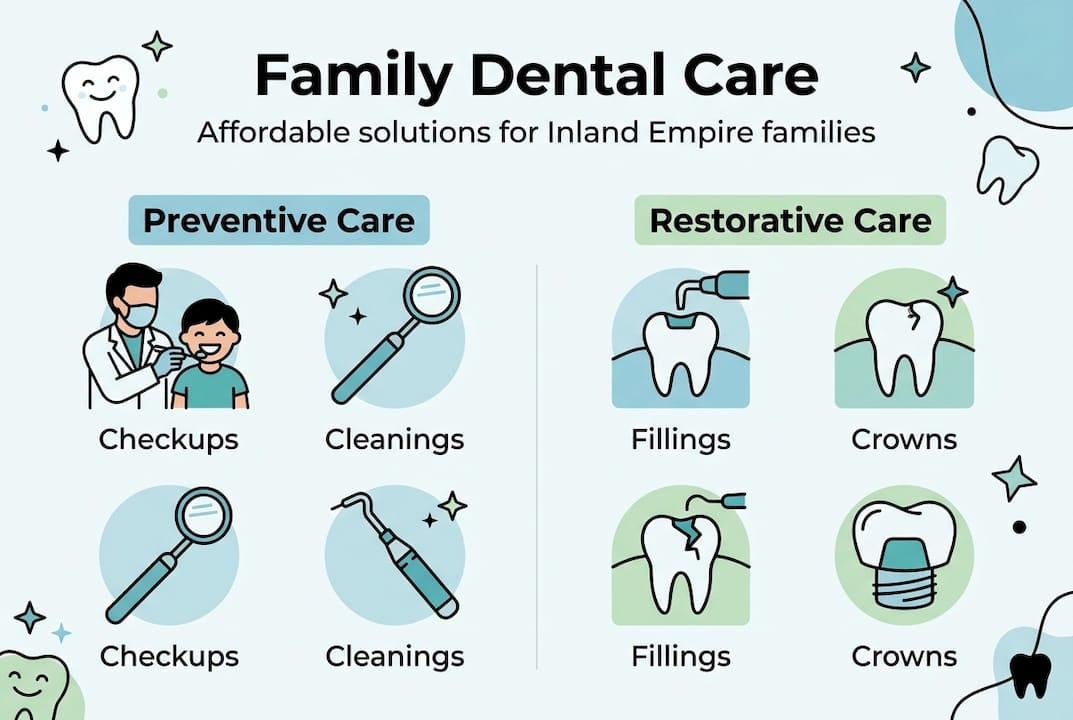
Preventive services form the foundation. Regular exams catch problems early, professional cleanings remove buildup your toothbrush misses, and protective treatments like sealants and fluoride shield vulnerable teeth. These simple interventions prevent most cavities and gum disease before they start.
Restorative treatments fix existing damage. Fillings repair cavities, crowns rebuild broken teeth, and basic extractions remove teeth beyond saving. Your general dentist handles these common procedures in the same office where you get cleanings, eliminating the hassle of multiple appointments at different locations.
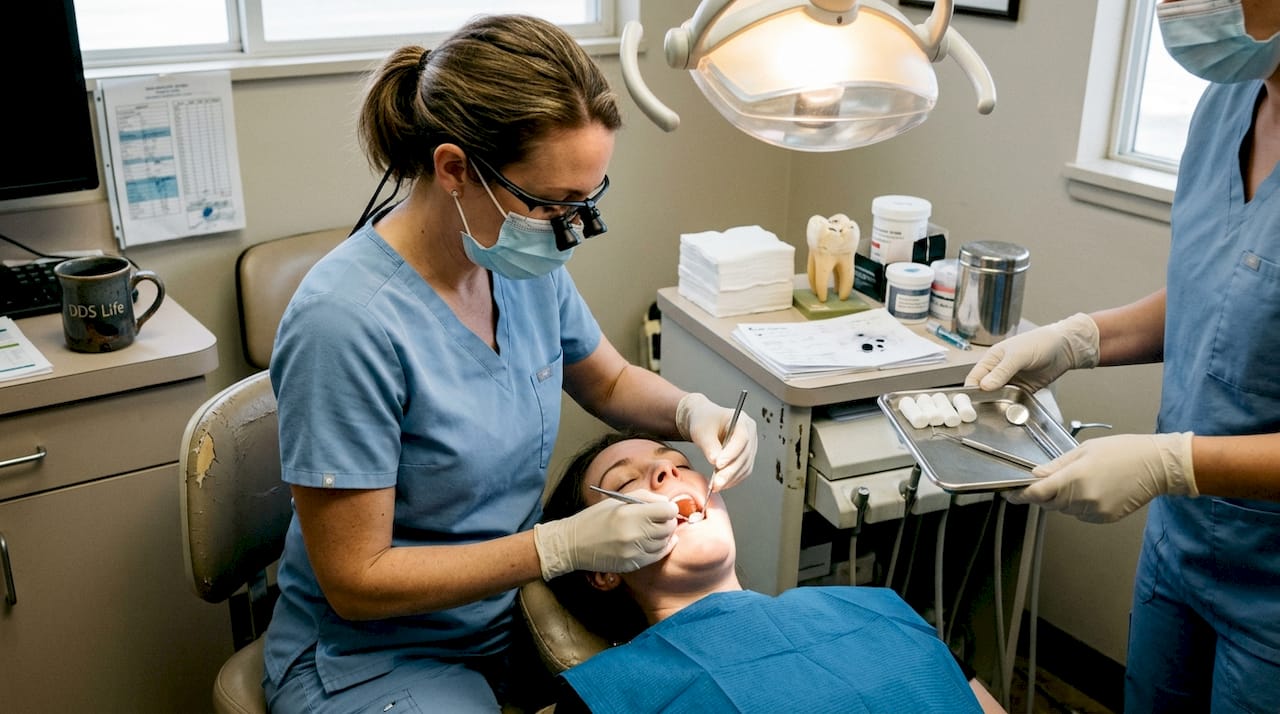
Pediatric care addresses children’s unique needs. General dentists monitor dental development as permanent teeth emerge, apply sealants to protect molars, and treat early cavities with gentle techniques designed for young patients. This early intervention establishes healthy habits that last a lifetime.
| Service Type | What It Includes | Primary Goal |
|---|---|---|
| Preventive | Exams, cleanings, X-rays, sealants, fluoride | Stop problems before they start |
| Restorative | Fillings, crowns, bridges, basic extractions | Repair existing damage |
| Pediatric | Growth monitoring, early cavity treatment, behavior guidance | Build healthy foundations |
Pro Tip: Schedule preventive visits for every family member twice yearly, even if no one has symptoms. Catching a small cavity early costs far less than treating an infected tooth later.
For practical guidance on daily care between visits, explore our family dental hygiene checklist. Understanding affordable dental care steps helps you maximize the value of each appointment.
Why prevention matters: Impact on family health and costs
Preventive dental care delivers measurable health and financial benefits that compound over time. The statistics tell a clear story about what happens when families skip regular care.
“Preventive care reduces caries by up to 80% via sealants; 47% adults 30+ have gum disease.” — CDC/NHANES Data
Sealants reduce cavities by 80%, yet many children never receive them. Fluoride treatments strengthen enamel and reverse early decay. Regular exams detect gum disease, oral cancer, and systemic health issues like diabetes that show early signs in the mouth. These simple interventions cost a fraction of the treatments needed when problems progress untreated.
The financial impact is substantial. A preventive visit costs $75 to $200. A root canal and crown to save an infected tooth runs $1,500 to $3,000. An extraction and implant to replace a lost tooth costs $3,000 to $6,000. Multiply those numbers across a family of four over several years, and the savings from prevention become life changing.
Beyond money, untreated dental problems affect quality of life. Children with cavities miss school and struggle to concentrate. Adults with tooth pain lose work productivity. Gum disease increases risks for heart disease, stroke, and pregnancy complications. Your mouth connects to your whole body, and neglecting it creates ripple effects throughout your health.
To maximize preventive care benefits:
- Schedule regular checkups for every family member, even those without symptoms
- Ask about sealants and fluoride for children and high-risk adults
- Address small problems immediately before they require expensive treatments
- Learn proper home care techniques from your hygienist to maintain results between visits
- Use available resources like insurance benefits, Denti-Cal, or membership plans to remove cost barriers
Delaying care always costs more in the long run. A small filling today prevents a root canal tomorrow. Regular cleanings prevent gum disease that requires surgery later. The math is simple, but many families learn it the hard way.
Discover more about affordable dental care options and practical oral health tips tailored for Inland Empire families.
How general dentists support children’s unique oral health needs
Children require specialized dental approaches that general dentists are trained to provide. 52% of children ages 6-8 have cavities in their primary teeth, making early intervention critical for breaking cycles of dental disease.
Young patients need more than scaled-down adult treatments. Their teeth are still developing, their cooperation requires patience and skill, and their experiences shape lifelong attitudes toward dental care. General dentists address these unique needs through:
- Gentle examination techniques that build trust and reduce anxiety
- Developmental monitoring to track tooth eruption and jaw growth
- Preventive sealants applied as permanent molars emerge around ages 6 and 12
- Fluoride treatments timed to strengthen enamel during critical growth periods
- Early cavity treatment using minimally invasive techniques when possible
- Behavior guidance that teaches children to cooperate and feel comfortable
- Parent education on nutrition, brushing, and habits that protect developing teeth
For Inland Empire’s diverse population, inclusive care matters enormously. Children feel more comfortable when staff speak their language and understand their cultural background. Bilingual support removes communication barriers that can prevent families from seeking care or understanding treatment recommendations.
The first dental visit should happen by age one or within six months of the first tooth appearing. This early start establishes a dental home, allows monitoring of development, and catches problems when they’re easiest to treat. Many parents wait until age three or four, missing critical preventive opportunities.
Pro Tip: Ask your dentist about the optimal timing for sealants and fluoride treatments as your child’s permanent teeth emerge. These preventive measures work best when applied soon after teeth come in.
Learn how bilingual family dental visits improve care quality and explore dental membership benefits that make pediatric care more accessible.
Working with specialists: The referral role in complete family care
Your general dentist acts as the coordinator of your family’s oral health, handling 80-90% of dental needs while referring to specialists when advanced care is required. This coordination ensures seamless care and prevents problems from falling through the cracks.
Understanding when general dentists treat versus refer helps you navigate the dental system efficiently:
| Condition | General Dentist | Specialist Referral |
|---|---|---|
| Simple cavities | Treats with fillings | N/A |
| Infected tooth pulp | May perform simple root canals | Endodontist for complex cases |
| Crooked teeth | Monitors development | Orthodontist for braces/aligners |
| Gum disease | Treats mild to moderate cases | Periodontist for advanced disease |
| Tooth extraction | Performs routine extractions | Oral surgeon for impacted/complex cases |
| Missing teeth | Places simple restorations | Prosthodontist for complex reconstruction |
The ADA recognizes 12 dental specialties, each focusing on specific advanced treatments. Your general dentist maintains relationships with trusted specialists and coordinates referrals when your family needs care beyond general practice scope.
This referral system protects your health and saves money. General dentists charge less for routine procedures than specialists, so you only pay specialist fees when truly necessary. Integrated care improves outcomes, particularly for adolescents and lower-income families who benefit from coordinated treatment plans.
The coordination works both ways. After specialist treatment, you return to your general dentist for ongoing maintenance and monitoring. This continuity ensures someone tracks your complete dental history and catches new problems early.
For families, this means one trusted provider who knows everyone’s dental history, coordinates care across specialists when needed, and maintains relationships that last for years. You’re not navigating the dental system alone.
Explore specialty dental care options and learn about affordable orthodontics for comprehensive family treatment.
Affordable access: Insurance, membership plans, and local resources
Understanding your payment options transforms dental care from an overwhelming expense into a manageable investment. Inland Empire families can access affordable care through multiple pathways designed to fit different financial situations.
Most families access dental care through one of these methods:
- Employer-sponsored dental insurance (PPO or HMO plans) that covers preventive care fully and shares costs for restorative treatments
- Denti-Cal (Medi-Cal dental) for eligible low-income families, covering comprehensive services for children and basic care for adults
- In-house membership plans offered by dental practices, providing discounted services for a monthly or annual fee without insurance paperwork
- Community health centers that offer sliding-scale fees based on income for families without other options
- Dental schools where supervised students provide quality care at reduced costs
Each option has advantages. Insurance spreads costs over time but may limit provider choice. Denti-Cal eliminates out-of-pocket costs but requires eligibility verification. Membership plans offer predictable pricing without claim denials or waiting periods. Community centers and dental schools provide safety nets for families facing financial hardship.
Pro Tip: Ask your dental office about membership plans if you’re uninsured or your insurance has high deductibles. Many practices offer family plans starting around $20 per month that include preventive visits and discounts on other treatments.
The key is removing cost as a barrier to care. Delaying treatment because of expense always leads to higher costs later. A $150 filling today prevents a $2,000 root canal and crown next year. Finding an affordable payment method protects both your family’s health and your budget.
For detailed guidance, review our resources on in-house dental membership programs and comprehensive affordable care options available locally.
Take the next step for your family’s oral health
General dentistry provides the foundation for your family’s lifelong oral health, but only if you take advantage of the affordable options available. Whether you need preventive care to keep healthy smiles, restorative treatments to fix existing problems, or guidance on accessing care within your budget, the right resources make all the difference.
We’ve designed our practice around removing barriers that keep Inland Empire families from getting the care they need. Our family membership program offers predictable monthly costs without insurance hassles. Our restorative dental services repair damage efficiently and affordably. Our affordable orthodontics options help families access specialized care when needed.
Your family deserves comprehensive dental care that fits your budget and schedule. Explore the resources above to find the solutions that work best for your situation, or contact us directly to discuss your family’s specific needs. Taking action today prevents bigger problems and expenses tomorrow.
Frequently asked questions
What is the difference between a general dentist and a specialist?
General dentists handle 80-90% of family dental needs including preventive care, fillings, crowns, and routine extractions. Specialists focus on advanced treatments like orthodontics, gum surgery, or complex root canals that require additional training.
At what age should my child start seeing a general dentist?
The ADA recommends children have their first dental visit by age one or within six months of their first tooth erupting. Early visits allow monitoring of dental development and establish preventive care habits.
How often should my family get dental checkups?
Most families should visit the dentist every six months for preventive care. Only 65.5% of adults had recent dental visits, yet regular checkups catch problems early when they’re easiest and least expensive to treat.
What if we can’t afford dental insurance?
Many clinics offer in-house memberships starting around $20 monthly that include preventive visits and treatment discounts. Denti-Cal covers eligible families, and community health centers provide sliding-scale fees based on income.
Do general dentists see both adults and children?
Yes, general dentists treat patients of all ages, making them ideal for families who want everyone to receive care at the same practice. This continuity improves coordination and builds long-term relationships.
Recommended
- Accessible Dental Care 2026: Options For Inland Empire Families
- Complete dental hygiene checklist for Inland Empire families
- Orthodontics for oral health: affordable options in Inland Empire
- Affordable Dental Care Steps for San Bernardino Families