Most parents think of braces as a cosmetic fix, a way to give their child a straighter, more confident smile. But orthodontics does something far more important than that. Orthodontic treatment improves oral health by making plaque removal easier, lowering gum disease risk, and correcting bite problems that cause long-term damage. For families in the Inland Empire, the good news is that affordable solutions, including Denti-Cal coverage and in-house membership plans, are within reach right now.
Table of Contents
- What is orthodontics and how does it impact oral health?
- Why early orthodontic intervention matters for children
- Modern orthodontic methodologies: Braces, aligners, and appliances
- Orthodontics in periodontal patients: Special considerations
- Affordable orthodontic options for Inland Empire families
- Explore affordable orthodontic care and membership options
- Frequently asked questions
Key Takeaways
| Point | Details |
|---|---|
| Orthodontics boosts oral health | Proper alignment makes cleaning easier, reduces gum disease, and prevents uneven wear. |
| Early intervention is crucial | Starting orthodontic checks at age 7 leads to better long-term results and fewer complications. |
| Treatment options fit needs | Braces, clear aligners, and appliances each offer unique benefits depending on age and oral health. |
| Periodontal cases need special care | Patients with gum concerns should prioritize clear aligners and ensure periodontal stability before treatment. |
| Affordable care is available locally | Denti-Cal and membership plans give Inland Empire families access to orthodontics regardless of insurance status. |
What is orthodontics and how does it impact oral health?
Orthodontics is the dental specialty focused on aligning teeth and jaws so they function properly together. It is not just about appearance. When teeth are crowded, spaced unevenly, or the bite is off, everyday tasks like brushing and flossing become harder. Plaque hides in tight spaces, and over time, that leads to cavities and gum disease.
Understanding the role of orthodontists helps parents see why this specialty matters beyond cosmetics. Proper alignment reduces jaw strain, prevents uneven tooth wear, and supports better chewing function. These are structural benefits that protect your child’s teeth for decades.
Nearly half of adults 30 and older have some form of periodontal disease. Proper alignment reduces the risk by making oral hygiene more effective every single day.
The orthodontic treatment evidence is clear: children who receive timely orthodontic care show measurable improvements in both oral hygiene and self-confidence. Studies from the American Association of Orthodontists (AAO) confirm that post-treatment patients report better gum health and stronger daily hygiene habits. Investing in your child’s alignment today is one of the most proactive steps you can take for their long-term health.
Key oral health benefits of orthodontic treatment include:
- Easier brushing and flossing due to properly spaced teeth
- Lower plaque accumulation, reducing cavity and gum disease risk
- Corrected bite function, preventing jaw pain and uneven wear
- Improved airway function in some cases, especially with early intervention
- Boosted confidence, which supports better long-term hygiene habits
The importance of pediatric dental health cannot be overstated. Starting orthodontic care at the right time sets the foundation for a lifetime of healthier smiles.
Why early orthodontic intervention matters for children
Knowing orthodontics’ value, parents often ask when treatment should start. The answer may surprise you. The AAO recommends that children have their first orthodontic evaluation by age 7. At this age, a mix of baby and permanent teeth are present, giving the orthodontist a clear picture of how the jaw and bite are developing.
Early treatment is not always about putting braces on a seven-year-old. It is about identifying problems while the jaw is still growing and guiding that growth in the right direction. Research shows that early intervention reduces overjet by an average of 3.5mm and overbite by 2.1mm, which significantly lowers the chance of needing tooth extractions or complex surgery later.
Did you know? Children who receive phase-one orthodontic treatment before age 10 are far less likely to develop severe malocclusion (misalignment) that requires jaw surgery as adults.
Here are the three steps for getting your child’s early assessment started:
- Schedule an evaluation with an orthodontist by age 7, even if no problems are visible yet
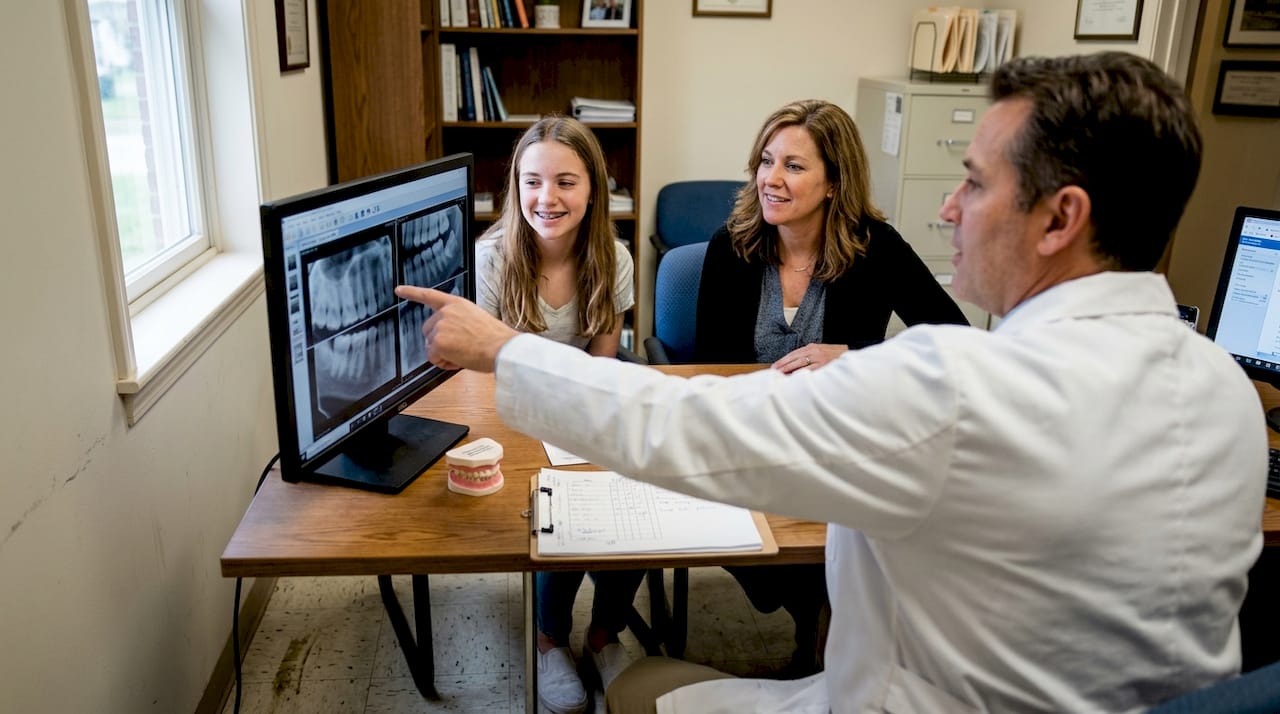
- Review bite and jaw development with the provider, including X-rays to assess tooth positioning
- Discuss treatment options based on your child’s specific growth stage and needs
Pro Tip: Ask your orthodontist specifically about Denti-Cal eligibility during the evaluation. Many families in the Inland Empire qualify for coverage and do not realize it until they ask. Learn more about the early orthodontics advantage for children.
Modern orthodontic methodologies: Braces, aligners, and appliances
With early intervention in mind, let’s compare the most common treatment options so you can make an informed decision for your child.
Today’s orthodontic options go well beyond traditional metal braces. Each approach has specific strengths depending on your child’s age, the severity of their case, and your family’s lifestyle. Orthodontic methodologies include braces, clear aligners, functional appliances, and temporary anchorage devices (TADs), each suited to different clinical needs.
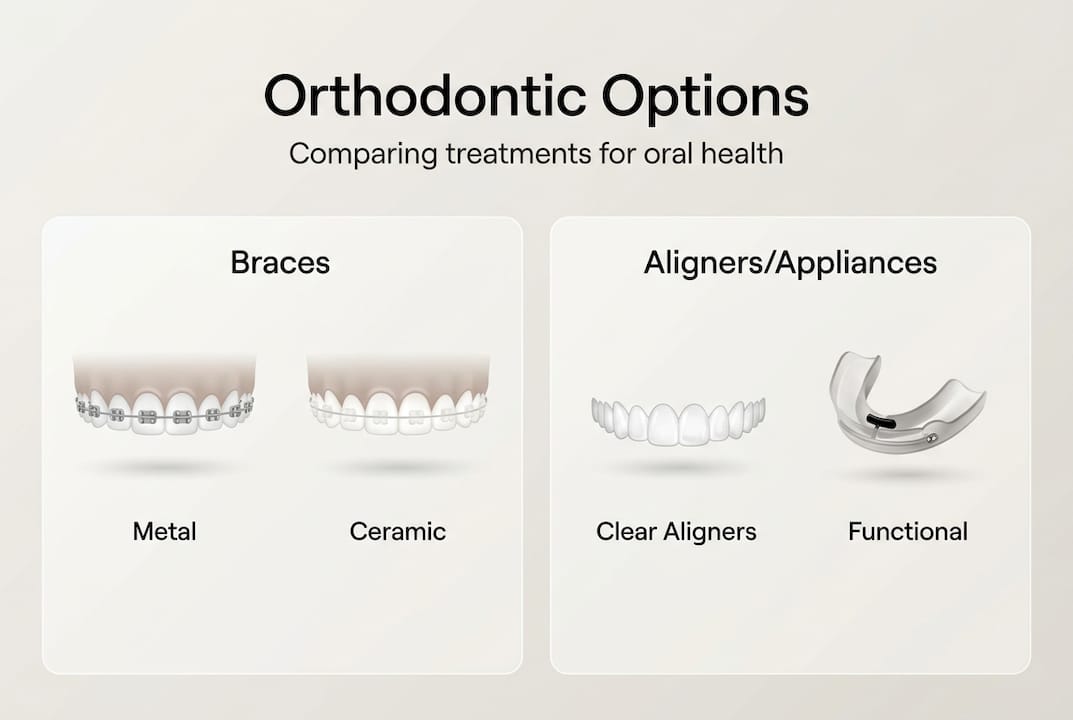
| Treatment | Best age | Hygiene ease | Comfort | Cost range | Best for |
|---|---|---|---|---|---|
| Metal braces | Any age | Moderate | Moderate | Lower | Complex cases |
| Clear aligners | Teens and adults | High | High | Moderate to high | Mild to moderate cases |
| Functional appliances | Growing children | Moderate | Moderate | Varies | Jaw growth guidance |
| TADs | Teens and adults | Moderate | Moderate | Varies | Difficult tooth movements |
Functional appliances, like the Twin Block device, are especially useful for growing children because they work with the jaw’s natural development to correct bite issues. Functional appliances evidence shows they can also improve airway function in some children, which has broader health benefits beyond the mouth.
TADs, or temporary anchorage devices, are small titanium mini-implants placed temporarily in the jaw to provide a fixed point for moving teeth. They are particularly helpful in cases where traditional braces alone cannot achieve the needed movement. Explore all available braces and aligner options to find the right fit for your child.
Orthodontics in periodontal patients: Special considerations
Since oral health conditions like gum disease impact treatment, it is vital that parents understand how orthodontics adapts for these cases. Periodontal disease (gum disease) affects the tissues that support the teeth, and moving teeth through inflamed or compromised tissue can cause serious harm.
Before orthodontic treatment begins, periodontal stability is required. That means no active bleeding, and pocket depths (the space between the gum and tooth) must be 4mm or less. Once gum health is stable, orthodontic treatment can proceed safely.
Orthodontic treatment in periodontally compromised patients shows that combined ortho-perio therapy, treating gum disease first and then moving teeth, yields significantly better outcomes. Success rates reach 96% with combined therapy compared to 74% with orthodontics alone in compromised patients.
| Factor | Clear aligners | Fixed braces |
|---|---|---|
| Plaque accumulation | Lower | Higher |
| Gum recession risk | Lower | Moderate |
| Hygiene ease | Easier | More difficult |
| Monitoring flexibility | High | Moderate |
Clear aligners are often the preferred choice for patients with gum concerns because they are removable, making thorough cleaning much easier. For families navigating these decisions, our affordable orthodontic guide walks through how to approach treatment planning when gum health is a factor.
Pro Tip: Always discuss your child’s gum health with the orthodontist before choosing an appliance. If there is any sign of gum sensitivity or thin gingiva (gum tissue), clear aligners may be the safer and more effective path.
Affordable orthodontic options for Inland Empire families
Once parents understand their child’s needs, cost becomes the next real hurdle. The good news is that several strong options exist right here in the Inland Empire to make orthodontic care genuinely accessible.

Denti-Cal covers orthodontics for qualifying children under 21 who have severe malocclusion, measured using the Handicapping Labio-lingual Deviation (HLD) index. A score of 26 or more points on the HLD index typically qualifies a child for coverage. Prior authorization is required, and the approval process for braces through Medi-Cal involves submitting records, X-rays, and a treatment plan for review.
Here is a summary of affordable orthodontic options available to Inland Empire families:
- Denti-Cal (Medi-Cal Dental): Covers braces for qualifying children under 21 with severe malocclusion and prior authorization
- PPO and HMO insurance plans: Many local providers, including Monteluz Dental, accept a wide range of plans
- In-house membership programs: Starting at just $20 per month, these plans make care accessible for uninsured families
- Flexible financing: Payment plans spread the cost of treatment over time, reducing upfront financial pressure
- Miles of Smiles: Offers flexible financing and in-house plans for families in the Hemet and Temecula areas
At Monteluz Dental Specialty Group, we accept Denti-Cal, PPO, and HMO plans, and our in-house membership program is designed specifically for families who do not have insurance. Understanding your dental insurance options in California is a great first step, and our team is here to help you navigate coverage in both English and Spanish. We also encourage families to explore accessible dental care options in 2026 to find the right path forward. Our Denti-Cal guide breaks down exactly how to check eligibility and start the process.
Explore affordable orthodontic care and membership options
You have seen how orthodontics protects your child’s oral health, why early intervention matters, and what affordable options are available right here in the Inland Empire. Now it is time to take the next step.
At Monteluz Dental Specialty Group in San Bernardino, we offer orthodontic care for children and teens, including braces and aligner options tailored to each patient’s needs. For families without insurance, our dental membership program starts at just $20 per month and covers a range of preventive and specialty services. We also accept Denti-Cal, PPO, and HMO plans, so most families have a path to care. Learn more about the child orthodontic advantage and schedule your child’s first evaluation with our bilingual team today.
Frequently asked questions
Is orthodontic treatment necessary for oral health, or just cosmetic?
Orthodontic treatment improves oral health by reducing plaque buildup, preventing gum disease, and correcting bite issues. Its benefits go well beyond cosmetic improvements and directly support long-term dental health.
How early should my child visit an orthodontist?
The AAO recommends children have their first orthodontic check by age 7 to identify and address jaw or bite issues while the jaw is still developing and most responsive to guidance.
What orthodontic appliances are best for maintaining gum health?
Clear aligners reduce plaque accumulation compared to fixed braces, making them the preferred choice for patients with thin or sensitive gums who need to maintain strong hygiene throughout treatment.
Does Denti-Cal cover orthodontic treatment for children?
Denti-Cal covers braces for children under 21 with severe malocclusion scoring 26 or more points on the HLD index, provided they meet qualifying criteria and receive prior authorization before treatment begins.
Where can I find affordable orthodontic options in the Inland Empire?
Local options include Monteluz Dental Specialty Group for Denti-Cal and in-house membership plans, and Miles of Smiles for flexible financing in the Hemet and Temecula areas. Many practices also offer payment plans to spread costs over time.
Recommended
- Accessible Dental Care 2026: Options For Inland Empire Families
- Prótesis dental asequible en Inland Empire: calidad y opciones
- Understanding the role of orthodontists: affordable care guide
- Access bilingual dental services in Inland Empire 2026