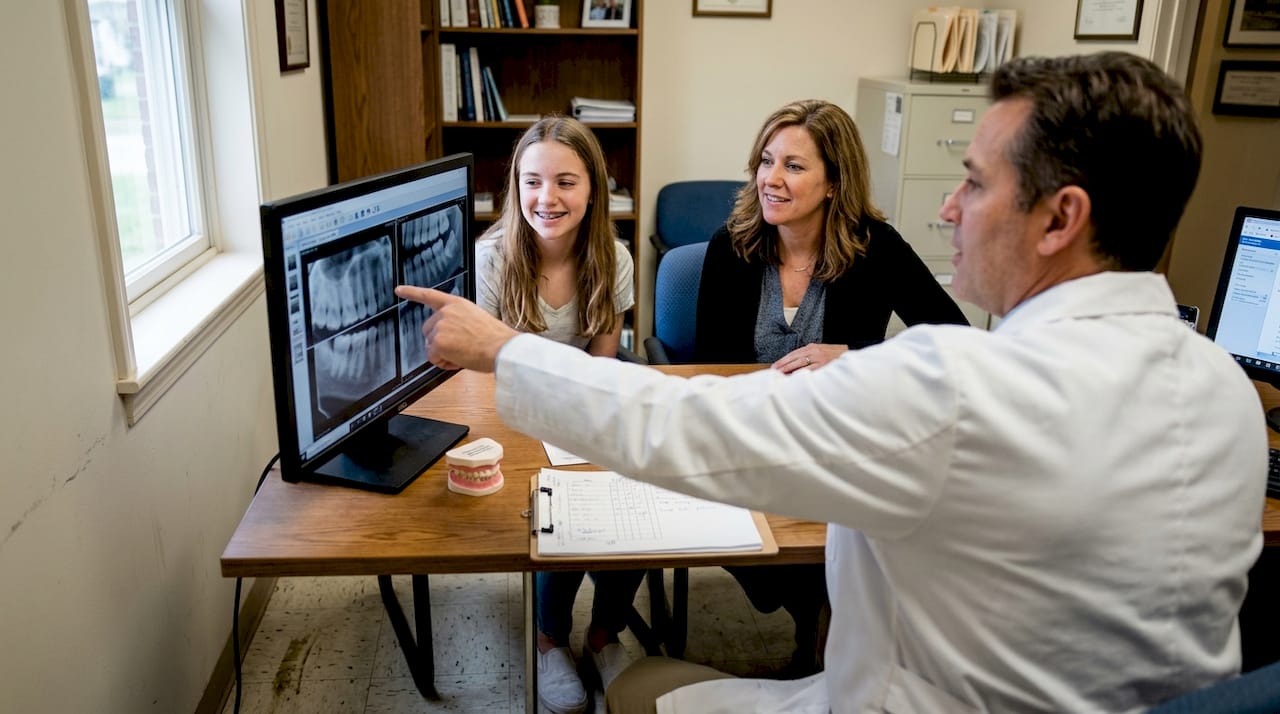
Specialty Dental Care: 95% Success Rates & Real Savings

Many families believe specialty dental care is purely cosmetic, but this misunderstanding costs them their health. Advanced treatments like root canals and implants prevent life-threatening infections and save natural teeth. For low- to middle-income Southern California families, affordability seems like a barrier, but accessible options exist through Medi-Cal, membership programs, and flexible financing. This guide clarifies what specialty dental care involves, its proven benefits, and practical ways to access affordable treatment in your community.
Table of Contents
- Introduction To Specialty Dental Care
- Key Advantages Of Specialty Dental Treatments
- Affordable Access Options For Southern California Families
- Comparing Specialty Dental Care To General Dentistry
- Common Misconceptions About Specialty Dental Care
- Patient-Centered Services And Accessibility Enhancements
- Practical Steps To Access Specialty Dental Care Today
- Explore Affordable Specialty Dental Care At Monteluz Specialty
- Frequently Asked Questions
Key Takeaways
| Point | Details |
|---|---|
| Success Rates | Specialty treatments achieve over 95% implant success and 15-20% better root canal outcomes than general dentistry. |
| Affordability Options | Denti-Cal, membership programs starting at $20/month, and financing make specialty care accessible for families. |
| Medical Necessity | Specialty treatments prevent systemic infections and bone loss, not just cosmetic improvements. |
| Expert Training | Board-certified specialists provide focused expertise that general dentists cannot match for complex procedures. |
Introduction to Specialty Dental Care
Specialty dental care involves advanced procedures that go beyond routine cleanings and checkups. These treatments require years of additional training after dental school and board certification. Specialists focus on specific areas like dental implants, root canal therapy, orthodontics, and oral surgery.
General dentists handle preventive care, fillings, and basic extractions. Specialists step in when conditions become complex or require surgical precision. For example, an endodontist exclusively performs root canals using microscopic equipment and advanced techniques. A prosthodontist or oral surgeon places dental implants with specialized training in bone grafting and surgical protocols.
Specialty care addresses medical necessities, not cosmetic wants. Untreated tooth infections can spread to your bloodstream and vital organs. Missing teeth cause bone deterioration and affect your ability to eat nutritious foods. Root canals save teeth that would otherwise require extraction, preserving your natural smile and bite function.
Key specialty treatments include:
- Dental implants for permanent tooth replacement
- Endodontic root canal therapy to save infected teeth
- Orthodontics for bite correction and alignment
- Periodontal treatments for gum disease management
- Oral surgery for wisdom teeth and complex extractions
Families often delay specialty care because they assume it costs too much or isn’t covered by insurance. Learning about affordable dental care in California helps you understand your options before problems worsen.
Key Advantages of Specialty Dental Treatments
Specialists deliver measurably better outcomes than general dentists for complex procedures. Dental implant success rates exceed 95% when done by specialists, and root canal success rates improve by 15-20% compared to general dentistry. These numbers matter because treatment failures mean additional costs, pain, and potential tooth loss.
Endodontists use specialized microscopes to see tiny canal systems that general dentists might miss. This precision reduces infection recurrence and saves more teeth. Implant specialists understand bone biology and surgical techniques that maximize osseointegration, the process where your jawbone fuses with the titanium implant.
“Specialty training transforms good outcomes into excellent ones. The difference between 80% and 95% success might seem small, but for the patient whose treatment fails, it’s everything.”
Long-term health benefits extend beyond your mouth. Untreated dental infections can trigger heart disease, diabetes complications, and respiratory problems. Replacing missing teeth with implants prevents bone loss that ages your facial structure and limits food choices. Successful root canal therapy eliminates infection sources while preserving natural tooth structure.
Interdisciplinary care coordination improves treatment planning. Specialists work together when you need multiple procedures. An orthodontist might align your teeth before an implant specialist places permanent replacements. This teamwork produces results no single provider could achieve alone.
The life-changing benefits of dental implants include restored confidence, better nutrition, and facial structure preservation. Patients report improved quality of life after replacing missing teeth with stable, permanent solutions.

Specialty care prevents costly emergencies. A properly performed root canal costs less than extraction, bone grafting, and implant placement later. Investing in specialist treatment upfront saves money over time by avoiding complications and repeat procedures.
Affordable Access Options for Southern California Families
Affordability concerns shouldn’t prevent you from getting necessary specialty care. Multiple financial pathways exist for low- to middle-income families in Southern California.
Denti-Cal (Medi-Cal) covers many specialty dental treatments for eligible families. Coverage includes root canals, extractions, and some restorative work. Eligibility depends on income level and family size. Check your qualification status through the Medi-Cal website or contact providers who accept Denti-Cal patients.
Dental membership plans offer affordable monthly rates with substantial discounts on specialty services. Programs starting at $20 per month provide access to reduced-fee implants, root canals, and orthodontics without insurance restrictions. These plans work well for families who don’t qualify for Medi-Cal or whose insurance excludes specialty procedures.
Flexible financing options help manage out-of-pocket costs. Many practices offer:
- Interest-free payment plans for 6-12 months
- Third-party financing through CareCredit or LendingClub
- Sliding scale fees based on household income
- Family discount programs for multiple treatments
Verify insurance acceptance before starting treatment to avoid surprise bills. Call your provider’s billing department with your insurance information. Ask which procedures are covered, what your copay will be, and if pre-authorization is required for specialty treatments.
Pro Tip: Ask about in-house membership plans designed specifically for low-income households. These programs often provide better value than traditional insurance for families needing multiple specialty procedures.
Explore dental membership plans in San Bernardino to compare monthly costs and covered services. Understanding dental insurance for specialty care helps you maximize existing benefits. Researching affordable insurance options expands your financial toolkit.
Comparing Specialty Dental Care to General Dentistry
Choosing between a specialist and general dentist for complex procedures significantly impacts your outcome. Specialists complete 2-4 additional years of focused training after dental school and maintain board certification through continuing education.
Implant placement by oral surgeons or prosthodontists achieves higher success rates because they perform these procedures daily. General dentists might place a few implants monthly, while specialists complete dozens weekly. This volume builds expertise that translates to better patient results.
| Factor | Specialty Care | General Dentistry |
|---|---|---|
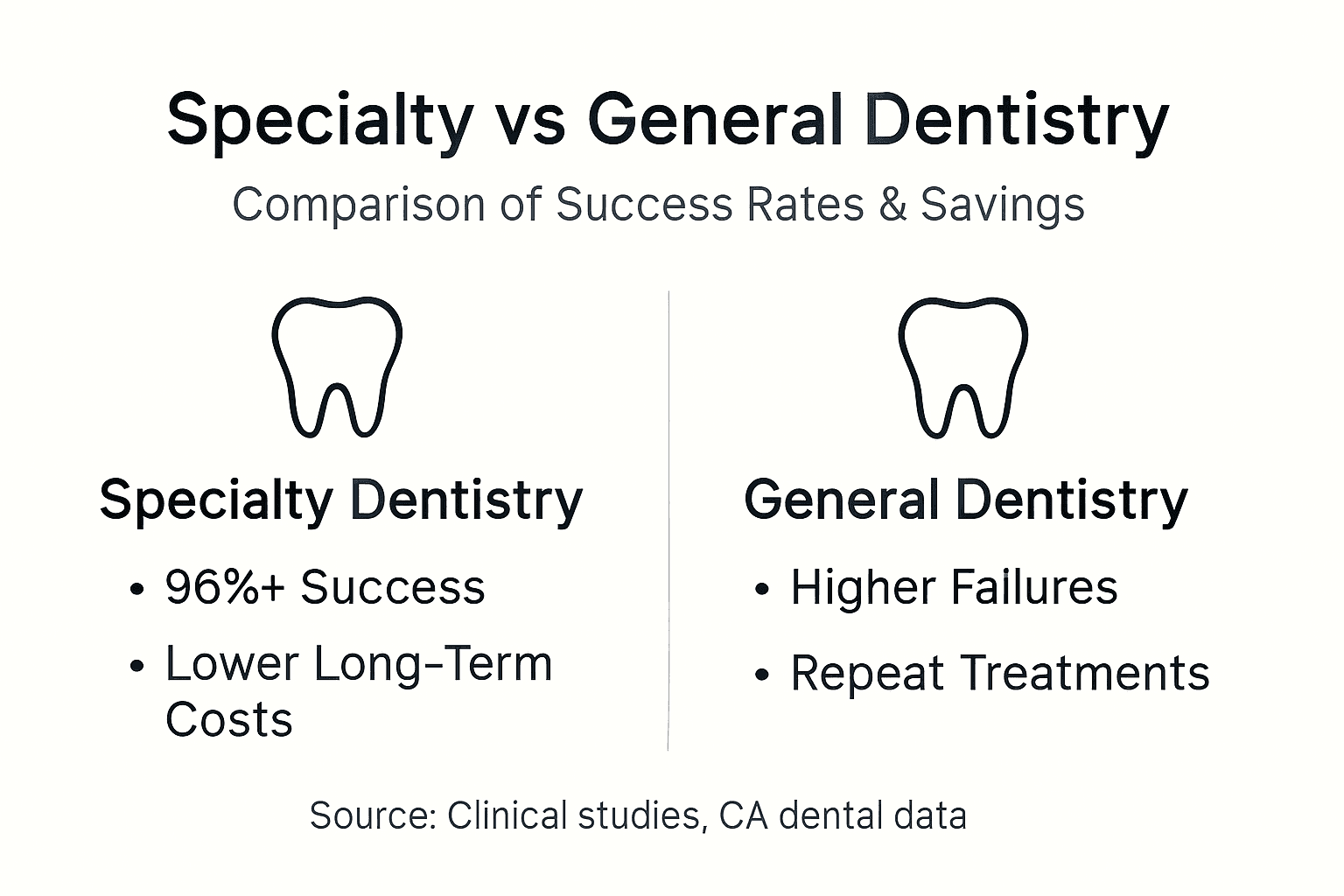
| Success Rates | 95%+ for implants, 90-95% for root canals | 85-90% for implants, 75-85% for root canals |
| Provider Training | Board-certified, 2-4 extra years specialized education | General dental degree, continuing education courses |
| Treatment Scope | Complex cases, surgical procedures, advanced techniques | Routine care, basic restorative work, simple extractions |
| Upfront Cost | Higher initial investment | Lower initial cost but potential for complications |
| Long-term Value | Fewer revisions, better outcomes reduce lifetime costs | May require retreatment or specialist referral |
Specialty providers manage complications more effectively. When unexpected challenges arise during treatment, specialists have the training and equipment to handle them immediately. General dentists might need to stop mid-procedure and refer you to a specialist, delaying your care.
Interdisciplinary approaches benefit patients with multiple dental issues. A periodontist can treat gum disease before an implant specialist places your permanent teeth. This coordination ensures optimal conditions for each procedure.
Upfront costs appear higher for specialty care, but long-term savings favor specialists. Treatment failures require repeating procedures, taking time off work, and managing additional pain. The 10-15% success rate difference between specialists and generalists translates to thousands of dollars in avoided complications.
Learn more about dental care accessibility in San Bernardino to find board-certified specialists in your area.
Common Misconceptions About Specialty Dental Care
Myths about specialty dental care prevent families from getting necessary treatment. Correcting these false beliefs helps you make informed decisions about your oral health.
Myth 1: Specialty care is mostly cosmetic. Reality shows specialty treatments prevent serious health complications. Root canals eliminate infections that can spread to your heart and brain. Dental implants prevent jawbone deterioration that affects facial structure and nutrition. These procedures address medical necessities, not vanity.
Myth 2: Specialty dental care is unaffordable for low-income families. Accessible programs counter this belief. Denti-Cal covers many specialty procedures for eligible families. Membership plans start at $20 monthly with significant discounts on advanced treatments. Flexible financing spreads costs over manageable monthly payments.
Myth 3: General dentists provide equal outcomes for complex cases. Clinical data proves specialists outperform generalists for advanced procedures. The 15-20% success rate difference reflects years of focused training and daily practice with specific techniques. Choosing a specialist reduces your risk of complications and repeat treatments.
Insurance coverage confusion creates additional barriers. Many families assume their insurance excludes specialty care without checking their actual benefits. Most PPO and HMO plans cover medically necessary specialty treatments like root canals and implant-supported dentures.
Pro Tip: Always verify specialty provider coverage with your insurer before treatment. Call the customer service number on your insurance card and ask specifically about endodontic, prosthodontic, and oral surgery benefits.
Understanding root canal myths helps you overcome fear-based decisions. Exploring affordable dental membership programs shows concrete financial solutions.
Patient-Centered Services and Accessibility Enhancements
Service delivery models significantly impact whether families can access and complete specialty dental treatment. Patient-centered approaches remove common barriers that prevent care.
Bilingual English-Spanish services improve communication and treatment understanding. When patients fully comprehend their diagnosis, treatment options, and home care instructions, they follow through with appointments and achieve better outcomes. Language barriers create misunderstandings that lead to missed appointments and incomplete treatment.
Flexible scheduling accommodates working families who struggle with traditional office hours. Evening and weekend appointments let parents bring children for care without missing work. This flexibility increases treatment completion rates and builds long-term patient relationships.
Community-focused care emphasizes prevention and education alongside treatment. Providers who invest in their local communities understand specific challenges families face. They develop programs addressing regional health disparities and cultural preferences that generic practices overlook.
Patient communication improvements include:
- Visual treatment planning with photos and models
- Written care instructions in preferred languages
- Text message appointment reminders
- Financial counseling before treatment starts
- Follow-up calls to check recovery progress
These enhancements increase treatment adherence and satisfaction. When patients feel heard and supported, they trust their providers and complete recommended care plans. This trust transforms one-time emergency visits into lasting relationships with comprehensive preventive care.
Discover more about patient-centered dental services and how community focus improves outcomes.
Practical Steps to Access Specialty Dental Care Today
Taking action on specialty dental care feels overwhelming without a clear roadmap. These steps guide you from identifying needs to receiving treatment.
-
Identify your need for specialty care based on symptoms or referrals. Persistent tooth pain, loose teeth, or missing teeth signal potential specialty treatment needs. Your general dentist might refer you for specific conditions requiring specialized expertise.
-
Check eligibility for Denti-Cal, PPO, HMO, or membership plans. Gather your insurance information or research membership programs if uninsured. Verify income requirements for Medi-Cal if you’re unsure about qualification.
-
Schedule a consultation with a board-certified specialist. Research providers accepting your insurance or membership plan. Confirm the specialist’s credentials through state dental board websites.
-
Explore flexible financing options if uninsured or underinsured. Ask about in-house payment plans, third-party financing, or sliding scale fees during your consultation. Understanding costs upfront prevents financial surprises.
-
Follow your treatment plan with recommended follow-up appointments. Specialty procedures often require multiple visits for optimal results. Complete all scheduled appointments even if you feel better.
-
Coordinate with other specialists if you need interdisciplinary care. Some conditions require sequential treatments by different specialists. Trust your provider team to manage this coordination.
Find detailed guidance on steps to accessing affordable dental care with local resources and eligibility information.
Explore Affordable Specialty Dental Care at Monteluz Specialty
Monteluz Dental Specialty Group eliminates barriers between Southern California families and advanced dental treatments. Our board-certified specialists provide implant dentistry and endodontic root canal therapy with the highest success rates in the region.
We accept Denti-Cal, PPO, and HMO insurance plans to maximize your existing benefits. For uninsured families, our affordable dental membership plans start at just $20 monthly with substantial discounts on specialty services. Bilingual English-Spanish staff ensure clear communication throughout your care journey.
Flexible financing options and evening appointments accommodate working families. Whether you need dental implants for missing teeth or endodontic specialists for root canals, our San Bernardino location serves the entire Inland Empire with patient-centered, affordable specialty care.
Frequently Asked Questions
What is specialty dental care and how does it differ from general dentistry?
Specialty dental care involves advanced procedures requiring additional years of training beyond dental school, like implants, root canals, and oral surgery. General dentists handle routine cleanings, fillings, and basic extractions, while specialists manage complex cases requiring surgical precision or microscopic techniques.
Are specialty dental treatments like implants covered by Medi-Cal or other insurance?
Denti-Cal (Medi-Cal) covers medically necessary specialty treatments including root canals and some restorative procedures for eligible families. Most PPO and HMO plans provide coverage for specialty care, though specific benefits vary by plan and require verification with your insurer.
How can low-income families afford specialty dental care in Southern California?
Affordable access comes through Denti-Cal for eligible families, dental membership programs starting at $20 monthly, and flexible financing with interest-free payment plans. Many specialty practices offer sliding scale fees and family discounts to reduce costs.
What should I expect during a specialty dental consultation?
Your consultation includes comprehensive examination, diagnostic imaging like x-rays or 3D scans, treatment planning discussion with cost estimates, and insurance verification. Specialists explain procedures in clear language, answer questions, and provide written care plans with timeline expectations.
Are specialty treatments really worth the higher upfront cost?
Yes, because specialists achieve 10-15% higher success rates than general dentists for complex procedures, reducing lifetime costs from avoided complications and retreatments. The long-term value of fewer revisions, better outcomes, and preserved oral health justifies the initial investment.
Recommended
- Our Services
- Top 6 Best Dental Implant Options in 2026 for Affordable Care
- 7 Practical Ways to Save on Dental Care for Families
- Best Dental Implant Clinic Near Me