TL;DR:
- Specialty dental groups provide comprehensive, multi-specialty care under one roof, improving access and coordination.
- These groups offer affordable options like memberships and accept various insurance plans, reducing costs.
- They are especially beneficial for diverse families needing bilingual support, flexible financing, and complex treatments.
Most families in the Inland Empire assume that seeing a specialist means navigating a maze of referrals, long wait times, and bills that stretch the budget. That assumption keeps too many people from getting the implants, orthodontics, or root canal therapy they actually need. The good news is that specialty dental groups provide comprehensive services under one roof, cutting through that complexity. At Monteluz Dental Specialty Group, we see this shift every day, and we want to help you understand exactly how these practices work and why they may be the smartest choice your family makes this year.
Table of Contents
- What are specialty dental groups?
- Making specialty care accessible and affordable
- Specialty groups versus solo practices: Efficiency and cost
- Coverage gaps and solutions: Navigating edge cases
- Our perspective: Why specialty dental groups change the game for SoCal families
- Take the next step: Accessible, affordable specialty dental care in Southern California
- Frequently asked questions
Key Takeaways
| Point | Details |
|---|---|
| Comprehensive services | Specialty dental groups provide multiple specialty treatments at a single location. |
| Access and affordability | Groups reduce costs and increase access with insurance options, membership plans, and bilingual support. |
| Efficiency and convenience | Sharing resources and specialists helps groups deliver faster, more efficient care for families. |
| Solutions for the uninsured | Memberships and flexible payment plans help uninsured families get the care they need affordably. |
What are specialty dental groups?
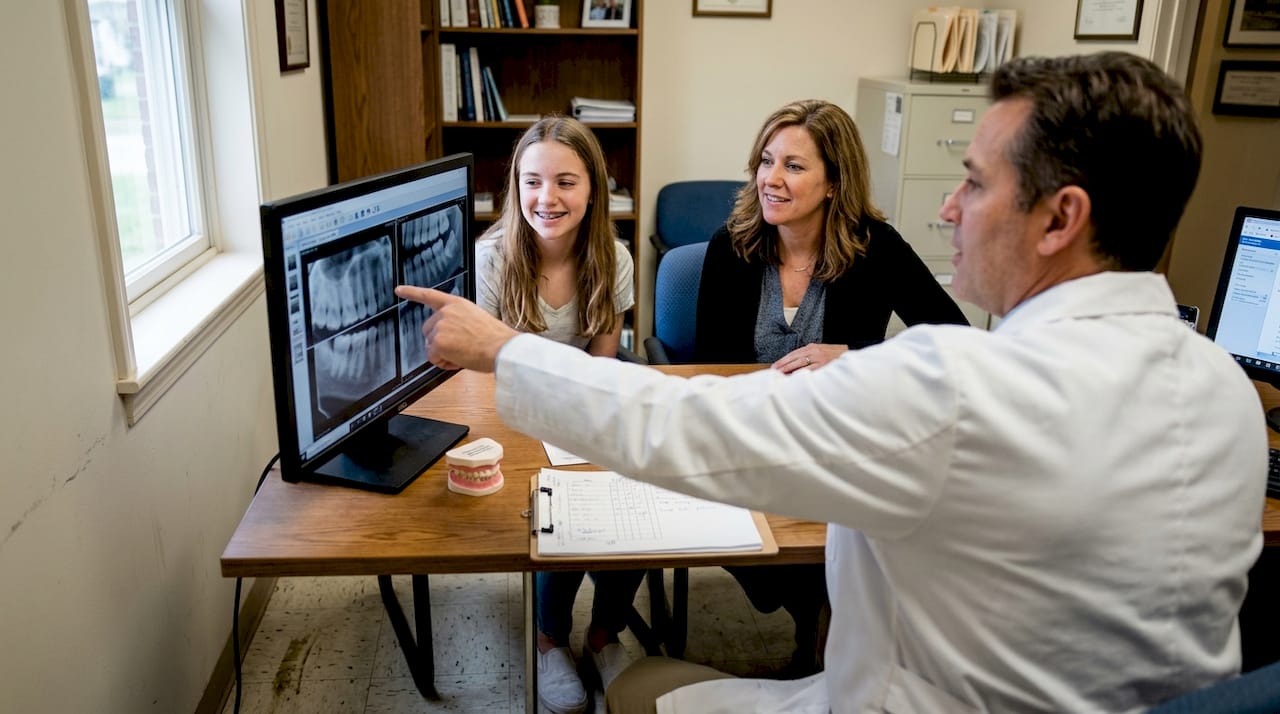
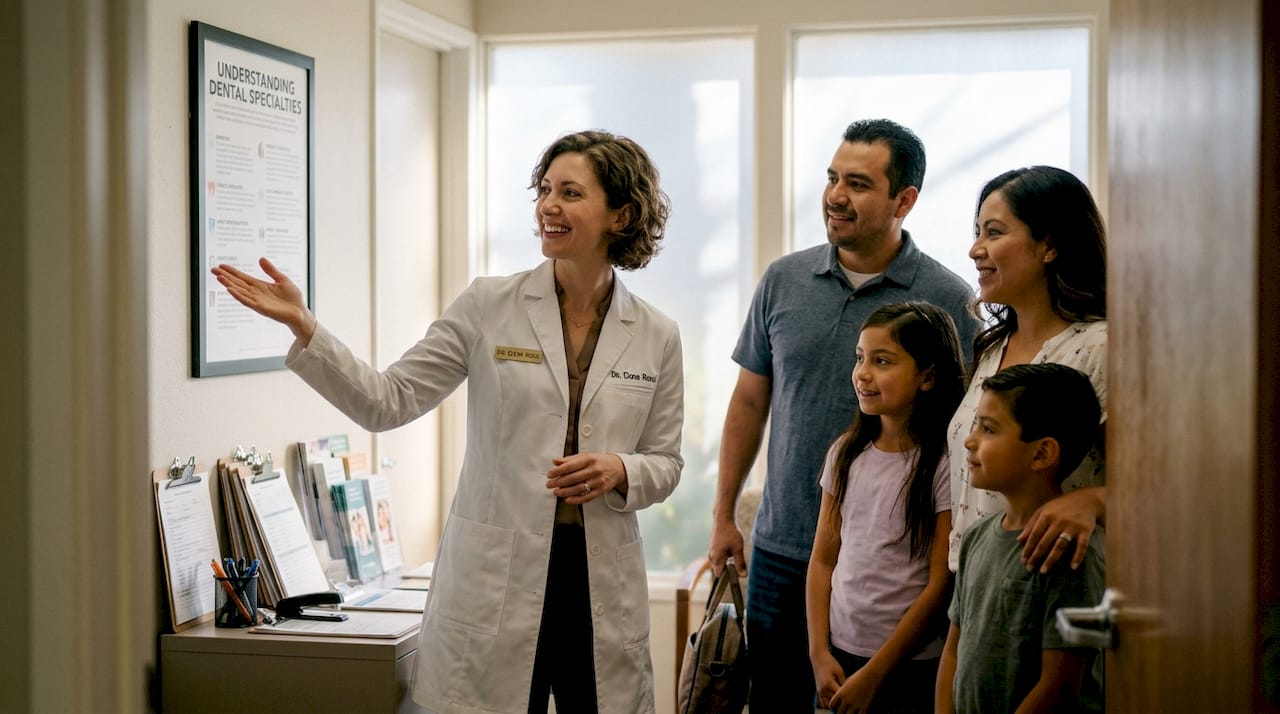
A specialty dental group is a practice where multiple dental specialists work together in a single location. Instead of your general dentist sending you across town to an oral surgeon and then to an orthodontist, everything happens in one coordinated environment. Think of it as a one-stop hub where your care team communicates in real time, shares your records, and builds a treatment plan that accounts for your whole oral health picture.
The range of services available at these practices is broad. Multi-specialty practices provide implants, orthodontics, prosthodontics, bone grafting, endodontics, and periodontics, all under one roof. That means whether your child needs braces or you need a tooth replaced, the same trusted team handles it.
Here is what you typically find at a well-structured specialty group:
- Dental implants for replacing missing teeth with permanent, natural-looking results
- Orthodontics including traditional braces and clear aligner options
- Endodontics (root canal therapy) to save teeth that might otherwise be lost
- Periodontics for gum disease treatment and prevention
- Prosthodontics for crowns, bridges, and full-mouth restorations
- General dentistry as the foundation for routine care and checkups
The role of specialists versus general practitioners matters here. A general dentist is trained to handle a wide variety of everyday needs, but complex cases require someone who has completed additional years of residency training in a specific field. Specialty groups bring both together, so you get the warmth of a family practice with the precision of expert-level care. You can explore our range of specialty services and see how we apply advanced dental technology to every case.
Pro Tip: When you call a dental group, ask whether specialists are on-site daily or only available on certain days. Daily availability means faster treatment timelines for your family.
Making specialty care accessible and affordable
Understanding the structure of specialty dental groups, let’s see how they make specialty care truly accessible and affordable. This is where the real transformation happens for families in Southern California.
One of the biggest barriers to care is insurance confusion. Specialty groups typically accept a wider range of plans than solo practices. IEHP serves 1.6 million members with dental specialists available in their network, and many specialty groups are part of that network. Denti-Cal (Medi-Cal dental) is also accepted at practices like ours, which opens the door for low-income families who might otherwise go without care. You can learn more about Denti-Cal for specialty care to understand exactly what your plan may cover.

For families without insurance, groups enhance access through in-house memberships, flexible financing, and bilingual support. Our membership plan at Monteluz starts at just $20 per month, making preventive and specialty care reachable even without a traditional insurance card. Explore our affordable membership plans to see what is included.
| Access pathway | Who it helps | Key benefit |
|---|---|---|
| Denti-Cal (Medi-Cal) | Low-income families | Covers many specialty services at no cost |
| IEHP dental network | Members in Inland Empire | Access to in-network specialists |
| PPO/HMO insurance | Working families | Reduced out-of-pocket costs |
| In-house membership | Uninsured patients | Flat monthly fee, no surprise bills |
| Flexible financing | All patients | Payment plans for larger treatments |
Bilingual support is another factor that changes outcomes. When a Spanish-speaking parent can discuss their child’s orthodontic plan in their preferred language, they make better decisions and feel more confident following through. Our team at Monteluz provides full English and Spanish support at every step.
Here is a quick look at what insurance acceptance details typically include at specialty groups:
- Denti-Cal and Medi-Cal dental
- IEHP and other Inland Empire plans
- Most major PPO plans
- Select HMO plans
- In-house membership for uninsured patients
Pro Tip: Before your first appointment, call the group’s billing team and ask them to do a benefits check on your behalf. Most specialty groups will verify your coverage for free before you ever sit in the chair.
Specialty groups versus solo practices: Efficiency and cost
After exploring how groups make care accessible, let’s examine how they compete with solo practices, especially on cost and efficiency. The numbers tell a clear story.
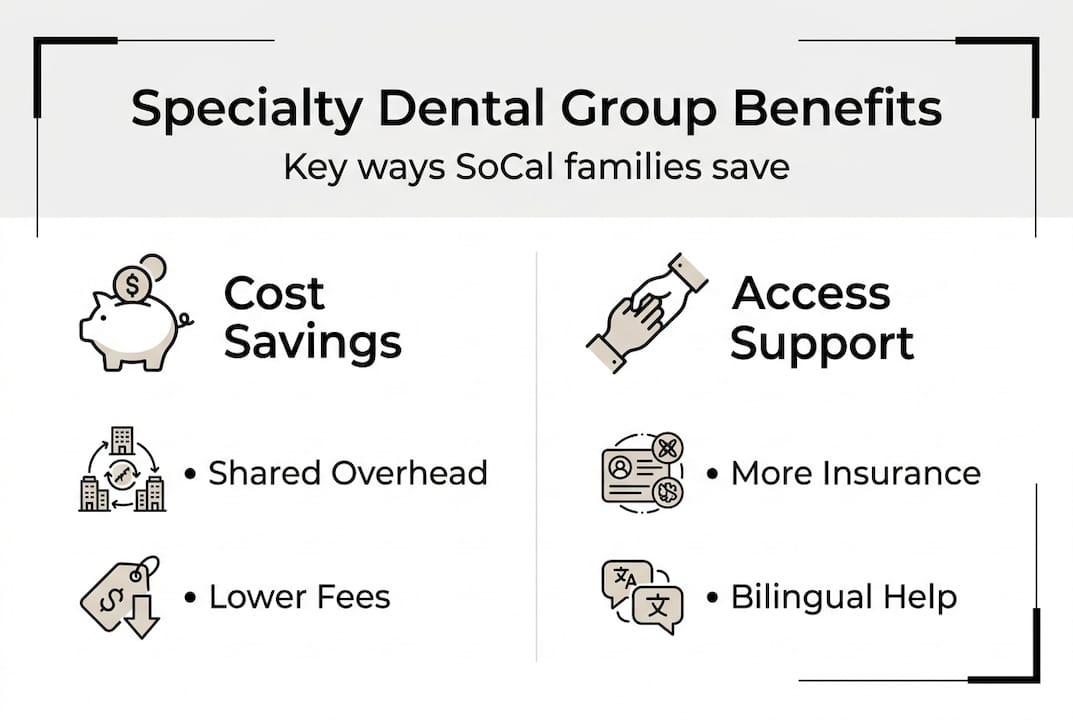
Specialists perform implants at a median cost of $3,400 compared to $4,800 by general dentists, and groups share expenses, provide advanced technology, and offer extended hours. That difference of nearly $1,400 per implant is significant for a family already managing a tight budget.
“When a specialty group shares overhead costs across multiple providers, the savings flow directly to patients in the form of lower fees and more advanced equipment than any single-provider office could afford alone.”
Here is how specialty groups achieve better efficiency:
- Shared overhead reduces per-patient costs for equipment, staffing, and facility maintenance
- High patient volume allows groups to invest in technology like 3D cone beam imaging and digital impressions
- Extended hours including evenings and weekends reduce emergency costs and lost workdays for families
- Coordinated scheduling means fewer total appointments to complete complex treatment plans
- In-house lab work speeds up turnaround time for crowns, aligners, and other restorations
Solo practices do have strengths. Solo-group hybrids avoid buyout and tax complications while maintaining independence, which can mean a more personalized feel. But for families who need implants, orthodontics, or multiple specialty services, the logistical and financial advantages of a group are hard to match.
You can review advances in dental technology that specialty groups use to improve accuracy and comfort, and see how these tools contribute to affordability in San Bernardino. The orthodontic volume comparison data also shows that higher-volume practices consistently deliver more competitive pricing for families.
Coverage gaps and solutions: Navigating edge cases
While groups streamline care and reduce costs, it is important to address the specific coverage gaps and the creative ways families can fill them.
The most common frustration we hear from families is about dental implants and insurance. Denti-Cal and IEHP rarely cover adult implants except when medically necessary, and groups offer alternatives like memberships and sliding fees to fill that gap. This is not a dead end. It is a starting point for a conversation about what options actually exist.
Here is a practical breakdown of common coverage gaps and what specialty groups do to address them:
- Adult dental implants: Rarely covered by Denti-Cal or IEHP; groups offer financing plans and membership pricing
- Orthodontics for adults: Often excluded from basic plans; groups provide sliding scale fees and payment plans
- Bone grafting: Frequently denied as elective; groups bundle costs and offer phased payment options
- Cosmetic-adjacent procedures: Usually not covered; membership plans reduce out-of-pocket exposure
Members-only plans and sliding scale fees bridge these gaps for families without full coverage. Our in-house membership at Monteluz is specifically designed for patients who fall into these gray areas, where their insurance covers some things but not the specialty procedures they need most.
For Spanish-speaking families, navigating these gaps is even harder when the paperwork and conversations happen only in English. Bilingual staff who can explain financing terms, coverage limitations, and treatment options in Spanish make a measurable difference in whether families follow through with recommended care. Explore our affordable care solutions and membership for uninsured patients, and check out our family dental coverage strategies for a fuller picture.
Pro Tip: If your insurance denies a specialty procedure, ask the dental group to submit a letter of medical necessity on your behalf. This step alone reverses denials more often than most patients realize.
Our perspective: Why specialty dental groups change the game for SoCal families
Here is what most families overlook when they are choosing a dental provider: the question is not just about cost or convenience. It is about whether the practice is actually built to serve your community.
Solo practices can offer genuine warmth and continuity. But groups excel for families needing specialties with bilingual support via IEHP and Denti-Cal networks, and that logistical reach is something a solo practice simply cannot replicate. When your family needs an implant, an orthodontic consultation, and a root canal, coordinating three separate offices is not just inconvenient. It is a barrier that causes people to delay or abandon care entirely.
We also believe that groups prioritize volume and accessibility while solos focus on personalization, and both have their place. But for the diverse, working families of the Inland Empire, accessibility wins. The ability to get specialist-level care in Spanish, under one roof, with a $20 monthly membership option, is not a luxury. It is the standard every family deserves. We encourage you to explore what this model means for your family’s long-term well-being.
Take the next step: Accessible, affordable specialty dental care in Southern California
As we have seen, the right group can make all the difference. Now here is how to connect with accessible, affordable options in your area.
At Monteluz Dental Specialty Group in San Bernardino, we have built our practice around exactly the needs described in this guide. Whether you are exploring dental implants in San Bernardino, looking into orthodontic care options for your child or yourself, or searching for a way to get quality care without insurance, we are here to help. Our bilingual team is ready to walk you through every option in English or Spanish.
Our affordable membership options start at just $20 per month and are designed for families who need real solutions, not complicated paperwork. Call us or visit our website to schedule your consultation and take the first confident step toward better oral health for your whole family.
Frequently asked questions
What services do specialty dental groups provide?
Multi-specialty practices provide coordinated specialty services including implants, orthodontics, endodontics, periodontics, and prosthodontics, all managed under one roof for a seamless patient experience.
Does Denti-Cal or IEHP cover dental implants for adults?
Denti-Cal and IEHP rarely cover adult implants except in medically necessary cases, but specialty groups often offer membership plans and financing to help bridge that gap.
How do specialty dental groups help families save money?
Specialist groups perform implants at lower median costs than general dentists, and shared overhead, multiple insurance acceptance, and in-house memberships add up to meaningful savings for families.
Can specialty dental groups provide bilingual support?
Yes, many specialty groups in the Inland Empire and Southern California offer bilingual English and Spanish support. Bilingual support is a key accessibility feature that helps Spanish-speaking families make informed decisions about their care.
Are membership plans worth it for uninsured families?
Membership plans bridge coverage gaps and make specialty care affordable for uninsured families, especially when insurance excludes procedures like adult implants or orthodontics.
Recommended
- Specialty Dental Care: 95% Success Rates & Real Savings
- Specialty dentistry role in affordable family care 2026
- Why choose specialty dentistry for families in San Bernardino
- Accessible Dental Care 2026: Options For Inland Empire Families
- Top 4 Affordable All on 4 Solutions in 2026 for US Residents Regaining Confidence and Smile