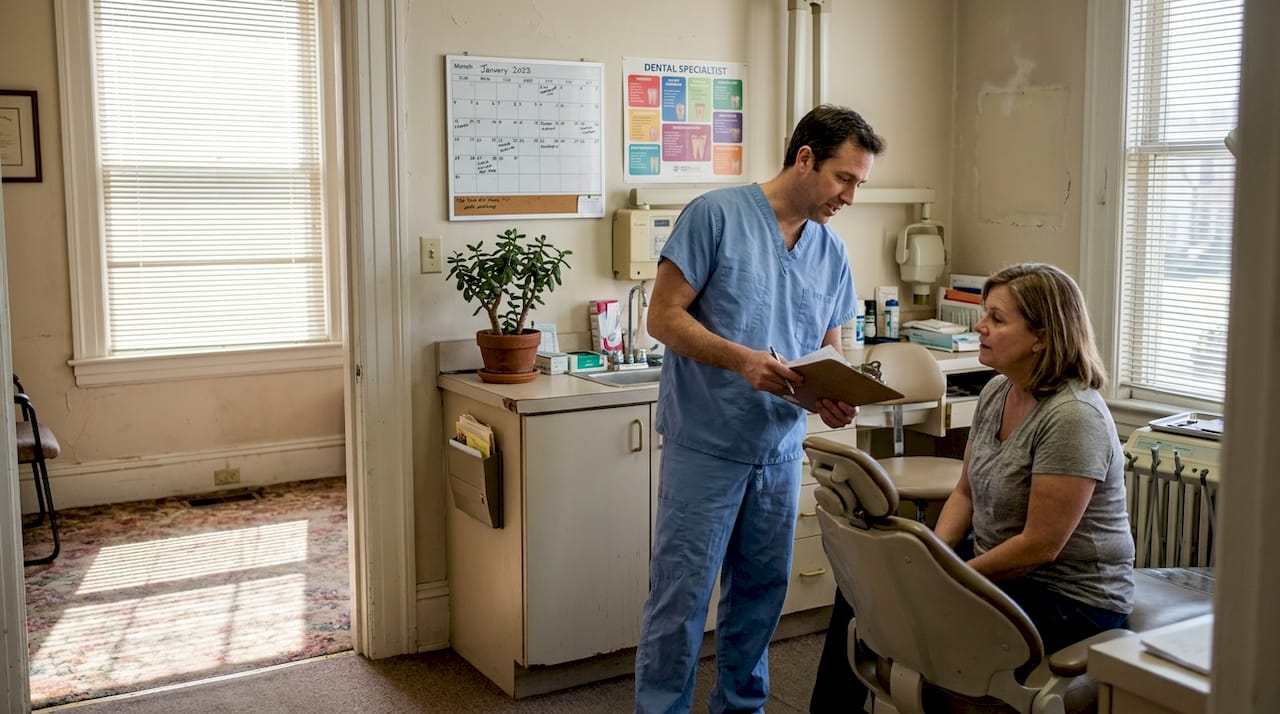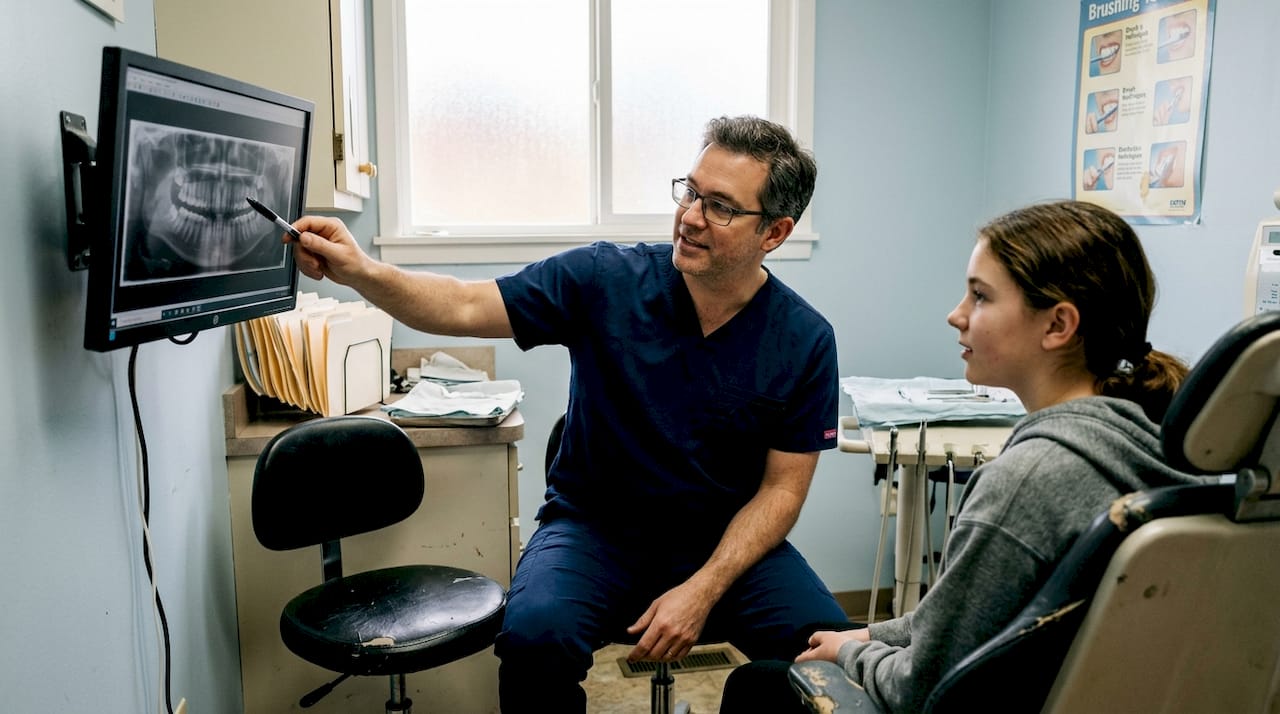
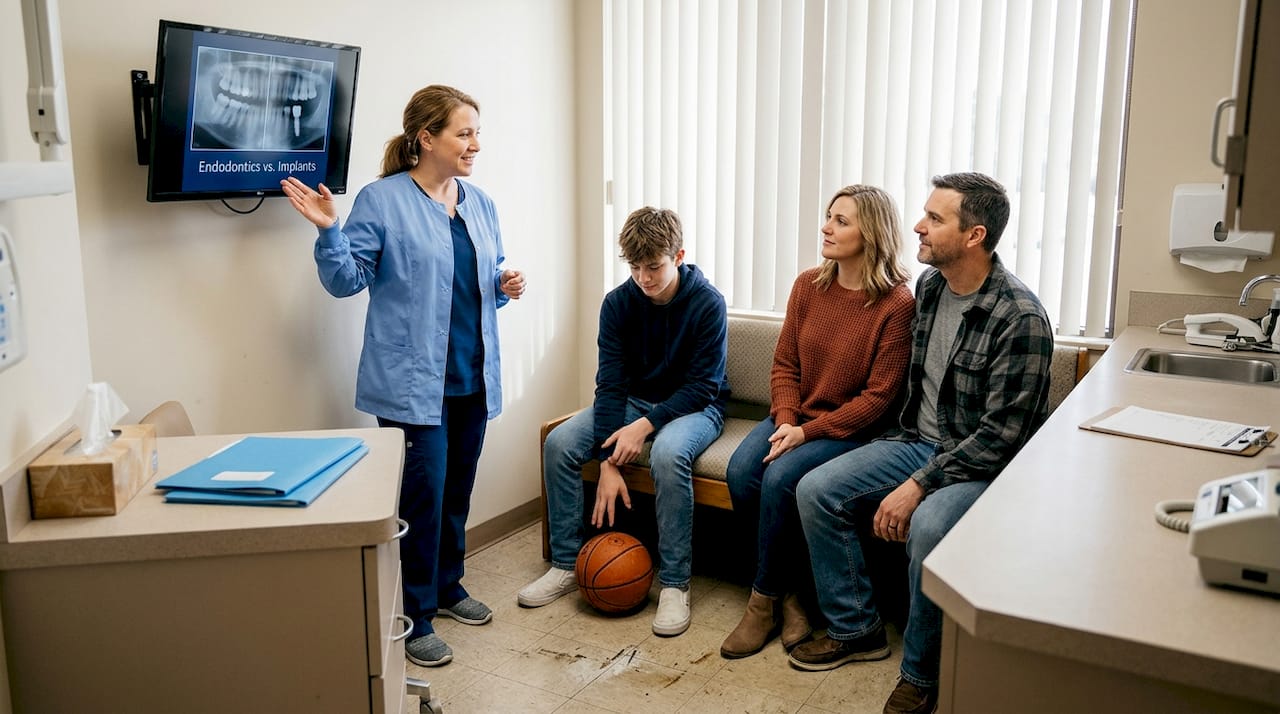
Many families facing tooth pain assume extraction is the simplest, cheapest solution. Yet specialty dentistry, particularly endodontics and implants, offers advanced techniques to preserve natural teeth or replace them predictably. For families in San Bernardino and the Inland Empire seeking affordable, bilingual, patient-centered care, understanding these options unlocks better oral health outcomes and long-term value. This guide clarifies how specialty dentistry works, what success rates and costs look like, and how coordinated care removes barriers to quality treatment.
Table of Contents
- Understanding Specialty Dentistry: Endodontics And Implants
- Success Rates, Risks, And Cost Considerations In Specialty Dentistry
- Patient-Centered Specialty Dental Care For Inland Empire Families
- Choosing Between Endodontics And Implants: Key Nuances And Practical Guidance
- Explore Specialty Dental Care Options At Monteluz Specialty
Key takeaways
| Point | Details |
|---|---|
| Preserve or replace | Endodontics saves natural teeth, implants replace missing ones with high success rates |
| Success rates favor implants | Primary root canals succeed 85-92%, implants achieve 97.8% survival over 10 years |
| Cost versus value | Endodontics costs less initially, implants provide more predictable long-term outcomes |
| Bilingual care matters | Spanish and English support reduces misunderstanding and improves treatment adherence |
| Holistic planning wins | Early risk assessment and coordinated specialty care optimize health and affordability |
Understanding specialty dentistry: endodontics and implants
Specialty dentistry focuses on advanced procedures beyond routine cleanings and fillings. Two key branches serve families seeking to preserve or replace teeth: endodontics and implantology. Endodontics treats the dental pulp and root canal system, aiming to save natural teeth through procedures like root canals and microsurgery. Implantology involves placing titanium posts into the jawbone, which integrate with bone tissue to support crowns or bridges as reliable replacements for missing teeth.
Specialty dentistry role in advanced care has evolved dramatically with modern technology. Endodontists now use operating microscopes to visualize tiny canals, biocompatible materials to seal infections, and cone-beam computed tomography (CBCT) for precise diagnosis. These innovations improve outcomes, turning once-hopeless teeth into long-term assets. Similarly, dental implant procedures and success benefit from CBCT-guided surgery, allowing surgeons to place posts with millimeter accuracy, avoiding nerves and sinuses.
Implant placement timing matters. Immediate placement occurs right after extraction, while delayed placement waits for bone healing. Immediate placement appeals to patients wanting fewer appointments, but delayed placement typically reduces failure risk by allowing complete bone remodeling. Families balancing convenience with safety should discuss these options with their specialist.
Pro Tip: Ask your endodontist or implant surgeon to show you CBCT scans of your tooth or jawbone. Seeing the anatomy firsthand helps you understand why a particular treatment makes sense for your situation.
For families new to specialty care, starting with a root canal care guide clarifies what to expect during endodontic treatment. If a tooth is already missing or unsalvageable, exploring dental implants options reveals how implants restore function and appearance. Understanding specialty dental care benefits empowers families to weigh preservation versus replacement confidently.
- Endodontics preserves natural tooth structure and bone support
- Implants replace missing teeth without affecting adjacent teeth
- Both specialties require advanced training and precision equipment
- Modern endodontic techniques reduce discomfort and improve healing
Success rates, risks, and cost considerations in specialty dentistry
Numbers guide smart treatment decisions. Success rates in endodontics and implants show primary root canals succeed 85-92% of the time, while implants achieve 97.8% survival beyond 10 years. Implants outperform endodontics in long-term predictability, but both offer high success when performed by specialists.
Risk factors influence outcomes. Dental implant failure risks concentrate in the early healing phase, with most failures occurring within the first year due to poor bone integration or infection. Patients with lower socioeconomic status face higher failure rates, often linked to systemic health issues, smoking, or delayed follow-up care. Families should address these risks upfront through honest conversations with their provider.
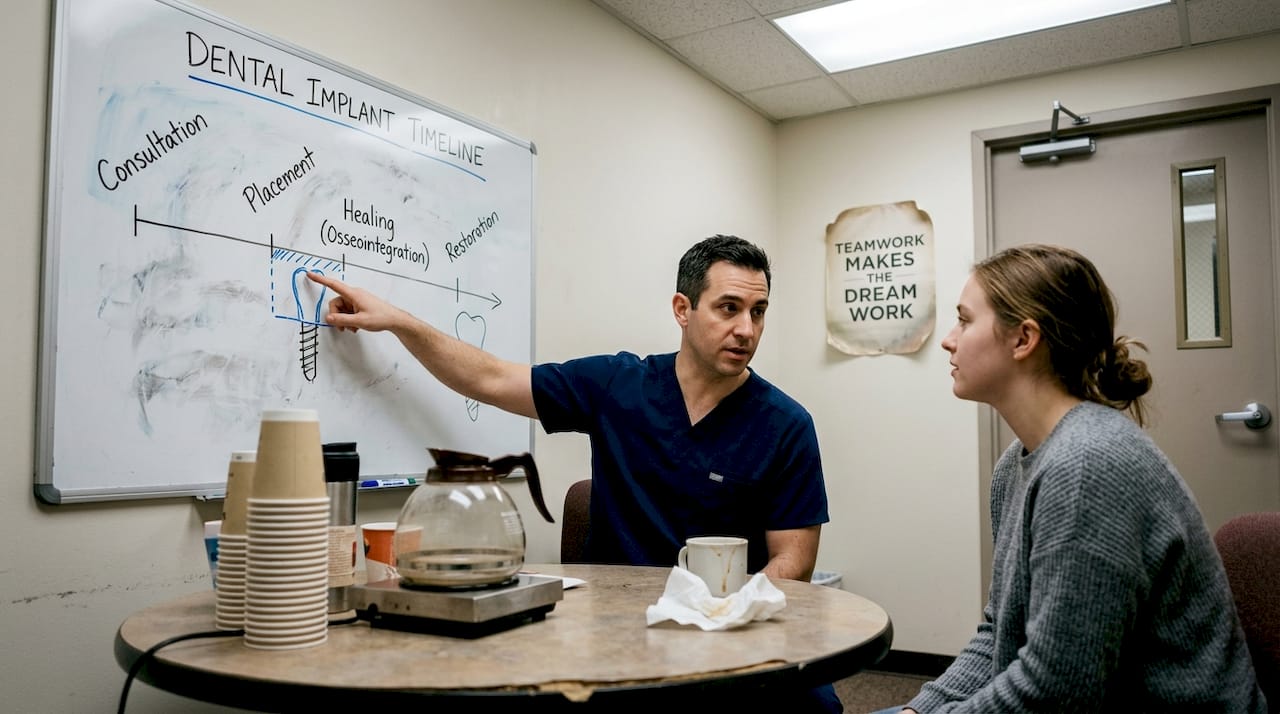
Cost shapes many decisions. Costs and outcomes of endodontic retreatments reveal root canals cost less initially, typically $800-$1,500, while implants range $3,000-$5,000 per tooth including crown. However, retreatment needs and eventual tooth loss can make endodontics more expensive over time. Implants, though pricier upfront, rarely require replacement if maintained properly.
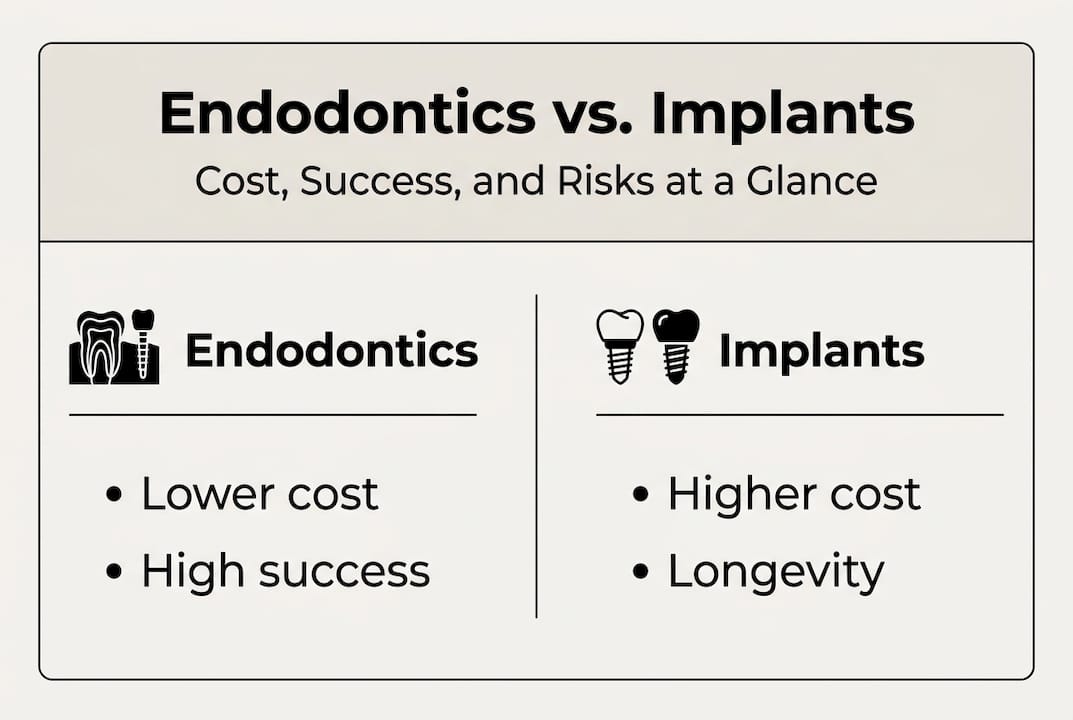
| Factor | Endodontics | Implants |
|---|---|---|
| Initial cost | $800-$1,500 | $3,000-$5,000 |
| Success rate | 85-92% primary, 77-83% retreatment | 97.8% survival >10 years |
| Longevity | Variable, may need retreatment | Highly predictable long-term |
| Bone preservation | Maintains natural root and bone | Stimulates bone, prevents loss |
Pro Tip: For families with tight budgets, prioritize early risk assessment. Identifying health or lifestyle factors that increase failure risk helps you choose the treatment most likely to succeed, avoiding costly do-overs.
Exploring dental implant success rates provides benchmarks for what to expect. Understanding dental implant cost factors clarifies why prices vary by case complexity. Comparing implants versus dentures highlights why implants often deliver better value despite higher upfront expense.
- Health status, smoking, and diabetes affect implant success
- Root canal outcomes depend on infection severity and tooth anatomy
- Insurance and membership plans reduce out-of-pocket costs significantly
- Survival of root-filled teeth vs implants favors implants over decades
Patient-centered specialty dental care for Inland Empire families
Coordinated specialty care simplifies complex treatment. Instead of bouncing between offices, families benefit when endodontists, implant surgeons, and general dentists collaborate under one roof or through close referral networks. This coordination reduces missed appointments, streamlines insurance claims, and ensures everyone understands the treatment plan.
Bilingual support transforms the patient experience. Patient-centered bilingual specialty care benefits families by ensuring clear explanations of procedures, risks, and costs in Spanish or English. Miscommunication leads to anxiety, missed follow-ups, and poorer outcomes. When patients fully understand their options, they make confident decisions and adhere to post-treatment care instructions.
Tooth preservation remains the gold standard when feasible. Natural teeth maintain proprioceptive feedback, allowing you to sense biting pressure and protect surrounding structures. Endodontics preserves this advantage while avoiding the surgical risks and healing time implants require. However, when a tooth is too damaged or infected, implants provide a durable, lifelike replacement.
Dental membership programs and interdisciplinary care improve affordability. Membership plans offer discounted specialty services, preventive care, and flexible payment options without traditional insurance hassles. Interdisciplinary teams coordinate treatment timing, ensuring implants integrate fully before placing final crowns or that root-canaled teeth receive timely restorations.
Families navigating specialty care should consider these practical tips:
- Schedule consultations with both endodontists and implant surgeons before deciding
- Ask about financing options, membership plans, and insurance coverage upfront
- Request written treatment plans detailing costs, timelines, and success rates
- Prioritize providers offering bilingual staff and coordinated care models
- Follow post-treatment instructions precisely to maximize success and avoid complications
Learning about affordable dental care workflow helps families plan treatment steps and budget accordingly. Exploring dental membership program advantages reveals how memberships reduce costs for uninsured patients. Understanding interdisciplinary dental care benefits shows how teamwork improves outcomes and convenience.
Choosing between endodontics and implants: key nuances and practical guidance
No single treatment fits every situation. Endodontics versus implants: nuanced treatment choice depends on tooth condition, patient health, financial resources, and personal preferences. Both offer high survival rates, but each has distinct advantages.
| Consideration | Endodontics | Implants |
|---|---|---|
| Procedure type | Non-surgical or minor surgery | Surgical placement, healing period |
| Treatment time | 1-2 visits over weeks | 3-6 months from placement to crown |
| Tooth preservation | Saves natural tooth and root | Replaces missing or extracted tooth |
| Risk factors | Retreatment needs, fracture | Early failure, bone loss, infection |
| Best for | Salvageable teeth, budget constraints | Missing teeth, long-term predictability |
Follow these steps to make an informed decision:
- Get a comprehensive exam including CBCT imaging to assess tooth and bone health
- Discuss your medical history, medications, and lifestyle factors with your specialist
- Review success rates, costs, and timelines for both endodontics and implants in your case
- Consider your financial situation, insurance coverage, and payment plan options
- Evaluate your comfort with surgery, healing time, and follow-up care requirements
- Ask about specialized options like regenerative endodontics or bone grafting if needed
Pro Tip: Coordinate with both specialists for holistic planning. An endodontist can assess if a tooth is savable, while an implant surgeon evaluates bone quality for future implant placement. This dual perspective ensures you choose the treatment with the highest chance of long-term success.
Regenerative endodontics offers hope for immature teeth with damaged pulp, using the body’s healing capacity to rebuild tissue. Bone grafting prepares sites with insufficient bone for implant placement, expanding treatment options for patients who initially seem like poor candidates. These advanced techniques require specialized training but significantly improve outcomes.
Shared decision-making respects patient values. Some families prioritize preserving natural teeth for physiological and emotional reasons. Others prefer implants for their predictability and lower maintenance. Your specialist should present options objectively, helping you weigh trade-offs without pressure.
Reviewing implants for missing teeth clarifies when replacement is the best path forward. Understanding dental implant failure risks prepares you to minimize complications. Exploring dental implant pricing variables helps you budget accurately and avoid surprises.
Explore specialty dental care options at Monteluz Specialty
Your family deserves expert, bilingual specialty dental care tailored to your needs and budget. Monteluz Dental Specialty Group in San Bernardino offers comprehensive endodontic and implant services with a patient-centered approach. Our specialists coordinate treatment plans, explain options clearly in Spanish or English, and work with Denti-Cal, PPO, HMO, and membership plans to maximize affordability.
Scheduling a consultation is simple. Our team evaluates your oral health, discusses treatment options, and creates a personalized plan that fits your timeline and financial situation. Whether you need permanent dental implants San Bernardino to replace missing teeth or endodontic specialists San Bernardino to save a damaged tooth, we provide advanced care without barriers. Explore dental membership plans starting at $20 per month for uninsured families.
Pro Tip: Taking early steps with specialists improves long-term dental health and reduces costs. Addressing problems before they escalate saves teeth, bone, and money.
Frequently asked questions
What is specialty dentistry and why is it important for families?
Specialty dentistry focuses on advanced techniques like endodontics and implants that go beyond routine dental care. It helps preserve natural teeth through root canals and microsurgery or replace missing teeth with durable implants. For families, specialty care improves oral health, prevents tooth loss, and enhances quality of life by restoring function and appearance. Bilingual and coordinated specialty services reduce barriers, ensuring better outcomes and patient satisfaction.
How do I know if I need a root canal or a dental implant?
Root canals treat infected or damaged natural teeth to save them, while implants replace missing or unsalvageable teeth. Your dentist will evaluate the tooth’s condition using exams and imaging to determine if it can be saved. If the tooth has severe decay, fracture, or bone loss, extraction and implant placement may be the best option. Discussing your health, budget, and preferences with specialists helps you choose the treatment that fits your situation.
What are the cost differences between specialty dental treatments?
Endodontics generally costs less initially, ranging $800-$1,500 for root canals, while implants cost $3,000-$5,000 per tooth including the crown. However, implants provide more predictable long-term benefits, rarely requiring replacement if maintained properly. Root canals may need retreatment or eventual extraction, increasing total costs over time. Financial assistance, insurance coverage, and membership plans significantly improve affordability for both treatments, making specialty care accessible to more families.
How can bilingual support improve my dental care experience?
Bilingual support ensures clear explanations of procedures, risks, and costs in your preferred language, reducing stress and misunderstanding. When you fully understand your treatment plan, you make confident decisions and follow post-treatment instructions accurately. This improves healing, reduces complications, and builds trust with your dental team. For Spanish-speaking families in the Inland Empire, bilingual specialty care removes language barriers that often delay or complicate treatment, leading to better oral health outcomes.
Recommended
- Specialty Dental Care: 95% Success Rates & Real Savings
- Affordable Dental Care – Impact on Family Well-being
- Accessible Dental Care 2026: Options For Inland Empire Families
- Top 6 Best Dental Implant Options in 2026 for Affordable Care