Many families in San Bernardino and the Inland Empire assume they need separate dentists for their toddler, teenager, and grandparent. That assumption costs time, money, and often leads to gaps in care. Family dentistry was built to solve exactly this problem. It brings every member of your household under one roof, with one trusted team that knows your history, your insurance, and your needs. Whether you’re covered by Denti-Cal, a PPO plan, or have no insurance at all, there are accessible options right here in the Inland Empire. This guide breaks down what family dentistry is, what it covers, and how to make it work for your family.
Table of Contents
- What is family dentistry? Core concepts explained
- Typical services you’ll find at family dental practices
- Family dentistry vs. general dentistry: The key differences
- Affordable access and insurance: Denti-Cal and local options
- What makes family dentistry ideal for long-term dental health?
- Why continuity of care through family dentistry actually matters more than most people realize
- How Monteluz can support your family’s dental health
- Frequently asked questions
Key Takeaways
| Point | Details |
|---|---|
| All-ages care | Family dentistry provides comprehensive dental services for children, adults, and seniors in one office. |
| Wide range of services | Preventive, restorative, cosmetic, and emergency treatments are available through family dentists. |
| Affordable options | Many family dental practices in San Bernardino accept Denti-Cal and offer membership or school programs. |
| Continuity matters | Seeing the same dentist for years supports better health tracking and eases dental anxiety. |
What is family dentistry? Core concepts explained
To lay the groundwork, let’s clarify what family dentistry really means.
Family dentistry is the practice of providing dental care to patients at every stage of life, from a toddler’s first tooth to a senior’s denture fitting. It’s not about one age group. It’s about one practice serving your entire household, year after year.
A key distinction worth knowing: family dentistry emphasizes all-ages care, with training that spans both pediatric (children’s) and geriatric (older adult) oral health. General dentistry, by contrast, tends to focus on adult patients. That difference matters when you have a five-year-old and a sixty-five-year-old in the same household.
Here’s what sets family dentistry apart in practical terms:
- One location for every family member, regardless of age
- Continuity of records, so your dentist tracks changes over time
- Pediatric-informed care for children without requiring a separate specialist
- Geriatric awareness for older adults managing conditions like dry mouth or bone loss
- Familiar environment that reduces anxiety, especially for kids
It’s also worth noting that family dentist is a practice model, not an official American Dental Association (ADA) specialty. That means the term describes how a practice is structured and who it serves, rather than a specific board certification. You can explore more in our family dental care guide to understand how this model fits your household’s needs.
“The best dental relationship is one that grows with your family. When your dentist has known your child since their first visit, they can spot patterns no new provider ever could.”
This model is especially powerful for busy families who can’t afford to coordinate multiple offices, multiple insurance forms, and multiple appointment schedules.
Typical services you’ll find at family dental practices
Now that you know what family dentistry is, let’s look at the full scope of services it covers.
Family dental services span four major categories: preventive, restorative, cosmetic, and emergency care. Each category serves a different need, and together they cover the full arc of oral health across a lifetime.
| Life stage | Common services |
|---|---|
| Kids (0-12) | Cleanings, fluoride treatments, sealants, first exams |
| Teens (13-17) | Orthodontic referrals, cavity fillings, sports guards |
| Adults (18-64) | Crowns, root canals, whitening, implant consultations |
| Seniors (65+) | Dentures, bone loss monitoring, dry mouth management |
Preventive care is the foundation. This includes routine cleanings, exams, X-rays, fluoride applications, and dental sealants (thin coatings applied to back teeth to prevent decay). Restorative care steps in when prevention wasn’t enough: fillings, crowns, bridges, and root canals. Cosmetic services like teeth whitening and veneers address appearance. Emergency care handles sudden pain, broken teeth, or infections.
Key preventive services at a glance:
- Biannual cleanings and exams
- Digital X-rays for early detection
- Fluoride treatments for cavity prevention
- Sealants for children’s molars
- Oral cancer screenings for adults
The ADA recommends twice-yearly visits for preventive services. Skipping those visits doesn’t save money. It delays problems until they become expensive emergencies. You can review affordable dental care steps to see how to keep costs manageable while staying consistent.
Pro Tip: Scheduling your whole family’s cleanings on the same day saves you multiple trips and keeps everyone on the same reminder cycle.
Family dentistry vs. general dentistry: The key differences
Understanding your options means knowing how family dentistry stacks up against traditional general dentistry.
| Feature | Family dentistry | General dentistry |
|---|---|---|
| Ages treated | All ages, birth to senior | Primarily adults |
| Pediatric training | Yes, built into practice model | Limited or none |
| Geriatric focus | Yes | Sometimes |
| Environment | Child-friendly, welcoming | Standard clinical |
| Insurance | Often accepts Denti-Cal, PPO, HMO | Varies widely |
| Continuity | Long-term family records | Patient-by-patient |
The core difference is that family dentistry is designed to grow with you, while general dentistry is typically structured around treating individual adult patients as they come in.
Here are the top reasons multi-generational families benefit from choosing a family practice:
- One appointment block for multiple family members saves hours each month.
- Shared records mean your dentist notices patterns across your family’s oral health.
- Consistent relationships reduce fear and resistance, especially in children.
- Coordinated referrals to trusted local specialists, such as orthodontists, happen faster when your dentist already knows your case.
- Insurance simplicity because one office handles your family’s billing, not three.
Family practices also tend to build referral networks with local specialists. So when your teen needs braces or your parent needs an implant, your family dentist connects you with someone they trust. Learning about using Denti-Cal in San Bernardino and understanding the importance of dental insurance can help you navigate coverage across all these services.
Affordable access and insurance: Denti-Cal and local options
Once you know what services are available, affordability and coverage become the next major consideration.
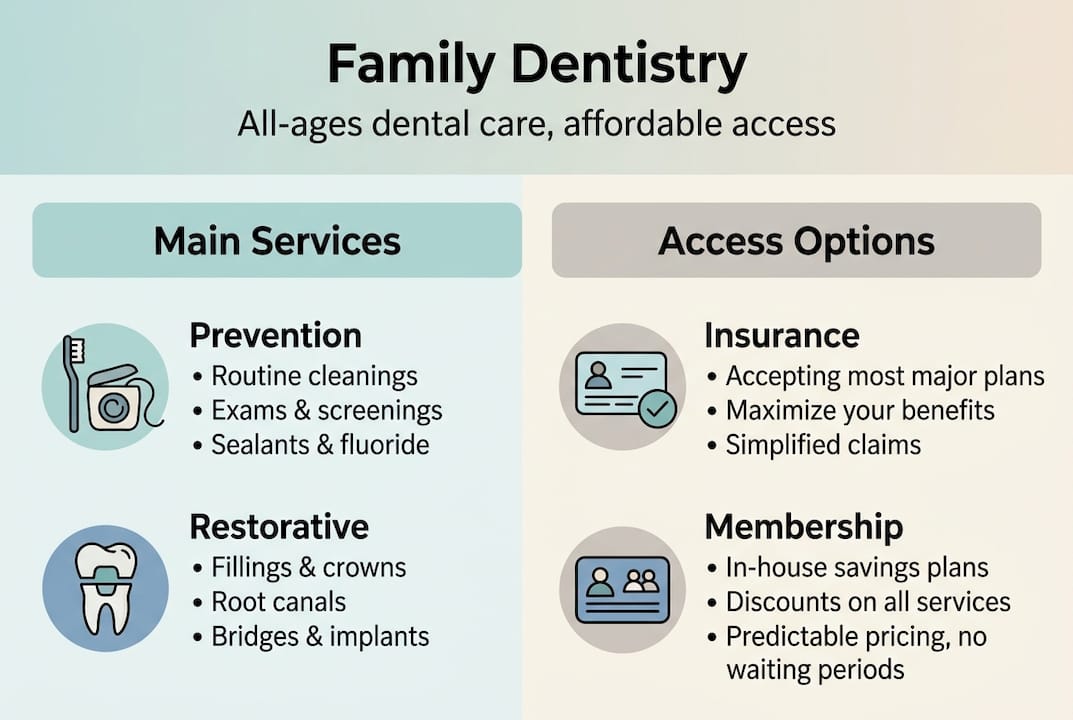
For many families in San Bernardino and the Inland Empire, cost is the biggest barrier to consistent dental care. The good news is that family dentistry in this region often accepts Denti-Cal (the dental component of Medi-Cal) for low-income families. Denti-Cal covers preventive and restorative care for children, and emergency services for adults.
Common coverage options for Inland Empire families:
- Denti-Cal (Medi-Cal Dental): Covers kids’ cleanings, fillings, and X-rays; adult emergency care
- PPO plans (e.g., Delta Dental): Broad network access, partial cost coverage for most services
- HMO dental plans: Lower premiums, assigned provider model
- In-house membership programs: Monthly fee plans for uninsured patients, often starting at $20/month
- School-based dental programs: Preventive care offered through local school districts
It’s important to know that Denti-Cal 2026 updates maintain comprehensive coverage for children but include some restrictions for certain adult services. Staying informed about what your plan covers helps you avoid surprise costs.
According to state data, a significant portion of children in San Bernardino County rely on Medi-Cal for their health coverage, making Denti-Cal one of the most critical access points for pediatric dental care in the region. Reviewing the best Medi-Cal dental plans available locally can help you choose the right fit.
Pro Tip: If you’re uninsured, ask your family dental office about an in-house dental membership. These programs often include two cleanings, exams, and X-rays per year plus discounts on other services, all for a flat monthly fee. Use the Denti-Cal guide 2026 to verify your eligibility before your first visit.
What makes family dentistry ideal for long-term dental health?
Affordability matters, but choosing the right type of dental care can transform your family’s health for years to come.
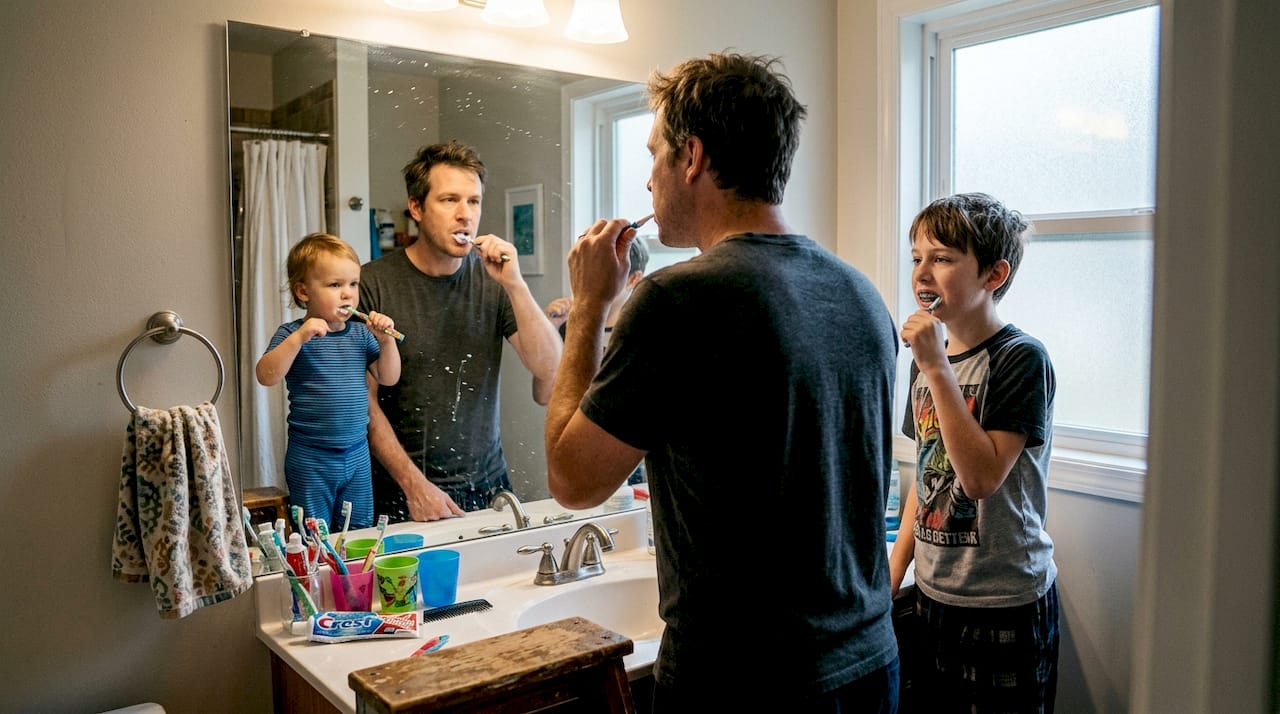
Family dentistry promotes continuity, which means your dentist tracks your oral health over time and connects it to your overall systemic health. Research links gum disease to heart disease, diabetes, and other chronic conditions. A dentist who has followed your health for years is far more likely to catch those early warning signs than one meeting you for the first time.
When your records stay in one place as your children grow and your parents age, patterns become visible. A dentist who has seen your child’s X-rays every year since age six will notice a shift in jaw development that a new provider might miss entirely.
Key advantages of long-term family dental care:
- Early detection of gum disease, decay, and bite issues
- Oral-systemic health tracking (connecting mouth health to heart, blood sugar, and more)
- Reduced dental anxiety through familiar faces and consistent routines
- Streamlined referrals when specialist care is needed
- Personalized care plans that evolve as your family’s needs change
“Familiarity is a clinical advantage. When patients feel safe, they communicate more openly, and that honesty leads to better diagnoses and better outcomes.”
This is especially true for anxious patients. The child-friendly approach used in family dentistry, gentle explanations, visual tools, and a calm pace, works just as well for nervous adults. If dental anxiety is a concern in your household, our tips for dental anxiety offer practical strategies to make every visit easier.
Why continuity of care through family dentistry actually matters more than most people realize
Let’s step back and address why this broader approach to dental care is more valuable than you might think.
Most families choose a dentist based on price or proximity. Those factors matter, but they’re incomplete. What gets overlooked is the compounding value of a long-term dental relationship. We’ve seen it directly: patients who bounce between providers for small savings often end up paying more over time because early warning signs were missed, anxiety built up, and records were scattered across offices.
Fragmented care creates real risks. Gum disease caught at stage one costs a fraction of what it costs at stage three. A child whose bite issues are tracked from age seven can often avoid complex orthodontic treatment later. These aren’t hypothetical savings. They’re the natural result of consistent, informed care.
For families in San Bernardino and the Inland Empire, building a relationship with a family practice is a proactive investment in your household’s health. A “dental home,” a single trusted practice that knows your full history, is worth more than the convenience of switching providers whenever something feels cheaper or closer. Our family dental care wisdom resource reinforces why this long-term thinking pays off in real, measurable ways.
How Monteluz can support your family’s dental health
If you’re ready to put these insights into action, here’s how you can work with a trusted local provider.
At Monteluz Dental Specialty Group in San Bernardino, we offer preventive, restorative dentistry services, and braces and aligners all under one roof. We also provide advanced solutions like dental implants for adults who need them. We accept Denti-Cal, PPO, and HMO plans, and for families without insurance, our in-house membership program starts at just $20 per month.
Our bilingual team speaks English and Spanish, and we’re committed to removing every barrier between your family and the care you deserve. Contact us today to schedule your family’s first visit and start building a dental home that grows with you.
Frequently asked questions
What does a family dentist actually do?
A family dentist provides preventive, restorative, and emergency care for patients of all ages, including cleanings, fillings, crowns, whitening, and more, all in one convenient office.
Is family dentistry covered by Denti-Cal in the Inland Empire?
Yes, most family dentists in the Inland Empire accept Denti-Cal, which covers preventive and restorative care for children and emergency services for qualifying adults.
How often should my family visit the dentist?
The ADA recommends twice-yearly visits for cleanings and exams, which helps catch problems early and avoid costly treatments down the road.
What’s the main difference between a family dentist and a general dentist?
The key difference is that family dentists treat all ages, including children and seniors, while general dentists typically focus on adult patients.
Can adults with dental anxiety benefit from a family dentist?
Absolutely. The child-friendly environment used in family practices, with gentle pacing and clear communication, helps anxious adults feel more comfortable and in control during their visits.
Recommended
- Affordable Dental Care Workflow for Families Near You
- General Dentistry for Affordable Family Care Inland Empire
- Family Dental Care Guide: Achieve Healthy Smiles for All Ages
- Affordable Orthodontic Care Guide for Local Families
- Healthy Family Dynamics: Complete Guide for Families - Mastering Conflict