Losing a tooth brings stress to families, especially when daily meals and confidence depend on a healthy smile. For many in San Bernardino, finding an affordable, permanent replacement becomes a priority when using Denti-Cal or HMO plans. Dental implants offer a lasting solution that looks and feels natural, and oral surgeons carefully evaluate each patient’s bone health to ensure long-term results. Get clarity on types, procedures, and what makes implants a practical choice for families on a budget.
Table of Contents
- Dental Implants Explained For Families
- Types Of Dental Implants And Key Differences
- How Dental Implant Procedures Work
- Benefits For Oral Health And Daily Life
- Financial Considerations And Insurance Options
- Implants Vs. Dentures And Bridges Compared
Key Takeaways
| Point | Details |
|---|---|
| Dental Implants Provide Permanent Solutions | Implants restore missing teeth with a natural appearance and prevent bone loss, enhancing overall oral health. |
| Assessment and Planning are Crucial | Comprehensive evaluations by oral surgeons ensure optimal implant placement and long-term success. |
| Financial Considerations Matter | Understanding insurance coverage and payment options is vital for making informed decisions about dental implants. |
| Implants vs. Other Solutions | Dental implants offer superior durability and comfort compared to dentures and bridges, representing a long-term oral health investment. |
Dental implants explained for families
Dental implants represent a transformative solution for families seeking to restore missing teeth with a permanent, natural-looking alternative. Dental implant surgery involves precisely placing a titanium screw into the jawbone, creating a strong foundation for replacement teeth that look, feel, and function exactly like natural ones.
These advanced medical devices consist of three critical components that work together seamlessly:
- Titanium Screw: Surgically placed into the jawbone, acting as an artificial tooth root
- Abutment: A connector piece positioned above the gumline
- Custom Crown: Designed to match surrounding teeth in shape, size, and color
Dental implants offer significant advantages for families dealing with tooth loss. Dental implants can benefit individuals experiencing tooth loss from periodontal disease, injury, aging, or genetic conditions. Unlike removable dentures, implants provide a permanent solution that maintains jaw structure and supports overall oral health.
The procedure requires candidates to be in good health with sufficient bone density to support the implant. Oral surgeons carefully evaluate each patient to ensure optimal placement and long-term success. During the healing process, the titanium implant fuses with the jawbone through a remarkable biological process called osseointegration, which typically takes several months.
Pro tip: Schedule a comprehensive dental consultation to determine your individual implant candidacy and explore personalized treatment options specific to your family’s dental needs.
Types of dental implants and key differences
Dental implant technology offers multiple solutions for patients with varying oral health needs. Dental implant procedures primarily focus on two main types: Endosteal and Subperiosteal implants, each designed to address specific patient requirements.
The most common types of dental implants include:
-
Endosteal Implants:
- Surgically placed directly into the jawbone
- Shaped like screws, cylinders, or blades
- Ideal for patients with healthy, sufficient bone density
- Most frequently recommended for bridge and denture wearers
-
Subperiosteal Implants:
- Positioned on or above the jawbone, under the gum tissue
- Used for patients with insufficient bone height
- Custom-designed to fit the patient’s specific bone structure
Additional specialized implant options include alternative dental implant techniques that can accommodate unique patient needs. Mini Dental Implants are particularly noteworthy, offering a narrower profile primarily used to stabilize dentures. Advanced diagnostic tools like 3D imaging now enable dentists to create precise treatment plans tailored to individual oral anatomies.
The selection of an appropriate dental implant type depends on several critical factors, including bone density, overall oral health, and specific restoration goals. Oral surgeons conduct comprehensive evaluations to determine the most suitable implant approach, ensuring optimal long-term success and patient satisfaction.
Here’s a summary of the main types of dental implants and who benefits most:
| Implant Type | Placement Location | Ideal Candidates | Notable Benefit |
|---|---|---|---|
| Endosteal | Inside jawbone | Good bone density patients | Most similar to natural teeth |
| Subperiosteal | On/above jawbone, under gum | Limited bone height patients | Suited for weaker bone |
| Mini Dental Implants | Jawbone, smaller diameter | Patients needing denture stability | Minimally invasive option |
Pro tip: Consult with a dental specialist who can perform a detailed assessment of your jawbone structure and oral health to recommend the most appropriate implant type for your specific needs.
How dental implant procedures work
Dental implant surgery is a sophisticated multi-stage process designed to replace missing teeth with permanent, natural-looking solutions. The procedure involves carefully planned surgical interventions that restore both functionality and aesthetic appearance of your smile.
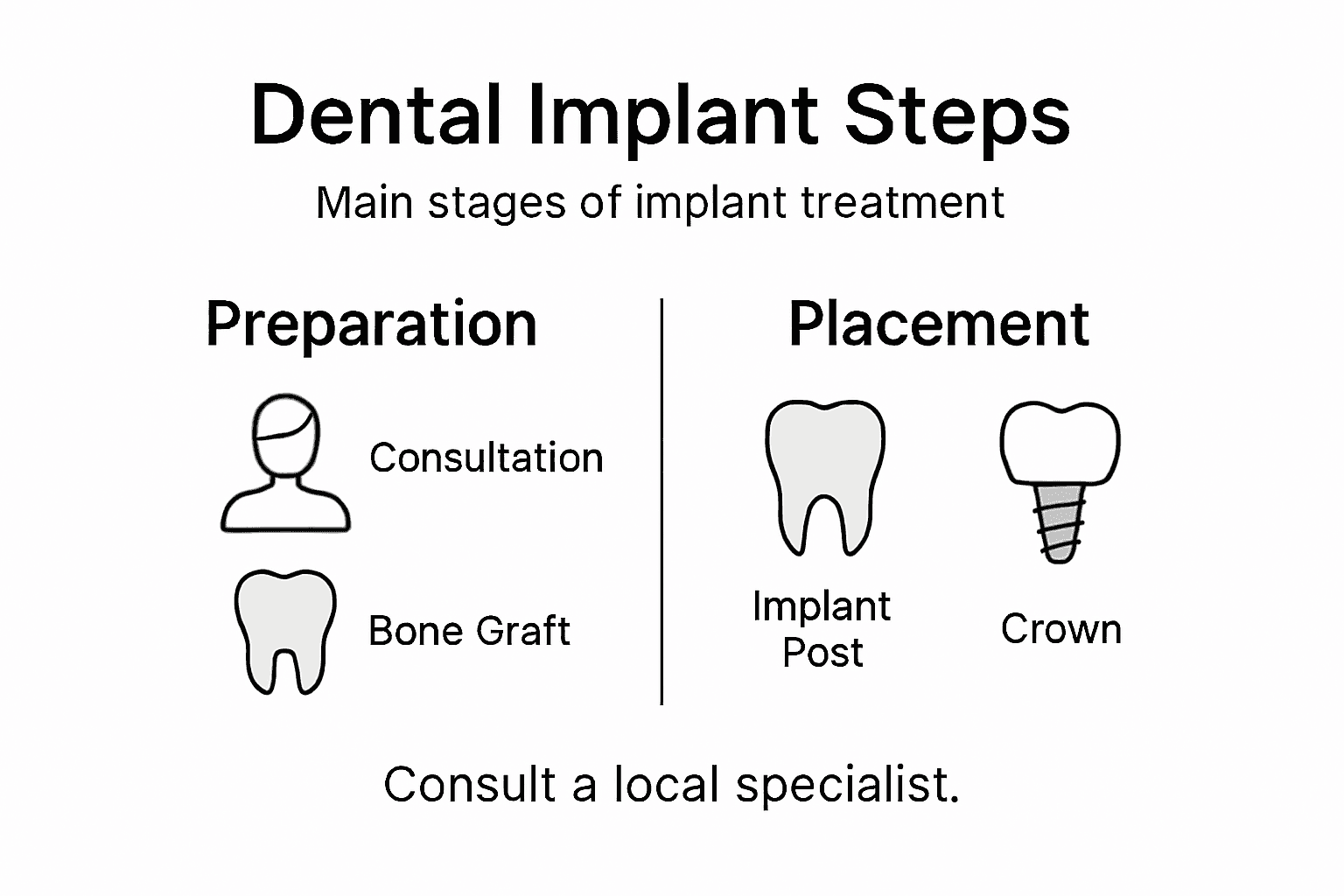
The typical dental implant procedure follows these key stages:
-
Initial Consultation and Planning:
- Comprehensive oral health assessment
- Digital imaging and 3D scans of jawbone structure
- Personalized treatment plan development
-
Surgical Implant Placement:
- Titanium post inserted directly into jawbone
- Precisely positioned to ensure maximum stability
- Local anesthesia used to ensure patient comfort
-
Healing and Osseointegration:
- Bone gradually fuses with titanium implant
- Healing period typically ranges from 3-6 months
- Ensures strong, permanent foundation for artificial tooth
Bone Grafting may be required for patients with insufficient bone density, creating an additional preparatory step in the implant process. This technique builds up the jawbone to provide adequate support for the implant, expanding treatment options for patients with initial structural limitations.
The final stages involve attaching the abutment and custom-designed crown, which are meticulously crafted to match the patient’s existing teeth in color, shape, and function. Advanced diagnostic tools and precision surgical techniques have transformed dental implants into a highly predictable and successful restoration method.
Pro tip: Request a comprehensive 3D scan during your initial consultation to get the most accurate assessment of your jawbone’s readiness for dental implants.
Benefits for oral health and daily life
Dental implants significantly improve oral health by addressing multiple challenges associated with missing teeth. Unlike traditional solutions, implants provide a comprehensive approach to restoring both functional and aesthetic aspects of your smile, ultimately enhancing overall quality of life.
Key benefits of dental implants include:
-
Improved Nutritional Intake:
- Enhanced chewing ability
- Better food digestion
- Reduced risk of nutritional deficiencies
-
Speech and Confidence Restoration:
- Clear, natural speech patterns
- Improved self-esteem
- Elimination of speech impediments caused by missing teeth
-
Long-Term Oral Health:
- Preservation of jawbone integrity
- Prevention of bone deterioration
- Maintenance of facial structure
Dental implants offer remarkable stability that closely mimics natural teeth. By fusing directly with the jawbone through osseointegration, they provide a permanent solution that goes beyond cosmetic improvements. Bone Preservation is particularly critical, as implants prevent the gradual bone loss typically associated with missing teeth or traditional denture use.

The comprehensive advantages extend far beyond immediate dental concerns, impacting overall health and personal confidence. Patients experience improved eating capabilities, clearer communication, and a renewed sense of self-assurance that comes from a complete, healthy smile.
Pro tip: Discuss your specific oral health goals with a dental professional to understand how dental implants can be customized to your unique needs and lifestyle.
Financial considerations and insurance options
Dental insurance options can significantly impact the affordability of dental implant procedures for San Bernardino families. Understanding the complex landscape of coverage, payment plans, and financial assistance is crucial for making informed decisions about your oral health investment.
Key financial considerations for dental implants include:
-
Insurance Coverage:
- Check specific plan details for implant coverage
- Verify percentage of procedure covered
- Understand annual maximum benefit limits
-
Payment Options:
- Dental practice financing plans
- Flexible monthly payment arrangements
- Health savings account (HSA) compatibility
-
Cost Breakdown:
- Initial consultation fees
- Surgical placement costs
- Additional procedures like bone grafting
- Crown and abutment expenses
Denti-Cal and HMO Plans play a significant role for low-income families in San Bernardino. These programs can provide partial coverage or reduced-cost options for dental implant procedures, making advanced dental care more accessible. Patients should carefully review their specific plan details and discuss potential coverage with their dental provider.
Many dental practices offer comprehensive financial counseling to help patients navigate insurance complexities. This includes verifying benefits, explaining out-of-pocket expenses, and exploring alternative financing strategies that make dental implants a realistic option for families with varying financial backgrounds.
Pro tip: Request a detailed financial consultation that includes a comprehensive breakdown of all potential costs and insurance coverage options before committing to your dental implant procedure.
Implants vs. dentures and bridges compared
Dental restoration options present unique advantages and limitations for patients seeking to replace missing teeth. Understanding the key differences can help San Bernardino families make informed decisions about their oral health treatment.
Key comparison points between dental solutions include:
-
Dental Implants:
- Permanently anchored into jawbone
- Preserve bone health
- Mimic natural tooth structure
- Longest lasting solution
- Most stable and functional
-
Dentures:
- Removable prosthetic device
- Sit on gum surface
- Can slip or cause discomfort
- Less expensive upfront
- Require periodic replacement
-
Dental Bridges:
- Depend on adjacent teeth for support
- Require altering healthy neighboring teeth
- Fixed in place
- Less invasive than implants
- Limited long-term bone preservation
Bone Preservation represents a critical differentiator among these options. Dental implants are unique in their ability to stimulate and maintain jawbone density, preventing the natural bone loss that occurs with tooth extraction. Dentures and bridges, by contrast, do not provide the same level of structural support to the underlying bone tissue.
Cost considerations also play a significant role. While implants may have higher initial expenses, their long-term durability and reduced need for replacement often make them a more cost-effective solution over time. Patients should consider not just immediate expenses, but the comprehensive long-term investment in their oral health.
See how dental implants and other restoration options compare on key decision factors:
| Factor | Dental Implants | Dentures | Dental Bridges |
|---|---|---|---|
| Durability | 20+ years, often lifetime | 5-8 years, may need replacing | 10-15 years, may need replacing |
| Maintenance | Brush and floss normally | Remove to clean, special care | Clean under bridge, floss aids |
| Jawbone Support | Preserves bone | No bone stimulation | Limited bone preservation |
| Comfort | Feels natural, secure | May slip, less stable | Fixed, but alters adjacent teeth |
Pro tip: Consult with a dental specialist who can perform a comprehensive evaluation of your specific oral health needs and anatomical considerations before selecting a tooth replacement strategy.
Discover Lasting Solutions for Your Smile with Monteluz Dental Specialty Group
Missing teeth can affect more than just your appearance They impact your confidence your ability to eat and even your overall oral health The detailed article on why choose dental implants in San Bernardino highlights the importance of a permanent natural-looking solution like dental implants that preserve bone health and restore function at every meal Monteluz Dental Specialty Group understands these challenges and offers expert implant services tailored to your family’s specific needs
Explore trusted answers and comprehensive dental health insights at our Dental Health and take the first step toward reclaiming your smile by scheduling a personalized consultation Visit Monteluz Dental Specialty Group today to learn about our flexible financing options insurance plans accepted and bilingual support that make advanced dental implants accessible and affordable The time to restore your oral health and confidence is now
Frequently Asked Questions
What are dental implants and how do they work?
Dental implants are advanced dental devices that replace missing teeth by surgically placing a titanium screw into the jawbone, which acts as an artificial tooth root. This process allows for the secure attachment of a custom crown that looks and functions like a natural tooth.
What are the benefits of choosing dental implants over dentures or bridges?
Dental implants offer several advantages including improved stability, better bone preservation, and a more natural appearance. Unlike dentures, which can slip and cause discomfort, implants are securely anchored in the jawbone, providing a long-lasting and durable solution for tooth replacement.
Am I a candidate for dental implants?
Candidates for dental implants should be in good overall health with sufficient bone density to support the implant. A dental specialist will conduct a thorough evaluation and may recommend additional procedures like bone grafting if necessary.
How long do dental implants last compared to other tooth replacement options?
Dental implants can last over 20 years, often a lifetime, with proper care. In contrast, dentures typically last 5-8 years and dental bridges around 10-15 years, making implants a potentially more cost-effective option in the long run.
Recommended
- Dental Implants: Transforming Oral Health in San Bernardino
- Dental Implant Procedure: Transforming Smiles in San Bernardino
- Rol de los implantes dentales en familias de San Bernardino
- Cómo Funcionan los Implantes Dentales en San Bernardino